

This Is The Most Important Campsite Amenity, According To Campers
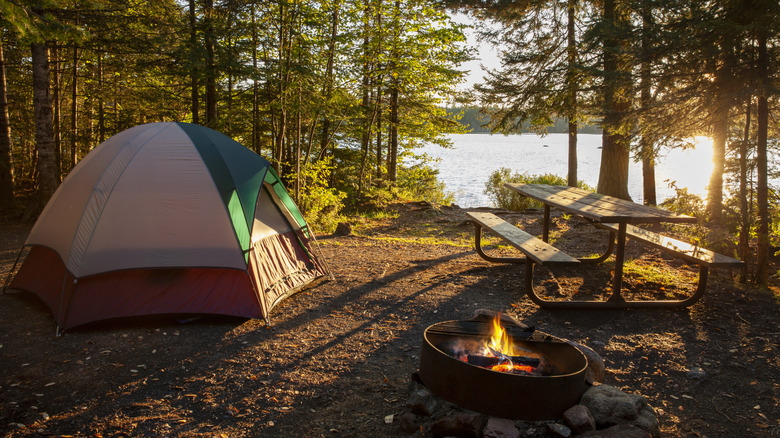
From cameras and tripods to the perfect lantern lighting and projectors for cozy movie nights, there are lots of items deemed essential for that picture-perfect Instagrammable camping getaway. But when it comes to the absolute necessities, campers say there's one tool they simply can't live without while roughing it in the outdoors. Fire rings and grills are the most desirable campsite amenity to have on hand, according to Hipcamp, an app that helps users find and book campsites, with 62% of campers saying fire rings are essential to a good camping spot. The website, which published the finding three years ago, says they used survey results from over 1,000 users, as well as information from their top-reviewed campsites and daily user feedback to determine the ranking.
It's little wonder that this camping tool came in at number one, as fire rings not only make cooking easier, they also make camping safer. Fire rings are a Smokey the Bear-approved method of creating campfires that keep the blaze contained, tidy, and sheltered from high winds — protecting both you and the environment from wandering embers and sparks that could set off a wildfire. Another perk is that fire rings can often be used with portable fire pits if you choose to bring your own from home, making campfire setup even easier. The rings can be made of all kinds of materials, from copper or steel to stone, so you'll want to be sure that whatever material the fire ring is made of is capable of withstanding high temperatures before getting started.
Some campfire caveats to be aware of
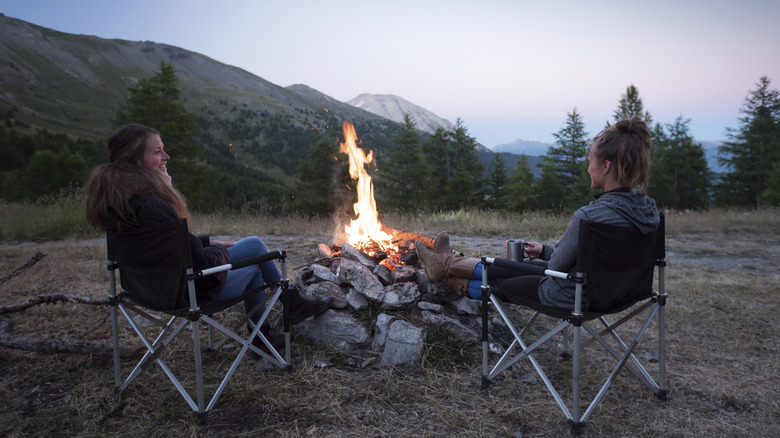
Campfires certainly enhance the ambiance and coziness of your outdoor adventures, and fire rings make the experience of building, maintaining and putting out your campfire all the easier. That said, there are several mistakes you should avoid while building a campfire — one of the most important being making sure that you're allowed to build a campfire at all. Certain parks and campgrounds may have restrictions or outright bans on building fires, especially if there has been a drought or conditions are dry and ripe for wildfires to spark and spread. Be sure to check land management websites such as the National Park Service or Bureau of Land Management for any restrictions or bans in your campsite area before lighting up or bringing a portable fire pit from home.
Once you've gotten the all-clear, you'll also want to freshen up on the best types of wood to use for campfires, including which woods light quickly and are best for starting a fire, and which wood types burn longer and are ideal for keeping a fire going. But keep in mind that you'll generally need to keep it local when it comes to fuel for your fire. Bringing firewood with you from far away or taking firewood home with you at the end of your camping trip is discouraged and even illegal in some states, as you run the risk of transporting invasive pests along with it. Ideally, you should only use firewood that was acquired within 10 miles of your campsite, and anything more than 50 miles is considered too far. Or, if you plan on transporting your firewood long-distance, you should buy wood that's been packaged with a U.S. Department of Agriculture Animal and Plant Health Inspection Service (USDA APHIS) heat treatment seal or a State Department of Agriculture heat treatment seal.