

The Common Bird Feeder Maintenance Mistake That's Attracting Pests To Your Yard
We may receive a commission on purchases made from links.
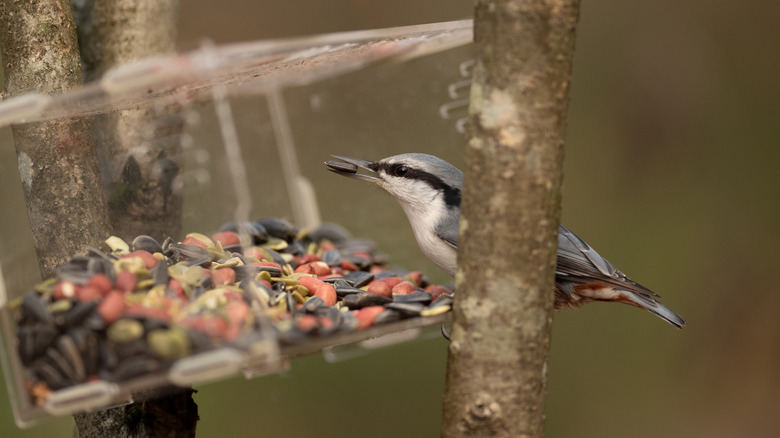
Having a bird feeder filled with fresh seeds is one of the easiest ways to get birds flocking to your yard, but the problem is, birds aren't the only ones that'll eat bird seed. Besides animals such as squirrels that could potentially access the actual feeder, a number of other creatures might be drawn to the spills beneath it. Forgetting to clean up that mess is one reason why raccoons are attracted to your yard, and they're probably not the only ones coming over for some late-night snacks. Rodents in particular may stop by for a meal when you're not watching, and no one wants a rat rendezvous in their yard. Other animals such as deer and opossums may also stop by for a midnight snack, and while they themselves are not problematic, the potential for a food free-for-all is.
If you live in bear territory, you may want to reconsider using a bird feeder at all. Even skunks will eat spilled bird seed, and though they're cute and helpful to the environment, there's also that infamous odor that could be an issue, especially if you have dogs that might try to chase them around the yard. It's best not to leave any potential food sources out for the unwanted animals, and that means keeping the area beneath the feeder as clean as possible. On top of all of this, spilled bird seed will start to rot and mold after a few days, which can make birds and your uninvited hungry guests ill.
How to avoid bird-feeder messes
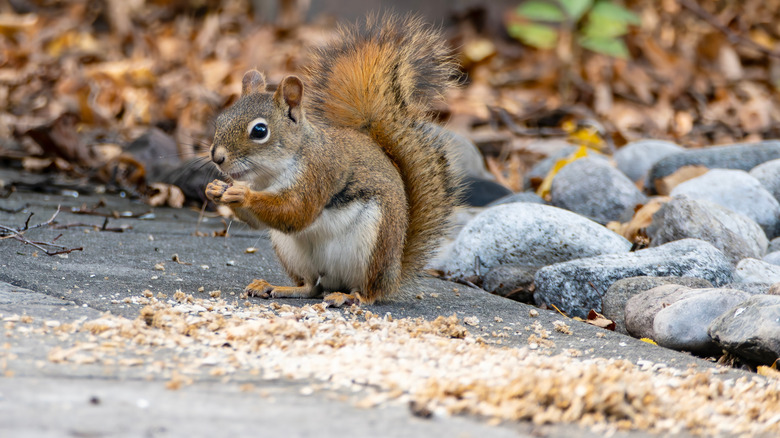
If you have a feeder with loose seeds, spills happen. If you offer seed blends with tiny seeds in them, or seeds that aren't among the birds' favorite foods, these often end up on the ground. attracting rodents and other non-avian diners. Spilled bird seed could even be responsible for weeds in your yard. Several birds feeding at once could create a mess below. Even black oil sunflower seed — the energy packed seed that many birds love — can be messy. It's often sold with the hull intact, and these end up on the ground after birds crack the hulls open for the tasty treat within.
Sweep up or vacuum spilled seeds and hulls at the end of every day or two, or whenever you notice them accumulating on the ground. For many pests, like raccoons, if a predictable food source disappears for several days, they'll move on. If you notice you're mostly getting nocturnal interlopers, like opossums or bears, consider bring feeders in each night. Another way to reduce seed mess is to switch to hulled seeds. Even if there's not much left inside a sunflower or other seed hull, even a tiny amount is enough to interest mice and rats. Alternatively, stick to just one seed variety per feeder, instead of blends. This way nothing unwanted gets "spit out" to the ground.
A seed catcher such as the Songbird Essentials seed hoop is another way to cut down on dropped seeds and debris, as most of the mess will land in the catcher instead of on the ground (also giving birds a second chance to enjoy them from the tray). It's a round, wire mesh tray that hooks onto the bottom of just about any type of bird feeder. They're wider than the feeder and come in different sizes.