

The Winter-Friendly Plant That'll Attract More Birds To Your Yard
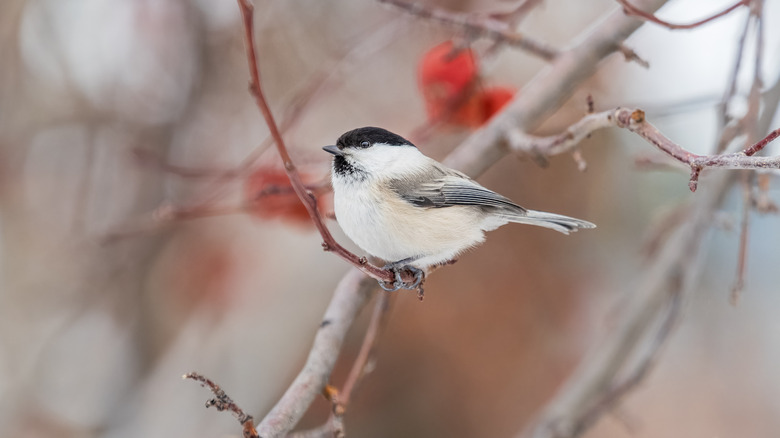
If you love watching birds flit around your yard or garden, winter may be somewhat of a sad time for you. Many birds fly south for the winter, and those that don't migrate focus their energy on finding food. If your entire garden is dormant and there's no food for your feathered friends, they're likely to go elsewhere. Setting out a bird feeder is a simple way to attract more birds to your yard, but if you don't want to go out in the cold to refill it then consider planting some native food sources in your garden. One fantastic option is a snowberry bush (Symphoricarpos albus).
Snowberries are native shrubs found throughout the U.S. that are hardy in zones 3 through 7 and are remarkably resistant to cold weather. During fall and early winter the branches are laden with small white berries. These berries are mildly poisonous to humans but birds love them. In summer, their pink and white flowers are highly attractive to bees and butterflies as well. Snowberries are easy to grow and play well with other common bird-attracting plants like dogwoods and alder trees, which is great if you're trying to attract a wide variety of birds. Whether you're a beginner who just wants to bring more birds to your yard during winter or an enthusiast trying to expand your already impressive collection, snowberry shrubs make excellent additions to most yards.
How to grow a snowberry shrub
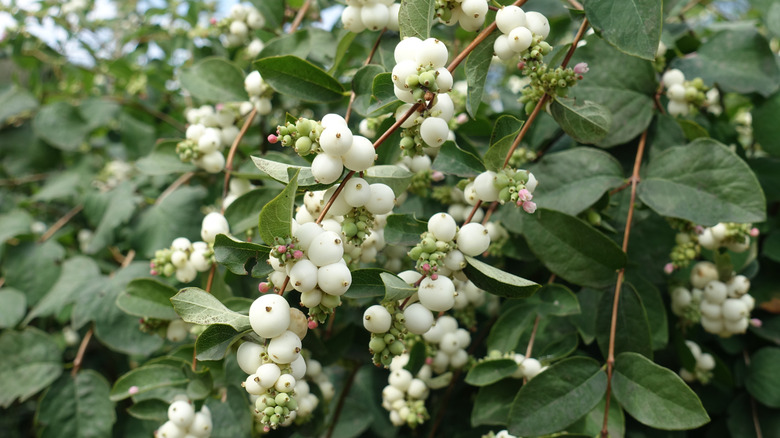
Find a section of your garden where your snowberries will get full to partial sun. They can tolerate light shade, but may not grow as many flowers as they would in full sun. Snowberries aren't picky about soil type or pH, but avoid planting them in low-lying areas where water pools or is slow to drain. They can develop fungal infections when left sitting in wet soil for too long, so a well-draining soil is ideal. Aim to plant them in spring, right as they're coming out of dormancy, but you can plant them later in the year if necessary.
Snowberries don't need much care after planting and are basically a fuss-free plant great for beginning gardeners. They're easy to grow, deer- and drought-resistant, and low maintenance once established. You can fertilize them during the growing season to give them a boost, but given that these shrubs grow quickly they may not need the encouragement. In the winter, the only thing to keep an eye on is rabbit damage down near the ground. Fence them off if it's too much so birds can continue to enjoy them. Heavy pruning can be done in early spring, while light pruning can be done in late summer or early fall. However, keep in mind that the more you remove in summer and fall the fewer berries your snowberry shrub will have for your feathered friends come winter!