

One Important Step You Don't Want To Forget When Preparing Your Deck For Winter
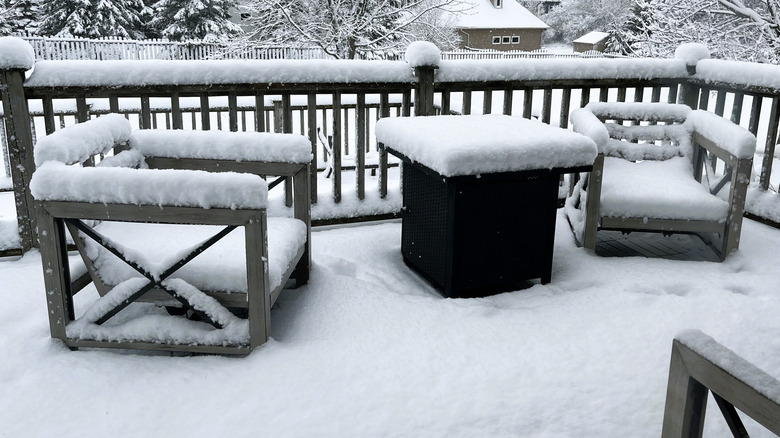
Preparing your outdoor living spaces for winter weather is no one's favorite task, but it's an important one. Between putting away outdoor furniture and protecting the wood deck from ice and snow, there is a crucial step that could be easy to overlook. Checking the deck for damage and other maintenance-related issues will help keep every part of your deck in optimal condition as seasons change, snow falls, and moisture on the surface freezes, thaws, and freezes again. If you've already had some early-season snowfall and haven't yet had a chance to do a maintenance check, here's how to safely remove snow from your deck; you could always look things over as conditions improve.
One key reason to give the deck a thorough inspection now, rather than waiting until spring, is to ensure it's in good enough shape to withstand potentially heavy snowfall and layers of ice. This is also a good time to ensure railings, stairs, and supports beneath the deck are in excellent condition. While these steps are important for any sort of deck, regardless of materials, they're vital for wood decks which can be especially subject to drying, splitting, cracking, and bowing.
Performing a pre-snowfall deck check
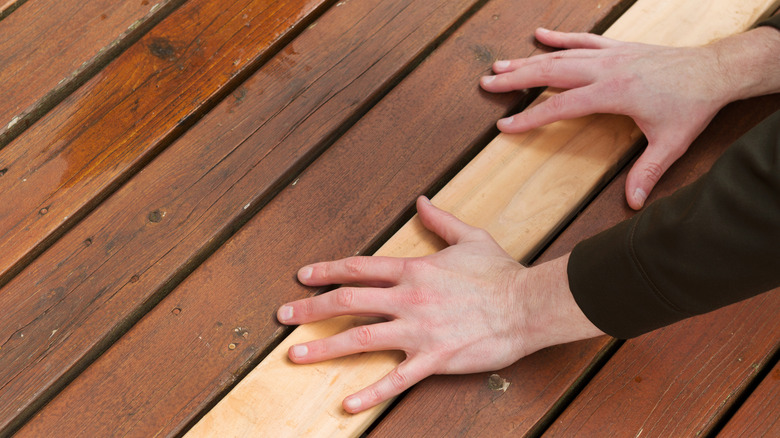
Before checking for damage, make sure the deck is relatively clean and that everything, including any outdoor area rugs, has been removed. This will give you the best possible view. Check the surface of each deck board, looking for issues such as soft, rotting wood, cracks, or splits. Walking across the entire deck is a good way to find problems with warped or rotting wood. Areas where gutters leak or where plant pots once sat could be especially prone to moisture-related damage, and these boards could be replaced individually. Also look for loose or missing nails or screws, and tighten or replace those.
Wiggle the railings to ensure they're all secure as well, including the railings paired with the stairs. While you're at it, also make sure all the boards that make up the stairs — treads, risers, stringers, posts, rails — are in great condition and well secured to the deck. Walk the perimeter of the deck and look underneath as well, checking the posts and joists holding things up, as well as the underside or back side of every board you can see. Look for damage and mildew, replacing or securing anything that needs it.
Checking for areas of peeling or missing paint and stain is also a good idea because these bare spots of wood are exposed to the elements with nothing protecting them. You may have to sand and re-coat the area with your chosen deck sealant, following recommendations on the product label. Failing to seal your deck could lead to reduced structural integrity, especially after it's exposed to winter moisture for days at a time or longer. The efforts you put forth now will ensure your deck is in prime condition to enjoy it once again as the weather warms up.