

Mice In Your Yard Will Be A Thing Of The Past With These Natural Scents
We may receive a commission on purchases made from links.
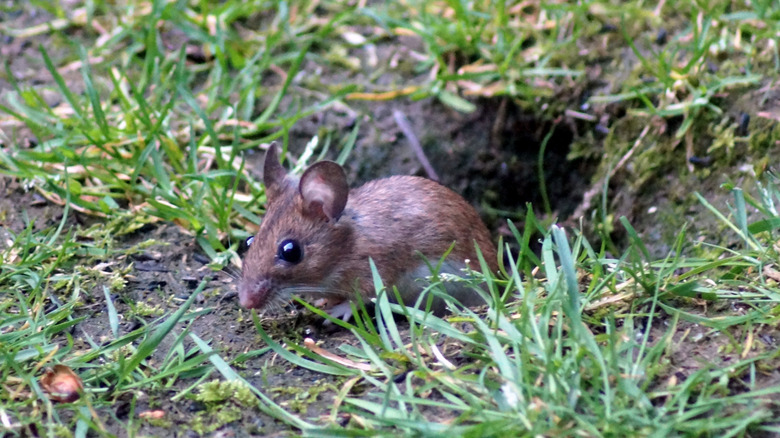
Mice are commonly found in backyards across the United States. Unfortunately, the tiny rodents are prolific breeders and rarely are satisfied with confining themselves to your lawn. Left unchecked, mice will take over your shed, move into your garden, and even take up residence in your home. While a variety of traps and poisons are available for dealing with mice, many homeowners prefer a safer, more humane way to rid themselves of these rodents. Luckily, there are non-toxic solutions, most of which target the rodents' sensitive sense of smell. When used properly, mice in your yard will be a thing of the past with these natural scents.
This approach is successful for a couple of reasons. For one, a mouse's sense of smell is almost four times as powerful of humans. So, many natural scents are either overwhelming or irritating to a mouse's nasal passages. Furthermore, these scents are not just unpleasant to mice, they also interfere with the mouse's ability to find its way, as mice use their sense of smell to help them navigate. There is also no shortage of options, as at least a dozen natural scents will keep mice from your yard. The key is utilizing them properly so they are maximally effective.
Some items that produce strong, irritating, and deterring scents to mice most commonly come in solid or powder form. Cinnamon repels mice, as does cloves, chili, coffee grounds, cayenne pepper, and garlic. To utilize these scents, you can place cinnamon sticks or garlic cloves along trails used by mice or near openings to your house, garage, and shed. Most of these substances can also be used in sachets or as sprayed infusions. Additionally, you can sprinkle powder forms of many of them along mouse trails and borders along fences and exterior walls.
Several natural aromatic oils repel mice

There are a number of strong-smelling natural oils that can also be used to keep mice from your yard. Among the most commonly suggested scents is peppermint oil. A variety of others natural oils, including rosemary, citronella, chili, eucalyptus, and cedarwood, have the same effect on mice. Each of these scents can be deployed in more or less the same way. One common method involves soaking cotton balls in the oil, then placing them in strategic spots around your lawn and garden. Another method involves spraying the oil or a water-based infusion along borders and trails.
While each of these oils can be effective on their own, some pest control experts suggest blending two or more together to form a more potent spray. You can also buy commercially produced versions, such as Mighty Mint rodent repellent, which is made from peppermint oil. Peppermint oil mixed with water and dish soap can even be used to clean and repel mice at the same time. Regardless of application, it should be noted that these natural scents must be reapplied frequently to remain effective, although some of the stronger oils can remain effective for a couple of months.
Vinegar is another common pantry staple that acts as a natural rodent repellent, as is ammonia. While vinegar works to irritate the senses like the other scents on this list, it is believed ammonia also imitates the smell of urine of larger animals which predate on mice. The miniature rodents tend to flee after getting a whiff of ammonia. These natural liquids can be used alongside peppermint or other natural oils are to deter mice or on their own.