

Is It Necessary To Shovel Snow Off Your Deck? Here's What You Should Know
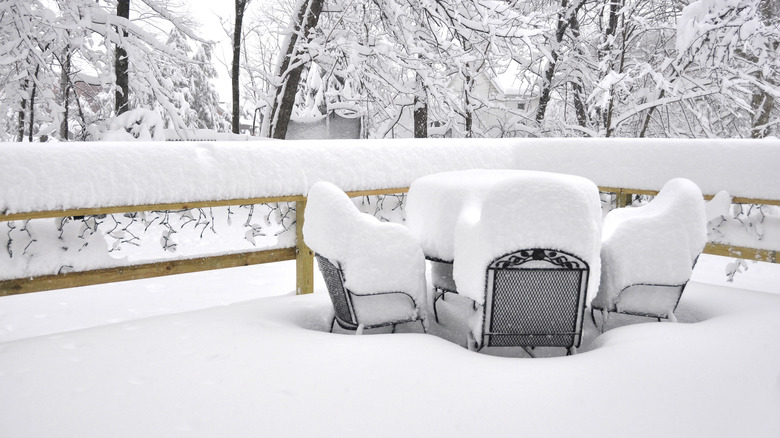
If you live in a colder climate, you're probably no stranger to the frustrations of clearing snow. Depending on the size of your property, you might be subjected to hours of shoveling for each storm that you face, in order to ensure your walkway, driveway, and deck aren't entirely buried under frozen icy slabs. Snow clearing is not only time-consuming, it can be risky if you're prone to heart problems or lower back issues. So, when it comes to shoveling snow, you may be looking for short-cuts. Luckily, you may be able to save some effort — and safely traverse the outside of your home the day after a storm — by not clearing your deck entirely.
Sometimes, shoveling snow off your deck is a necessity which can't be avoided. But, under the right circumstances, you might be able to leave the snow alone and focus on your walkway before adjourning inside for a cozy cup of cocoa. When determining whether this is an option, there are several factors worth considering. For starters, check out the snow: Wet snow can weigh three times as much as fluffy snow. So a thick layer of wet, clumpy can cause structural damage if avoided for too long, or turn into thick sheets of ice when left untouched and temperatures drop. Next consider the actual construction of your deck. Most decks (those built to code) are sturdy enough to handle the added weight of even heavy snowfall, as long as it doesn't accumulate more than about three feet.
Is shoveling your deck a real requirement?
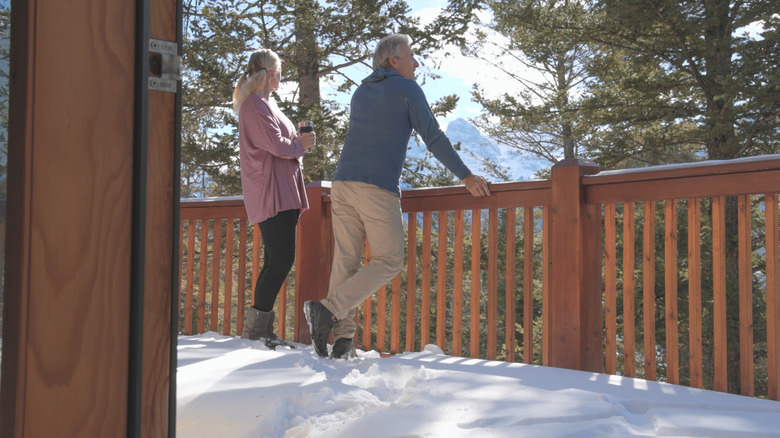
Realistically, your deck should be prepared to handle a snowstorm every now and then. Still, it's important to clear it off if the snowbanks grow to heights of more than three feet. Once snow is high enough to block the whole deck, or eclipse the railing, it can pose a significant safety hazard. Having said that, the vast majority of storms don't tend to drop more than a foot or two of snow in a single evening, unless you live in areas notorious for massive snowfall. Under normal circumstances, you can rely on warmer temperates to do most of the clearing for you, and focus your energy on sidewalks and driveways (which you should shovel often during and immediately after a storm to prevent compaction and ice). If you plan on using your deck in any way in the winter, then you'll want to make sure it's clear of snow and ice.
Even if you choose to ignore your deck, clear out a pathway for safety's sake. You wouldn't want the whole deck iced over, leaving you trapped in an emergency. Use a broom with fluffy snow instead of a shovel to protect your deck. If you're still trying to eliminate as much clearing time as possible, you can probably skip the far corners of your deck, and avoid clearing off your outdoor furniture if you're keeping it out all winter. Truthfully, weight shouldn't be much of a problem as long as your building is up to code. If a bit of snow is all it takes to collapse your deck, you've likely been ignoring warning signs for some time. If your deck is falling apart, you might consider a patio instead. But for now, go ahead and clear the snow to keep things safe.