

It's Time To Stop Believing This Commonly Known Mosquito Myth
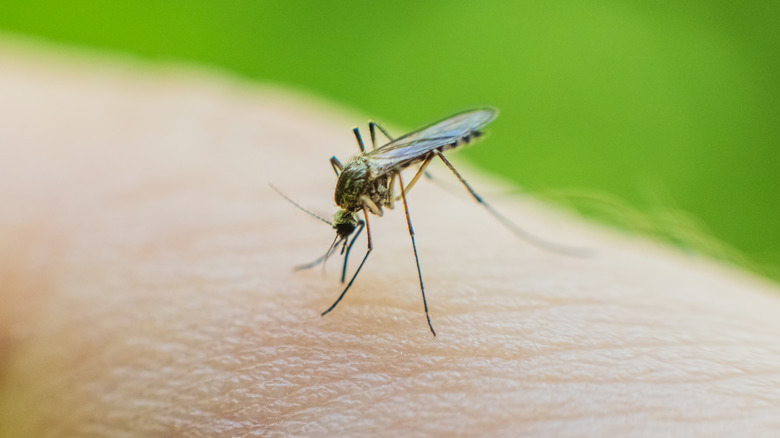
Mosquitoes are a literal plague on humanity. Known as the world's deadliest animal, mosquitoes are responsible for killing hundreds of thousands of people every year by transmitting viruses such as malaria and Zika. Even if you're fortunate enough to live in a country like the U.S. where mosquitoes generally don't pose a public health threat, they're still a nuisance that leave pesky bites that can itch and irritate your skin. In our loathing of mosquitoes, it's easy to get carried away by wishful thinking and believe this commonly-repeated myth: that mosquitoes die after they bite you. Well, we hate to break it to you, but that mosquito is actually going to go on buzzing and breathing after they suck your blood.
It's possible that people who believe this myth may be confusing mosquitoes with honeybees, who do in fact die a grisly death right after they sting you. But mosquitoes do not die after they bite; in fact, there is no limit to the amount of times a mosquito can bite you, and these little bloodsuckers will continue biting and feeding on your blood until they are full. Adult mosquitoes usually live about two to four weeks, depending on the species (and some are far more dangerous than others) and certain environmental factors, with female mosquitoes often outliving their male counterparts. A short lifespan, yes, but certainly not one that will be abbreviated by biting you.
Here's what happens when a mosquito bites you
Male mosquitoes don't bite and are actually harmless to humans and animals, preferring to feed on nectar and water. Female mosquitoes, on the other hand, are out for blood, which they use to source the protein necessary to produce eggs and create more little mosquitoes. When a female mosquito bites you, she pierces the skin using a special mouthpiece called a proboscis, which simultaneously sucks up blood and injects some of her own saliva into your skin.
The saliva prevents the blood from clotting while she feeds, and also temporarily numbs the area so that the host can't feel the bite — allowing the mosquito to go unnoticed and continue feeding longer. A few minutes later, a puffy, itchy red bump will appear, with some people only experiencing a mild reaction, and others having more serious symptoms. When she has had her fill, the mosquito will wait a few days before laying her eggs. Then, she's ready to go on the hunt for more blood again.
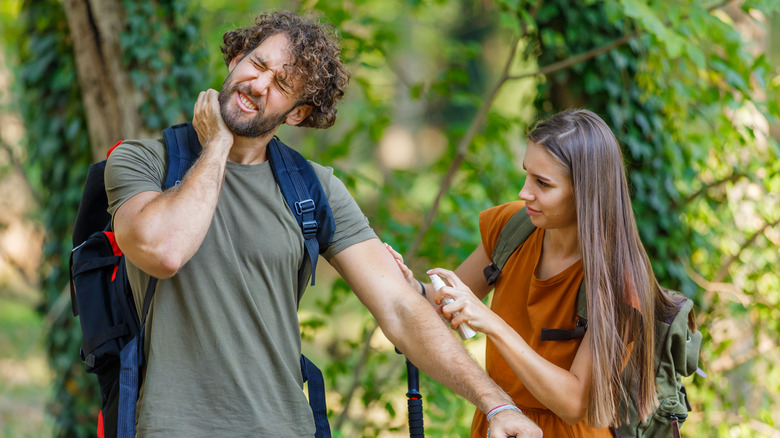
If you want to stay mosquito bite-free, be sure to apply insect repellent and wear long, loose-fitting clothes outside when conditions are ripe for mosquitoes: i.e. in warm, moist environments when temperatures are at or above 70°F. To vanquish mosquitoes from your yard, you can try creating a mosquito trap with the help of a black bucket, water, and oil. Or try using pine needles to naturally repel them; this DIY option not only has a lovely scent, it also happens to contain an element similar to DEET — the synthetic chemical compound used in many commercial mosquito repellents.