

How To Prepare Your Lawn For Heavy Rain

We may receive a commission on purchases made from links.
Heavy rain is often welcomed by gardeners and homeowners, as it can cut down on the need to water lawns and gardens. This is particularly true in times of drought. However, there are times when especially heavy rainstorms are too much of a good thing, particularly if your yard is not ready for it. In order to minimize damage, you should prepare your lawn for downpours by ensuring the water is efficiently absorbed and/or drains away quickly.
Excessively heavy rain can wash away newly seeded grass and cause brown spots and patchy growth to appear in established lawns. A torrential downpour can also erode topsoil. If your lawn remains wet for an extended period of time, the chances of pests, weeds, and infections invading your yard rises dramatically. Such an influx of rain can also cause the soil to expand and choke the root system of your grass, along with diminishing the amount of nutrients in the soil. Additionally, standing water will harbor mosquito larva, leading to an outbreak of these pesky biting insects.
To make sure your lawn is prepared to efficiently drain excess water, check for any low spots that may hold it. Add soil as necessary to raise the level of the low spots, grading the new soil away from your house to help direct the draining water. If you have areas in your lawn that are too large or low to be handled in this way, you may want to consider installing a French drain.
Aerate and dethatch your lawn to help water absorption
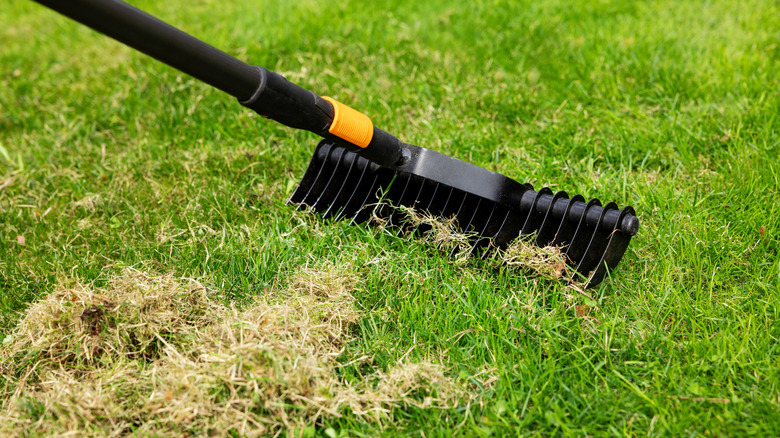
In order to help with the absorption of water, the soil must not be compacted or obstructed. There are two steps to make sure this is not the case — aeration and dethatching, which should both be done as part of your regular maintenance routine anyway. Aeration, which involves punching holes into the soil, prevents the soil from becoming overly compact and increases the stress tolerance of grass. If your lawn hasn't been aerated in the last couple of years, it should be done ASAP anyway
Additionally, dethatching your lawn helps water penetrate the soil and prevents having ponding or standing water in your yard. Essentially, dethatching is clearing the surface of the soil of dead grass and other organic matter. If this material is allowed to remain in place, over time it can create a dense mat. When this happens, rain cannot reach the soil. As a result, it ends up pooling on top of the layer of thatch.
Aeration will help remove thatch, any excess of which may need to be cleared with a stiff tine rake in order to completely wipe away the surface of the soil. All the thatch that has been removed should be picked up from your yard before the rain to prevent it from clogging drains or being redistributed across the lawn.
Other ways to make sure your lawn is ready for rain

Before a heavy rain is also a good good time to clean your gutters. If your gutter is clogged, a heavy rain will likely overwhelm it and cause water to overflow, eroding soil and saturating the lawn below it. On the other hand, a large volume of water can come flowing out of a clear gutter. In order to make sure water flowing from the rooftop doesn't flood your lawn, orientate the downspout in a different direction. Better yet, catch it for future use by directing the downspout into a Good Ideas Rain Wizard Water Collection Barrel or similar containment device.
Finally, mow your lawn before expected downfalls. Allowing your lawn to grow a little longer throughout the year is typically recommended, as taller grass will develop a deeper, more robust root structure that can better handle heavy rain when it comes. However, as a soaking rainstorm is approaching, it's best to trim it slightly shorter to reduce the negative impact of both wind and rain. If you follow all these steps, you should easily avoid any flooding or adverse effects from bad storms.