

Why It's Important To Change Out Your Birdbath Water Frequently
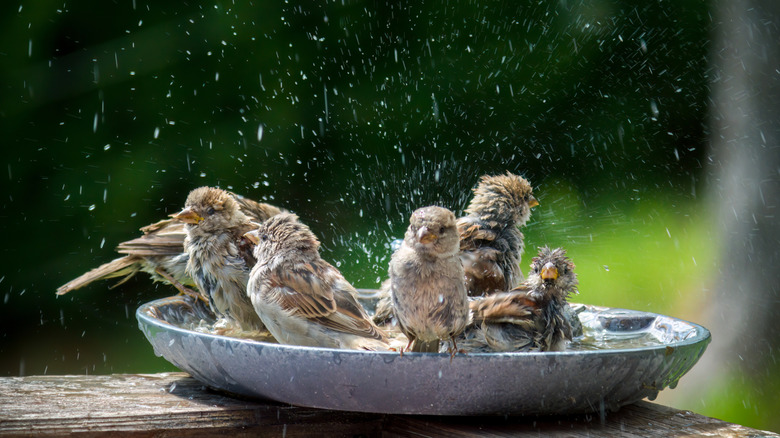
Offering fresh water for birds to bathe in or drink is one of the simple ways to get birds to flock to your yard, the keyword here being "fresh." Though birds may visit a puddle or a stagnant water source they find out in the wild, that doesn't mean that all water is good for them. The same holds true with birdbath water.
That old birdbath water gets funky fast and is potentially full of pathogens. Even if you filled the bath just this week, a busy bath means lots of splashing and the possibility for debris and waste to accumulate. Changing the water frequently means there's also less chance for algae to grow in the bath; plus it's infinitely easier to clean with regular maintenance. Changing the water can also banish mosquitoes from the birdbath preventing larvae from hatching in the water and creating a backyard super highway for these biting insects.
Best practices for keeping birdbath water clean

All kinds of things can end up in birdbath water, including leaves, seeds, and sometimes matter the birds leave behind. On hot days, or any time you notice lots of bird activity at the bath, check the basin to see if it needs refilling. Top off the water as often as needed on a hot day to offer an oasis to birds and other wildlife that could use some refreshment. Dump out any water that appears dirtied by bird droppings or bits of birdseed. Whenever you empty the water entirely, spray the entire basin out with a powerful jet setting on your garden hose to remove any stuck gunk. Using a stiff scrub brush also helps remove stubborn stains, including bacteria you might not see, plus this helps keep algae at bay. Rinse the bath out again after scrubbing it before you refill it with fresh water.
Think twice about keeping the birdbath out in full sun; the water gets too hot for comfort, or could evaporate quickly. Algae also grows faster as the water warms up, so it means you'll have to clean the bath even more often. Giving the bath a thorough cleaning a couple times per week helps ensure a safe environment for the birds and less chance for pests and pathogens to thrive. Don't use harmful chemicals to clean anything wildlife will use. Instead, try scrubbing with one part white vinegar to nine parts water. Rinse it out again, then refill with fresh, cool water.