

Can You Sleep In Your Car At A Rest Stop? Here's What You Should Know Before Your Next Road Trip
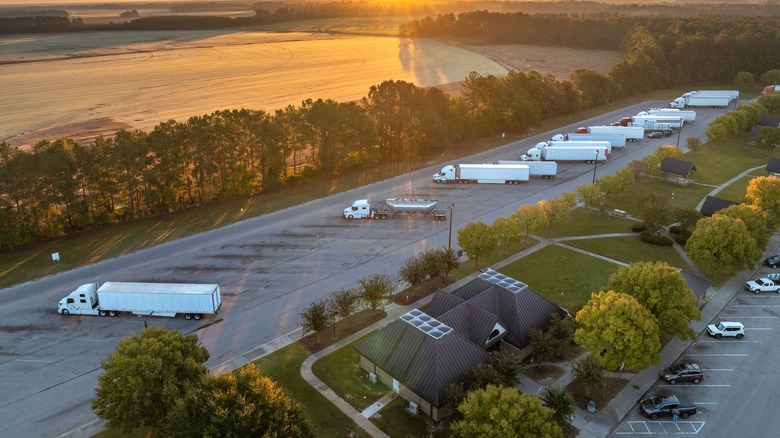
Road trips through the vastness of the United States are a uniquely American experience and offer views of some of the most breathtaking landscapes on Earth. This is partly due to a strong state and national park system, which brings in millions of dollars and sees massive numbers of visitors each year. However, finding a place to stop and sleep while on a road trip can be intimidating and expensive, with truck stops like Love's Travel Stop charging $45 a night. Though catching rest along the road is not confined just to truck stops and hotels. There are multiple places where you can stay the night for free, such as the American rest stop, a state-run-and-funded oasis for travelers to rest and refuel.
When it comes to sleeping at rest stops, the rules vary widely by state. Finding the perfect rest stop in each state is also one of the many secrets you can learn by asking a park ranger. But most importantly, the rules around sleeping at a rest stop are contingent on the distinction between overnight camping and overnight parking, with the camping option prohibited at nearly every rest area. On the other hand, overnight parking is usually accepted, requiring one to stay in their vehicle and keep campers and pop-up tents down.
You should know your state laws and plan ahead for your trip
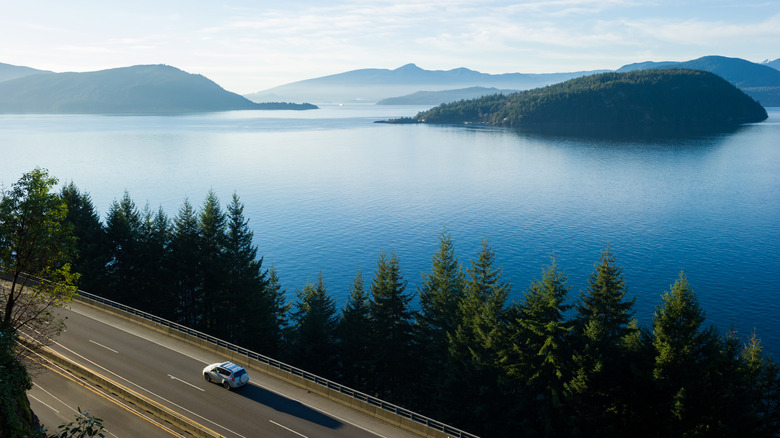
While overnight parking is widely allowed, there are some popular road trip states where it is strictly prohibited. These include Colorado, Minnesota, and Florida, where parking is limited to as little as three hours. Most state websites include rest stop maps and policies regarding overnight stays. So, to avoid a late-night migration to a hotel or truck stop, make sure you check local laws before settling in for the night.
Some of the more lenient states are Alaska, Kansas, and Montana, as they offer the same parking privileges to individuals as they do to commercial truck drivers. For Alaska, much of the focus is placed on emergency shelter as the weather patterns in the state are some of the most severe and volatile. The key when spending the night at a rest stop is realizing the driver's safety-oriented nature of their implementation nationwide. They are all designed to offer a place to catch a quick nap, to stop drowsy driving. Because of this fact, stays are limited to discrete campers, like mini campers, which can be an excellent option for your next adventure, and vehicles. Additionally, having a designated car-sleeping setup can add comfort to an impromptu night spent at a rest stop in states like Montana.
Rest stops offer incredible views, while other free options exist
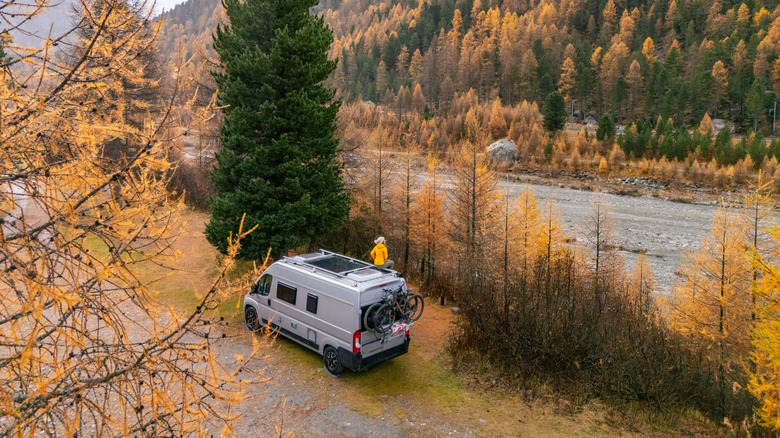
Rest stops are located along some of the most vibrant natural spaces in the country, with several lying in states where overnight parking is permitted. In Utah, a state with no official limit on stays at rest stops, lies the North Bear Lake overlook, a rest stop where one can spend the night while taking in the clear blue water of the turquoise vista. Another rest stop for adventure lovers is the Garden Corners Rest Area in Michigan, where one can stay the night for free, in the forest surrounding Lake Michigan.
While many states have lenient rest stop laws, there are plenty of free camping options for those adventuring through states that ban overnight parking. For travelers in Minnesota who have a taste for wilderness adventure, the state offers free dispersed camping. This policy allows wild camping in any of the state's multiple national forests, but it should be an appropriate distance from a trailhead or pull-off. When doing this, campers must be responsible and sustainable in their tent camping practices. Similar dispersed camping laws exist in Colorado, but allow for RV and trailer camping down rugged mountain roads.