

Why You Should Try Bringing Your Bird Feeders Indoors Each Night
We may receive a commission on purchases made from links.
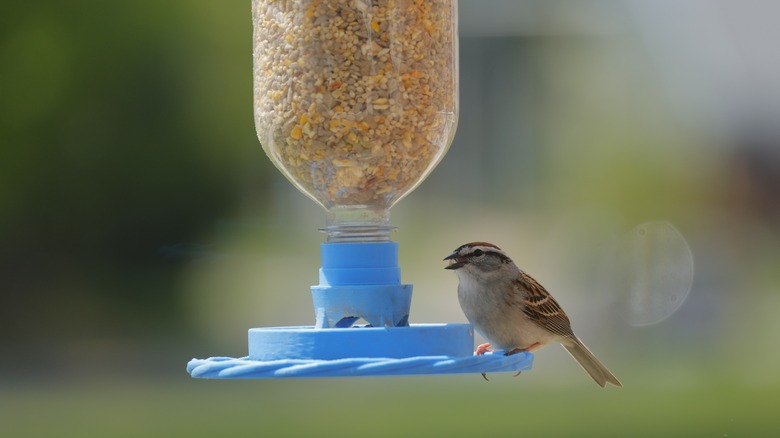
During the day, a bird feeder can serve as a delightful and entertaining food source for your feathered friends, enhancing the beauty and interest of your outdoor space. But after dark, a bird feeder can also trap moisture or sustain damage. Plus, the tasty offerings left in your feeder can lure pesky nocturnal critters like raccoons and skunks, who may make it costly for you to keep your feeders well-stocked for birds. Just as there's an ideal time of day to fill up your bird feeder, there's also a good time to bring it inside: around nightfall.
Pests such as raccoons, who are lured to these feeders, can topple trash cans, chew wires, and ruin your landscaping. A scared skunk feeding on fallen seed and peanuts might spray you or your pet. And larger animals such as coyotes can be drawn to the presence of mice, who feed on discarded seed, posing more significant threats. Finally, you might want to reconsider using a bird feeder if you live in bear territory.
Bringing your feeder inside before daylight recedes not only protects your yard, it also gives you a chance to clean it, preventing dirty feeders from spreading harmful diseases to birds. This is especially key if you have multiple feeders in your yard.
How to clean your bird feeder and keep other animals at bay

Taking your feeders indoors at night can be the perfect opportunity to give them their weekly cleaning to prevent disease. Start by dumping out any old seed, which can harbor mold and bacteria when spoiled. Next, hand-wash the feeder in a homemade solution using one part bleach and nine parts water. Rinse the feeder thoroughly and let it dry completely before refilling it. To sanitize a suet feeder, soak it in warm water with a bit of vinegar and dish detergent for an hour or two. Then, scrub it lightly with a clean rag, rinse it, and let it air dry thoroughly before filling it again.
Aside from bringing your feeders in for the night, there are other tactics you can employ to deter other wildlife from dining from your feeder. For starters, you can relocate it so that it's at least 20 feet from trees or bushes, making harder for squirrels to launch from them onto your feeder. You could also try hanging a baffle, a slippery protective structure, either just above it or below your feeder on its pole to make it more difficult for other wildlife to reach.
Keep in mind that squirrels are very determined critters, especially if food is involved, so if they want to reach the seed you've put out for your feathered friends, they probably will. Instead, you could try making your offerings distasteful for them and other unwanted bandits such as raccoons by spicing the food with some cayenne pepper. Birds won't mind it, but the heat might be just enough to keep other critters from gobbling it up.