

Why Late-Winter Pruning May Be The Key To Healthier Apple Trees
We may receive a commission on purchases made from links.
If you've decided to plant an apple tree in your yard in late fall, odds are you envision branches heavily laden with ripening fruit some day. In order to enjoy such a healthy harvest, your tree requires some maintenance. When it comes to caring for your apple tree, a big part of that is proper pruning practices, completed in the proper season in order to be most effective. It turns out, late winter provides the perfect window for pruning apple trees to ensure they are in good health and yield a good harvest.
There are several reasons why you should prune fruit trees. One major reason is to sustain the tree's health by cutting away any damaged, dead, or diseased wood. The better airflow that results from trimming away excess or too dense branches also promotes good health and reduces the risk of disease. Another goal of pruning is to encourage new growth and ensure limbs grow strong enough to sustain the weight of the fruit. Finally, it allows you to shape the tree and control its height and breadth.
But why should the pruning be done in late winter, heading into spring? At that point, the tree is dormant. So, pruning will not encourage immediate new growth, which could be harmed by freezing temperatures, something that could happen if your prune too early. With no leaves on the tree, you can also see better what you need to prune. And with spring right on the horizon, your tree will be ready to begin healthy new growth as the weather warms. Additionally, by waiting until the worst of the winter weather has passed, the new cuts you make won't be as stressful as they might be if the tree was enduring multiple storms or freeze cycles.
Winter pruning is the perfect time to shape and space your trees
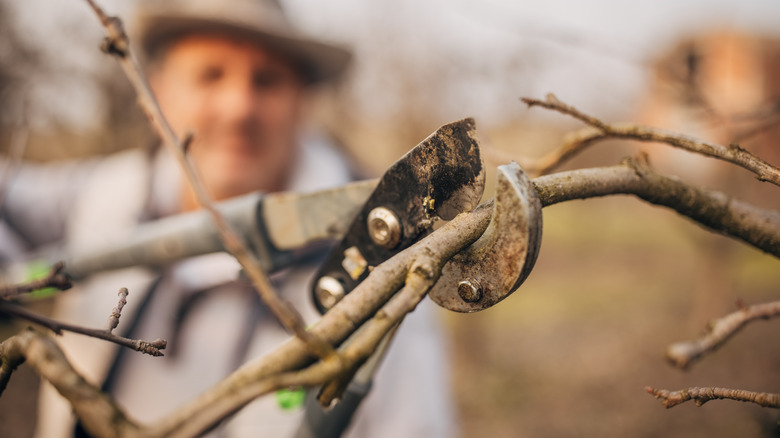
Another advantage to pruning your apple trees at this time is it gives you the ability to shape and train your trees, which will result in better fruit production. For one, you want to make sure the tree does not grow excessively tall, as that places some of the fruit out of reach. So, late winter is the time to adjust the height of your tree before the spring growth spurt. To maintain the ideal height, experts suggest cutting the primary upright limb all the way back to a horizontal limb at the height at which you wish to maintain your tree.
Overall, pruning should aim to remove roughly ⅓ of the tree's branches. While this may seem like a lot, the tree can handle it and thinning it to this point will allow adequate light, airflow, and room for fruit production. Trimming them in late winter, before new growth starts, ensures newly emerging leaves do not impede airflow, which will help prevent mold and disease. To further reduce the chance for stress and disease when pruning, use clean, sharp tools, such as the Fiskar's bypass pruning shears.
With young trees, winter pruning can also be used to create a tiered structure that allows for optimum fruit production. Here, you're working to preserve branches that produce the best combination of vegetation and fruit. Typically, these are those which grow at a slightly upwards angle from the trunk, creating a vase-shaped tree. Doing this before new growth begins in the spring will ensure that sub-prime branches are not drawing energy away from the best fruit and foliage producers.