

If You've Noticed Webs Forming In Your Trees And Shrubs, Here's What You Can Do
We may receive a commission on purchases made from links.
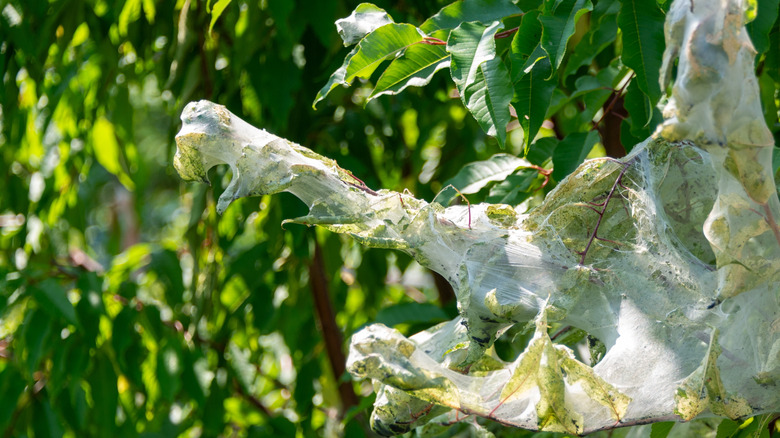
Of all the things Americans look forward to each autumn, the appearance of fall webworm webs covering trees in their yard is not one of them. Each year, however, webs begin covering trees throughout the Lower 48. If you've noticed webs forming in your trees and shrubs throughout the fall, there's no need for panic. There are some things you can do, ranging from attracting predator species to treating trees with pesticides, but you can also choose to do nothing at all.
The critter responsible for these silky, leaf-enveloping webs is actually a caterpillar that's building these structures as a miniature protective ecosystem for its offspring. As larvae hatch from eggs, they attach to the leaves of trees and shrubs. The larva will feed on the leaves contained in the web until they mature and drop to the ground. Although they damage the tree, they rarely destroy it, so if the outbreak isn't overwhelming, you can just allow it to run its course.
Although the webs are actually constructed to provide larval caterpillars a safe place to feed while they grow, the webs can attract predators, as a wide range of bird and insect species prey on these larvae. As a result, one of the non-chemical methods for controlling webworms and their webs is to increase the number of natural predators in your yard. Attracting more birds to your yard won't only help control a webworm outbreak, but it can also help prevent future issues with these seasonal caterpillars, as can improving the general health and wellness of the trees in your yard.
What to do when webworm webs take over
In addition to attracting species that prey on webworms and improving the health of your trees, there are a few other control methods you can employ if you start noticing webs forming in the branches of your trees. These include both chemical and non-chemical measures. One simple, yet time-consuming, method for controlling an outbreak without chemicals is hand-picking the larvae and the webs. To do this, wear protective gloves, pull the entire web nest from the tree with the worms still inside, and destroy it. Typically, this is most easily done by smashing it under a heavy object.
Another non-chemical method involves pruning parts of the tree that are heavily impacted by the webs. Any portion of the tree that has been pruned and is covered with webbing should be destroyed immediately and not added to compost or brushpiles. If the webworm outbreak is widespread, it is unlikely that pruning will be able to remove all of the affected areas without damaging the tree. However, pruning can help greatly reduce the number of worms that will complete the life cycle and lead to future infestations.
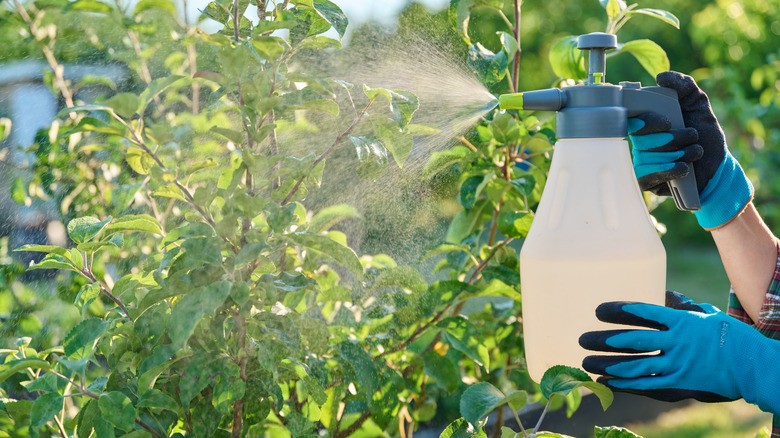
If the amount of webs begins to overwhelm a tree, spraying it with a chemical or natural pesticide may be your best hope. A number of insecticides are available that have been engineered to target webworms and other destructive caterpillars. You can also utilize non-chemical versions such as Wondercide Natural Outdoor Pest Control or neem oil. However, it is important to know that neem oil can be toxic to birds and other wildlife if used in excess.