

Say Goodbye To Rock Salt: Try This Clever Solution For De-Icing Your Driveway
We may receive a commission on purchases made from links.
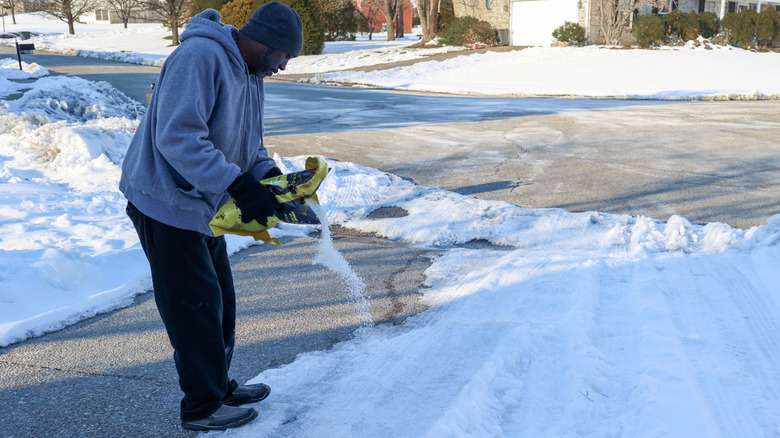
Shoveling snow is one thing; dealing with ice is another. When your driveway feels like you could skate upon it, it's time to break out some sort of de-icing product. Rock salt may be an old-school classic, but it's not always the best product for the job. Another naturally-occurring substance, magnesium chloride, works at lower temperatures than rock salt, so it will actually do a better job as temperatures continue to drop.
Rock salt is simply sodium chloride, which helps melt snow and ice down to temperatures of about 16 degrees Fahrenheit, while magnesium chloride still works down to about -13 degrees, depending on the product. The water-absorbing properties of magnesium chloride also helps it melt ice faster than rock salt, so it's definitely a hack that makes clearing the driveway easy when you're in a hurry to get the job done.
Magnesium chloride is also a bit easier on the environment than rock salt, as rock salt runoff can harm plants. The residual salt gets absorbed into the soil over time, and then plant roots draw it in, which could result in nutrient deficiencies, stunted growth, and other problems for the affected areas of your lawn and plants. Though magnesium chloride is safer for the environment and for pets that walk upon treated areas, it's more expensive than rock salt. Then again, it's even easier to clean up (if it requires any clean-up at all, which it usually doesn't).
Using magnesium chloride instead of rock salt
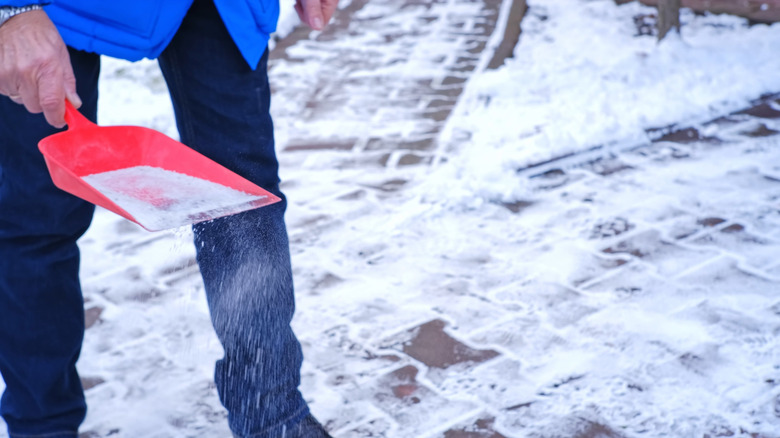
Application instructions may vary a little from one brand to the next, as some magnesium chloride products are flakes and others are pure pellets, such as Trusted Tracks Ice Melt, which should get the job done. For magnesium chloride to best do its job, shovel the area first if there's already snow on the ground. This allows the de-icer to get down to ground level faster. Flakes work well in areas such as the steps leading up to your entry doors. They won't roll or bounce the way pellets might, so it's easy to get them to land and stay where intended — at least on a calm day. If you've purchased a large bucket of any magnesium chloride product and aren't sure how to apply it evenly, repurpose an empty laundry detergent bottle to spread your ice-melt in a manageable way.
Do your best to apply the magnesium chloride evenly instead of leaving small piles of it in random areas. Using more than recommended on the package doesn't mean it'll work faster or better; just follow the guidelines on the package. If you're dealing with extended periods of extreme cold, magnesium chloride may not be the best de-icer for the job. When the forecast predicts well-below-zero temperatures, calcium chloride is the better option, since it works down to -25 degrees Fahrenheit. It's also one of the best ice-melting options for a patio or deck. There is a downside to calcium chloride, however, as its runoff can be especially harmful to grass and other plants.