

Protect Your Home From Flooding With A Simple Lawn Care Task
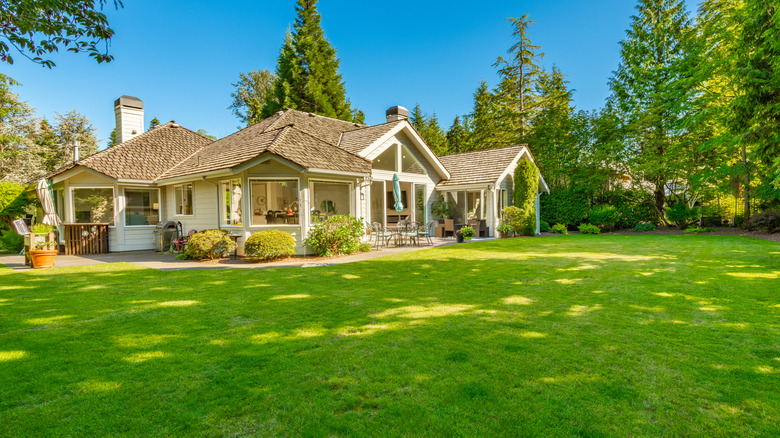
Whether it's April showers or December snows, there's always a risk of flooding. If the water stays in your yard, it's inconvenient and might make more work for you in the long run. However, if the water drains towards your house, it could cause major damage. Standing water can weaken your foundation and lead to moldy siding. You can use native plants to prevent a flooded yard, but that may not be enough if your lawn isn't properly graded.
Lawn grading might sound like one of those secrets only professional landscapers know, but it's actually pretty simple. It refers to the slope of your yard and the direction that water flows. A properly graded lawn will funnel water away from your home and other structures so melting snow and rain runoff won't pool around them. It might also involve leveling or smoothing out divots in your yard to get rid of other areas that are prone to flooding, even if they aren't near your home. If you're unsure where to begin, it's helpful to get in touch with a professional landscaper. While you absolutely can grade your own lawn, a professional will have all the experience and equipment needed to make the process and your yard as smooth as possible.
How to grade your lawn
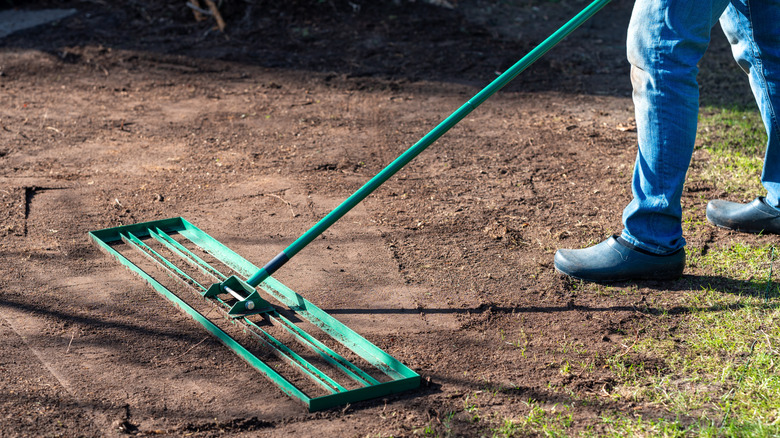
Before you get started, consider what tools and equipment you'll need. If your yard is small or only needs a bit of work, then you may be fine with hand tools. A shovel and something to move soil in, like a wagon or wheelbarrow, will do nicely. If your yard is larger, you may need to rent heavier equipment. Lawn grading is accomplished by moving soil from one area to another, so focus on equipment made for digging and transporting dirt.
If you want to be thorough, you can measure the slope of your yard by securing one end of a piece of string to your foundation and the other end 100 inches away with the string level. Measure the distance between the string and the ground at the far end, divide that number by 100, and move the decimal two places to the right to find your slope percentage. If it's lower than 3%, you're at risk of water collecting around your home. If it's higher than 25%, your yard is too steep and may need more serious work. If you're not concerned with perfection, just mark low areas you want to raise or high spots that need to be flattened. Move soil from high to low, tamping it down firmly so it doesn't wash away. Remeasure your slope once you're done to check if it needs adjusting. If you want, this is also a good time to add a DIY creek bed to help catch runoff.