

Build A Winter Home For Birds And Pollinators With A Clever DIY
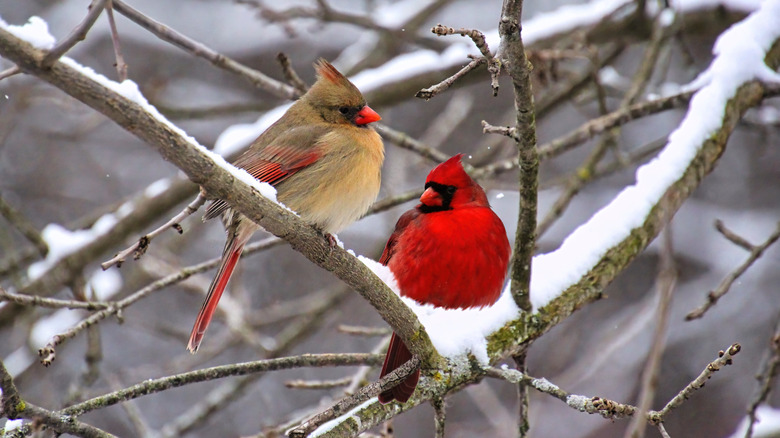
Many of the pollinators you see flitting around in summer don't travel south for the winter; they find cozy places to stay and keep warm, much as you might. Bees, some butterflies, and many birds seek winter housing wherever they can find it — often right in your own backyard. To help these little friends that play a crucial role in plant life, create a simple DIY winter nook for them with remnants of brush piles, yard waste, and even old logs left sitting in the corner of your yard. Not raking leaves in your yard is a good thing, for this reason. Caterpillars such as the orange- and black-striped woolly bear use the leaves as bedding, as do great spangled fritillary butterfly caterpillars. The leaves also provide welcome insulation from cold winds, and as a place that camouflages butterfly cocoons and chrysalides. Other insects burrow in old dried plant stems.
When you're winterizing or 'putting the garden to bed,' think of it as giving your pollinators a place to settle in, too. Every plant stem, seed head, stump, and tree branch left in an undisturbed area of your yard provides shelter and sometimes food when temperatures drop. If you don't want debris scattered across the yard, stack it to create neat, cold-season shelters for beneficial insects and birds. Leaving these elements out in nature will create a winter-worthy wildlife haven.
How to craft cozy winter housing for pollinators

Setting up pollinator-friendly spaces in your yard and garden means leaving several different options for them. Leaving a patch of bare soil exposed in a sunny location could help bumblebees and other ground-nesting species. Queen bumblebees actually spend their winters in loose soil. Hollow stems and twigs are winter homes for quite a few other insects, so leave some of those spent flowers and plants intact. You can even skip some fall pruning; certain plants offer shelter, while seed heads such as coneflowers provide food for birds such as goldfinches. Though goldfinches wear a more drab color in winter, it's still a gratitude-inducing experience to see this bird enjoying the coneflowers even on a cold winter day.
Logs and random piles of old tree branches provide shelter for all sorts of small creatures. Build a loose stack at least 6 inches off the ground with plenty of gaps for wildlife to slip into. Chickadees, a welcome sight in winter, may spend cold days within this makeshift shelter. Other small songbirds appreciate it too. Lightning bugs (aka fireflies) and some butterflies also find areas with old twigs, tree bark, and random natural detritus as a helpful space in winter. Loosely stacked stones leave enough space to provide winter apartments for bees and other beneficial insects. Leaves that accumulate in such areas also house earthworms, beetles, and random insects that serve as food for your feathered friends, turning these sheltered spots into a natural bed-and-breakfast for winter birds.