

Forget Salt: This Old-Fashioned Ice Melt Provides Excellent Traction For Snowy Winters
We may receive a commission on purchases made from links.
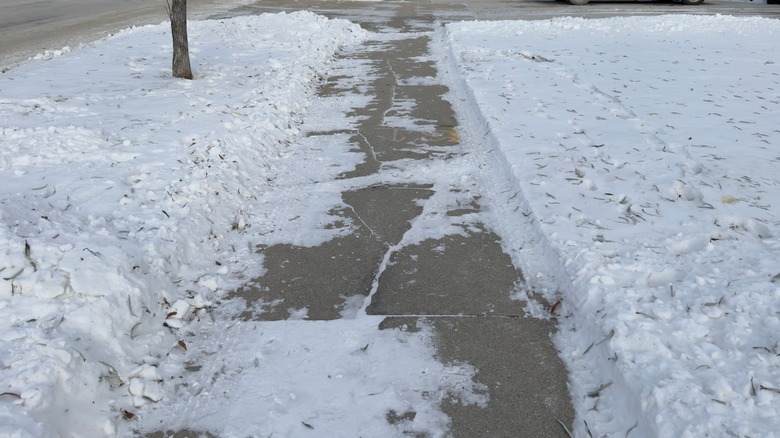
Whenever freezing winter weather is on the way, homeowners go into a flurry of activity preparing their property for the frosty conditions. Among the tasks on the to-do list is to stock up on snow melt in case sidewalks and driveways become covered with snow and ice. If you failed to secure enough snow melt to see you through a winter weather event, it may be tempting to head to the kitchen and grab table salt to de-ice your driveway and sidewalk. However, there are downsides to using salt, as it can harm your lawn as well as your metal and concrete structures. So, forget the salt: wood ash is an old-fashioned ice melt that also provides excellent traction in snowy conditions.
The wood ash that can be used for snow melt is nothing special. Any ash from burned wood will do the trick, apart from ash used in pressure treated wood, which has lawn-harming contaminants. This method works because the ashes contain potassium, which serves to melt the ice. Since the ash does not melt away, it also provides some traction both as it is melting the ice and snow, as well as after the de-icing is complete.
How to use wood ash to de-ice your sidewalk and driveway
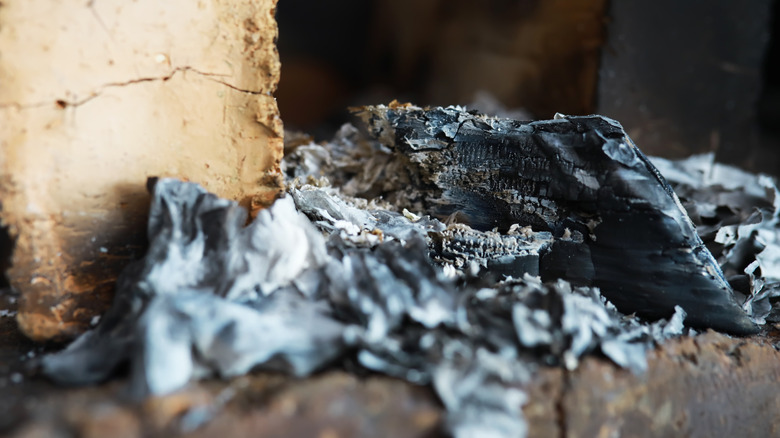
Using wood ash is a simple and clever hack for removing snow from your sidewalk and driveway. The first step is to gather up some ashes. This is simple enough if you have a fireplace, wood burning stove, or a fire pit. You can just scoop the ash and dump it into a bucket or bag. If you intend to use wood ash as a snow melt on a regular basis, you should save the ash each time you clean out your wood burning apparatus. Once you have enough of a supply, it helps to sift through it so that you remove any large pieces or debris. It is also helpful to wear gloves both while gathering the ash, as well as when you are dispensing of it.
Once it is time to apply the wood ash, you would simply sprinkle a thin layer over your sidewalk and driveway using a plastic hand scoop like this one or something similar. Be careful with the amount though. It doesn't take much ash to effectively melt the snow and ice, but too much can actually harm your lawn or nearby plants by adding excess potassium to the soil. Another word of caution – ash can be messy. This is probably one of the reasons it's likely not used more often as a snow melt. So, remember a little can go a long way and wipe your boots off before you come inside. The last thing you want to do is track ash all over your floors.