

Are Mice Taking Over Your Shed? Here's How You Can Get Rid Of Them
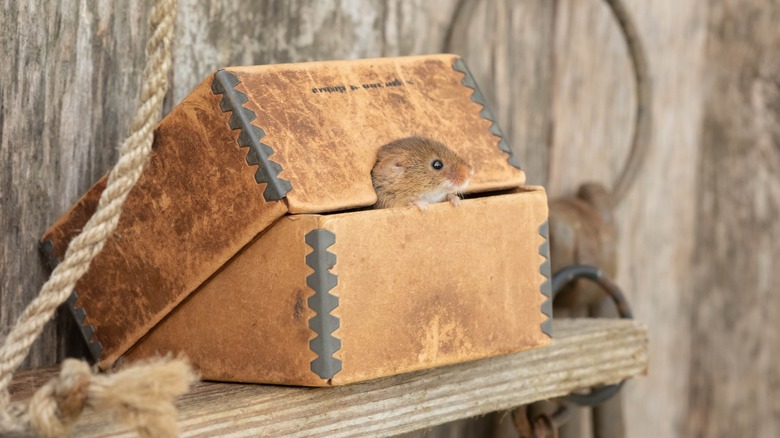
Much like people, mice need food, water, and shelter to thrive. The difference is that most people don't really want to share their resources with rodents, while mice don't mind using human spaces at all. Even if you've done a good job of mouse-proofing your property, you might still find evidence of activity in your shed. It's the ultimate location for them: it's shelter from the elements, it may provide food, and it's fairly undisturbed, especially if you don't enter the shed often. Getting rid of shed mice requires preventive and remedial measures, removing or securing anything food- and shelter-worthy, sealing gaps that allow them to come and go, and repelling them so they no longer enjoy the location.
The entire process may take some time, depending on how cluttered the shed is, but in the long run, it'll be worth it the next time you visit, and the space is mouse-free. As a bonus, your efforts could keep other pests out as well. Mice could be one of the things attracting snakes to your yard, so by getting rid of them, you might get rid of the reptiles, too.
Remove the things attracting mice to the shed
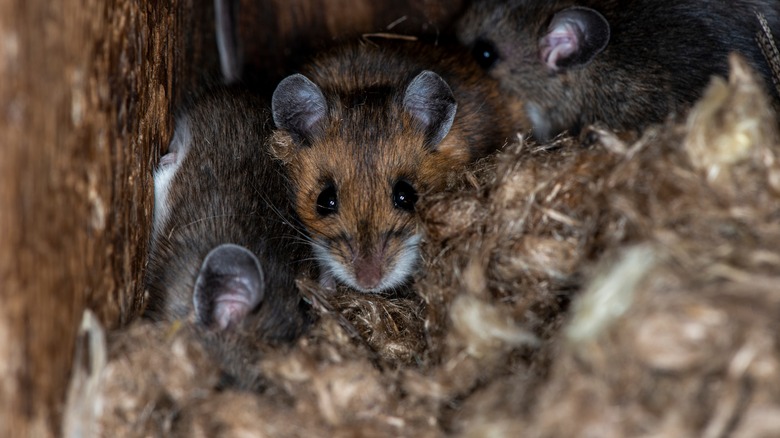
Mice often chew on paper products and cardboard, as small bits make nice nesting materials. If you store items in cardboard boxes, switch to durable, airtight plastic containers, as they're far more mouse-proof. The same holds true for pet food, bird seed, and even grass seed stored in the shed in their original bags. Switch to plastic bins, and make sure the lids are secure, so they cannot push them up to get inside.
Remove scrap cardboard and unnecessary clutter lying around, as well dried leaves that made their way into the shed. Leaves make good nest material. If you have fabric-based items stored in the shed, check them thoroughly. If you've seen evidence of mice within the shed, these creatures could be hiding within the layers of your stored materials. Fabrics, cardboard, and paper items also tend to absorb odors, so if mice have spent any time on these materials or found them as handy bathroom locations, there's a good chance the shed smells. Removing these items should deter the mice and help eliminate the odor.
Mice may live in wood piles and other debris. So, cut back tall weeds or grass that may be growing around your shed. And don't leave pet food bowls outside, as this could attract mice and other wildlife. Take a break from refilling your bird feeder, as spilled seed attracts all sorts of animals. Ultimately, if there's nothing that's attracting them, they'll likely move on.
Keeping mice out of the shed with sealants and repellents
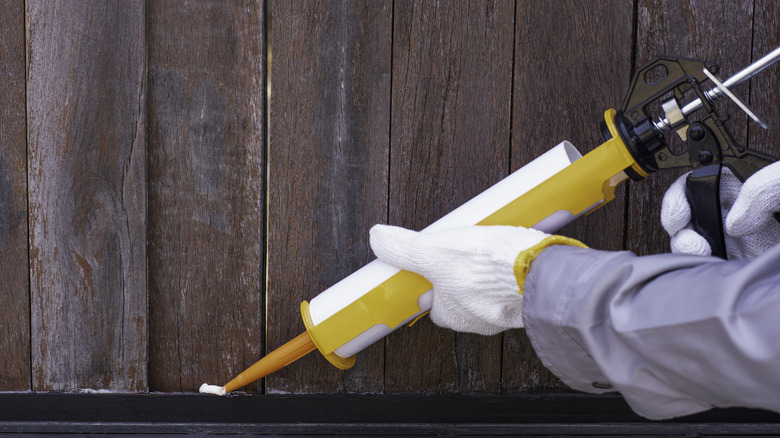
Almost any gaps where daylight shines through are big enough for a mouse. A dime-sized hole, potentially even smaller, is all it needs to enter a shed or any structure, really. Work your way around the shed with some caulk to seal small gaps and use expanding foam in larger holes. These gaps are also issues that could attract wasps to the area, too. Use weather stripping to seal cracks around the door or windows (if your shed has windows). Fix damaged areas of the roof and use hardware cloth with a small hole size to cover roof vents and other entry points.
Apply peppermint or eucalyptus essential oil to cotton balls and place them in and around the shed, as scent is a well-known way to repel mice. You can also mix water and peppermint oil in a spray bottle and use it around the perimeter of the building. With either method, scent wears off, so reapply it every week or two, and after it rains. You could also plant mint nearby to deter the rodents from your shed. For another all-natural option that also looks lovely, plant daffodils to keep mice away.