

Why You Should Avoid Using Boiling Water To Keep A Birdbath From Freezing
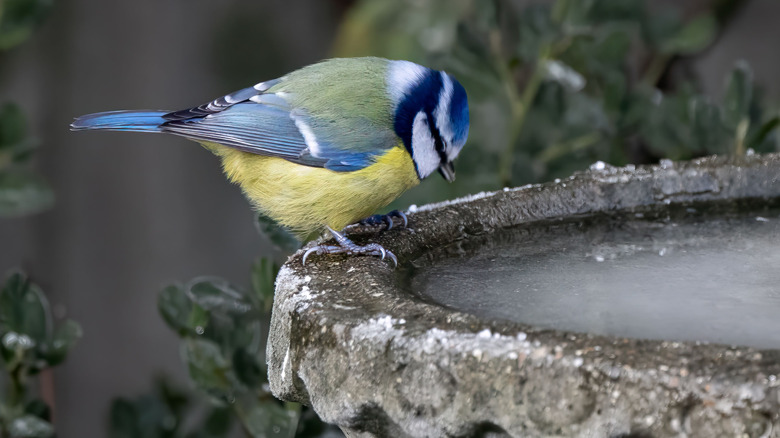
Having a birdbath in your yard is a great way to attract birds, butterflies, and other wildlife to your garden. During winter, drinkable water is an important resource for all kinds of critters, as many water sources will freeze and be inaccessible until spring. There are simple birdbath upgrades that prevent freezing, but they won't help much if your birdbath is already frozen. It may seem like a simple solution to use boiling water to warm it up, but it's actually a potentially devastating idea.
Boiling water will certainly melt any ice that's already formed, but it can also cause your birdbath to crack or even shatter completely. Sudden temperature changes, like going from ice cold to burning hot, can cause materials like porcelain, concrete, plastic, and ceramic to shrink or expand rapidly. In mild circumstances, this can cause stress fractures or other small cracks, but in extreme scenarios the damage can be more severe. You might be familiar with how glass can break if it's too cold for hot liquid, but even tougher substances like stone and concrete can be damaged by sudden temperature changes (officially called thermal shock). Even if your birdbath doesn't completely split in half, you may still end up with structural damage and microfractures that can leak water and worsen over time. While you can fix cracks in a birdbath, it's better for you and your feathered friends to avoid causing them in the first place.
What you should use instead of boiling water
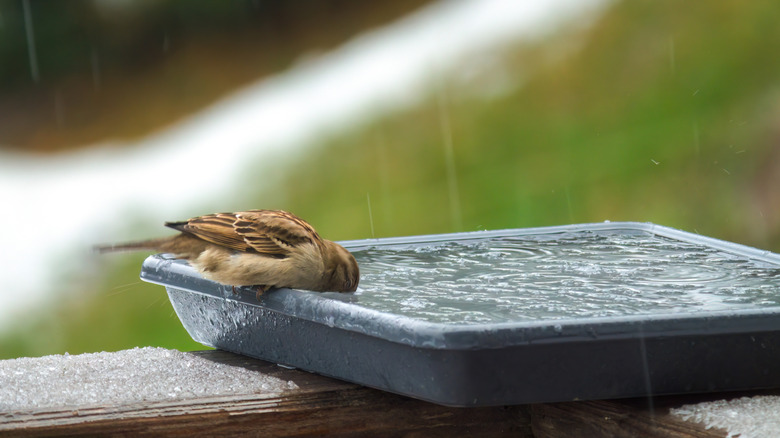
There's a hack you can use to prevent your birdbath from freezing with a tennis ball, but if you don't have one (or need it to play tennis), there's a simpler way. You can, in fact, use water to melt the ice on your birdbath or prevent ice from forming, but it needs to be warm, not hot. Run some warm water straight from the tap rather than heating it on your stove or microwave. It should be just warm — if you can't comfortably touch the water, it's too hot. It may seem like the water isn't warm enough, but remember that you're comparing the temperature to ice. Even room temperature water will be significantly warmer than your birdbath in the dead of winter.
If your birdbath is not frozen, mix a little warm water into the water already in the birdbath. That will raise the overall temperature and keep it thawed for a bit longer. This trick works particularly well if freezing temperatures only happen in the morning. Add the water a little at a time rather than all at once. If you're trying to melt ice that's already formed, pour some of the warm water over it. Let it sit, then add a little more. The goal is to raise the temperature gradually. The ice will melt more slowly, but you won't crack your birdbath. Finally, if freezing temperatures happen mostly overnight in your area, consider emptying your birdbath in the evening and refilling it each morning as the sun thaws things out.