

How To Propagate Zebra Plants In A Jar Of Water (And Grow Them Outside If You Live In The Right Climate)
We may receive a commission on purchases made from links.
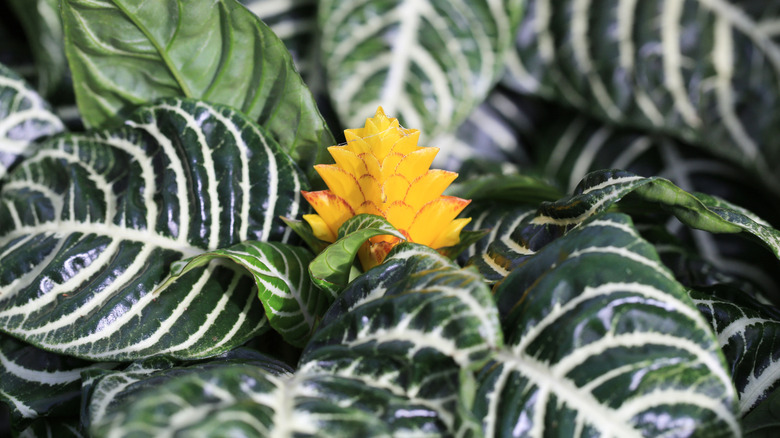
Aphelandra squarrosa, commonly known as the zebra plant, is celebrated for its dramatic dark green leaves, which are streaked with eye-catching white veins. While it's not a fuss-free plant and can be a bit temperamental, its lush foliage and pineapple-looking, long-lasting blooms make it worth the extra care.
Native to tropical parts of South America, it thrives in warm, humid environments and can bring a touch of exotic greenery to your home year-round. When the weather is warm enough, you can use it to brighten and add interest to your yard, porch, or patio. For more experienced plant owners, it's a manageable houseplant: It's slow-growing and only reaches a modest size of about 1 foot wide and 2 feet tall. Its compact stature allows it to flourish in even the tiniest of spaces, making it a versatile choice for your home. Another advantage is its accessibility: You can find zebra plants at big-box stores and nurseries alike, so you don't have to go to a specialty flower shop to get one for yourself.
Another appealing feature of this plant is how easy it is to propagate. With just a few supplies — a pair of scissors, a clean container of fresh water, potting mix, a planter, and, optionally, some rooting hormone — you can easily propagate new plants from cuttings. This makes zebra plants an ideal choice for expanding your collection or sharing some greenery with friends and loved ones.
How to grow zebra plant cuttings
There's every reason to propagate a zebra plant — after all, one healthy stem can develop into an entirely new plant. For the best results, however, wait until spring to get started so your cutting will have the best chances of survival. Use a pair of clean scissors to snip off a 2- to 3-inch young stem that has a leaf. Make the cut just below the leaf node where the leaf joins the stem. A light dusting of hormone rooting powder on the stem's tip will encourage better root development. Use a knife or scissors to shave a bit off the stem, and place the edge of the cutting in a small but wide container of distilled water, such as a short glass or jar. Make sure the leaf is above the water's surface to promote growth but avoid rot. Provide the cutting indirect sunlight, and change the water every three to four days; otherwise, algae could develop and sicken your cutting.
You can move it to a pot once roots begin to develop, or you can wait until you see a fresh leaf or two, which might take up to a month. Then, transfer your baby zebra plant to a pot filled with well-draining, nutrient-rich potting mix. Place the planter in indirect sunlight and water your new plant regularly. It'll grow best in a humid environment; you can provide this by putting the plant on pebbles in a tray partially filled with fresh water or by spraying it lightly every day. Keep the soil moist but never soggy. If you live in USDA hardiness zones 11–12, you can relocate your established zebra plant outdoors if you like. Place it on your patio or porch, or transplant it directly into your garden to fill your yard with lovely and happy tropical flowers.