

How To Successfully Use A Suet Bird Feeder During Winter
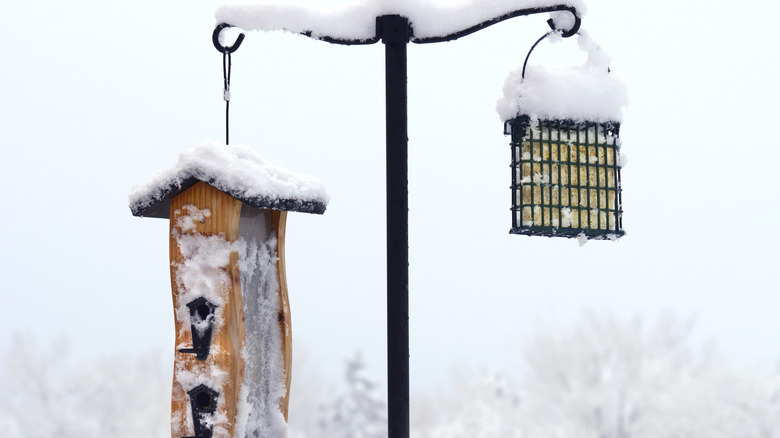
We may receive a commission on purchases made from links.
Feeding birds in winter helps your feathered friends stay nourished at a time when food such as seeds and insects are scarce. Filling your bird feeder is one hack that'll bring birds to your yard, but a suet feeder can be even better for winter bird feeding. That's because suet feeders aren't as messy as seed feeders, and they offer more complete nutrition due to the extra fats used to make the mixture. Much like seed feeders, however, you still need to ensure the safety of your birds by squirrel-proofing or even bear-proofing your feeder.
Like seed feeders, a suet feeder should be kept clean and hung in an area that's out of direct sunlight about 5 or 6 feet off the ground. You should also hang them from a tree or and fairly close to one. Only use suet feeders that prevent birds from touching the suet with their feet, as the fatty residue could end up on their feathers.
Best practices for using suet-filled feeders in winter
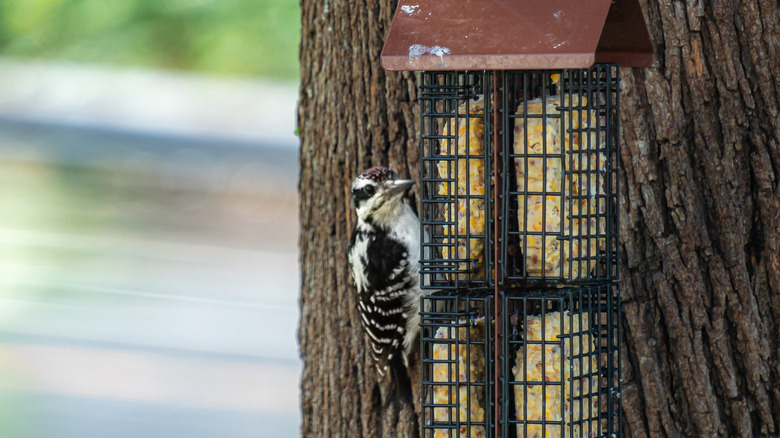
Suet is made of high-quality fats and often seeds or dried fruits that birds love, but it doesn't have an infinite shelf life. Those fats can go rancid or melt. If birds haven't eaten the suet within a week or so, it's time to toss it. Suet cakes can sometimes last a little longer if the weather stays below freezing, but it depends upon the suet's ingredients. If you bought it at a store, check the package for safety precautions.
A quality cage-style suet enclosure will help keep the suet off of the birds' feathers while also preventing squirrels and other animals from eating the entire suet mass. An extra baffle design such as the Kingsyard squirrel-proof suet feeder prevents pesky mammals from accessing the suet at all, yet it allows smaller and woodpeckers to safely reach the suet. Hang the suet bird feeder somewhat near other feeders so birds will notice it. Many of the birds that enjoy suet are types that stay near trees, rather than forage on the ground, so hanging it in a tree will be a great way to attract them to your yard. Chickadees, nuthatches, wrens, and woodpeckers are just some of the varieties that will appreciate the suet snacks you leave out for them.
Wash the suet feeder regularly with soap and hot water, then allow it to dry before adding more suet. Stick with firm suets rather than ones that feel mushy or greasy, as the soft fats can turn into oily residue that gets stuck on the birds' feathers. Since birds can't remove greasy substances from their feathers on their own through preening, the feathers could be permanently damaged. Birds also need clean feathers to prevent hypothermia. The softness of the fat is one of multiple reasons why bacon grease shouldn't be used in suet feeders.