

Want Gorgeous Coneflower Blooms In The Spring? Here's What To Do Now
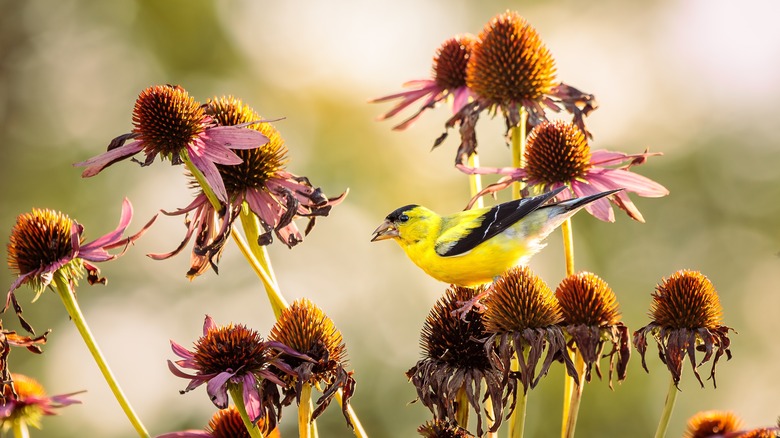
Coneflowers (Echinacea spp.) are a staple in gardens for many reasons. They're native to North America, thriving as perennials in USDA Hardiness zones 3 through 9, and bloom from late spring until at least late summer, and at times even until the first frost. Their blooms attract pollinators, which means you may see butterflies in your yard when coneflowers are in bloom. After the blooms are spent, they're also a favorite for birds such as goldfinches and chickadees that visit the seed heads to tug out the tiny seeds tucked within. Though coneflowers are one of many low-maintenance plants that are great for beginning gardeners, they still benefit from cutting back. As far as blooms are concerned, it can be beneficial to deadhead some of them throughout the season once they're spent to promote blooming all through the growing season.
Both fall and spring are safe times to cut them back to a couple inches above the ground, which leaves room for fresh growth and abundant blooms next season. The good news is, it's also one of those plants you can skip pruning in fall. It's often better to do nothing to your coneflowers in fall or winter if you want to support local wildlife. Besides the birds that visit for food during the cold months when it's fairly scarce in nature, leaving coneflowers intact provides shelter for insects, including pollinators that are beneficial to your garden.
If you do decide to cut them back in fall, the plant will still come back next year. Cutting them down before they go to seed, or shortly thereafter, is also a way to prevent them from reseeding in other parts of your garden. Cutting coneflowers back also allows more airflow for when the new growth starts coming in.
How to safely cut back coneflowers
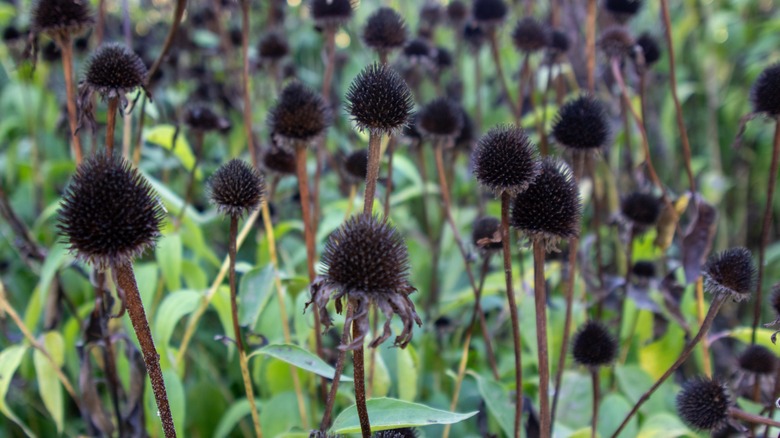
Whether you're in the "leave them up all winter" or "cut them down in fall" camp, a proper cut-back session in fall or early spring helps keep these perennials healthy for new growth. With pruning shears or even the hori hori knife that gets rave reviews on Amazon, make sure the cutting surface is clean, then cut the stem down to a couple inches above the ground. Stray echinacea stems may be brittle enough to snap off, but if maintaining them in bulk, use shears or a knife blade for less effort.
If you're cutting back your coneflowers in spring, be careful not to cut any new growth popping up among the dried stems. If you see any signs of disease, cut the plant back in fall. Aster yellows, a disease that affects the shape and growth of coneflowers and numerous other plants, is one such problem that could spread to other plants. Cut down the echinacea and also remove the entire plant, root and all, because there is no cure for the problem and it could spread. If it only affects one of many coneflowers, just remove the affected plant, but check the others regularly next season.