

This Strong-Smelling Perennial May Be The Reason Bears Keep Visiting Your Yard
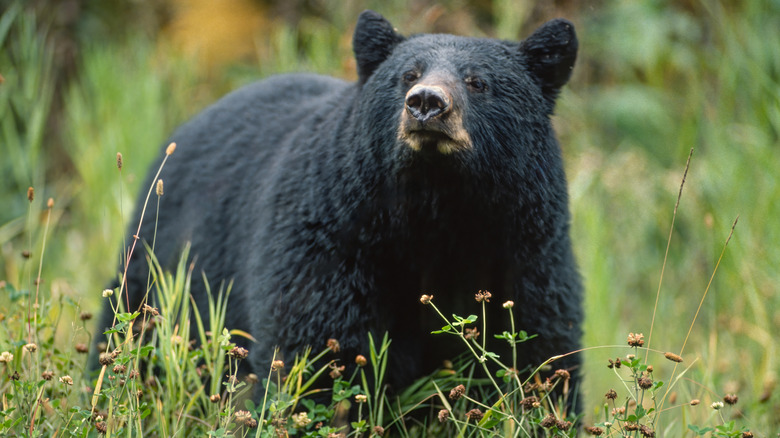
Bears are magnificent creatures ... from a distance. But sometimes bears amble into your campsite or yard (a thousand Nextdoor home security videos can't be wrong). You might know what to do if you hear a bear outside your tent, but what if a bear is right outside your home? You should stay indoors and make a lot of noise to scare the bear away, but once it's gone you may be wondering why it ventured into your yard in the first place. The answer might be found among the plants in and around your garden. Particularly skunk cabbage, which bears love, particularly in the spring.
In fact, the answer is usually food. Keeping your trash locked away might be common sense, but bears may also be attracted to any natural food sources growing in your yard or garden. One of their more unassuming food sources is a perennial called skunk cabbage (Symplocarpus foetidus), a plant that earns its name through the rotting meat smell it gives off. It may not smell good to us, but bears love this native perennial.
It is one of the earliest plants to emerge in late winter and early spring, when there aren't many other plants for hungry bears to snack on. The fresh, young leaves are a vital source of calories when bears are first waking up from hibernation, so it makes sense that a bear might risk getting close to humans for a snack, especially if there aren't other food sources nearby. Since the plant is a natural laxative, it may also help to get bear's digestive system moving again after months of hibernation.
Should you remove skunk cabbage from your yard?
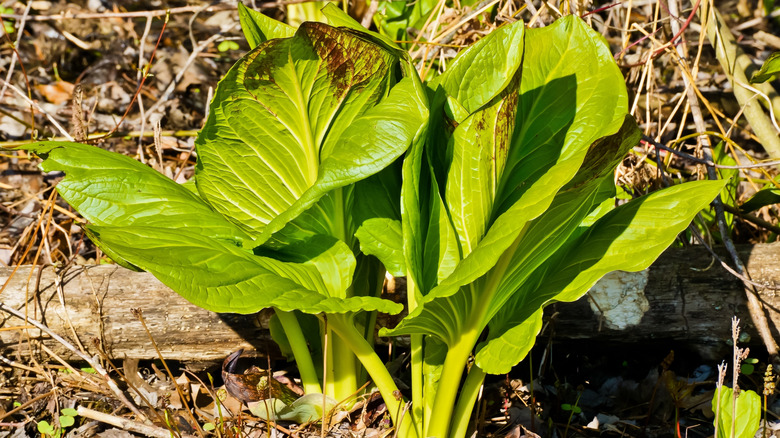
If you've had a problem with bears wandering into your yard, it may be a good idea to remove the skunk cabbage. This is especially true if you have kids or pets that might not be able to get inside quickly enough. If you don't live in bear country, it may not be worth the trouble. Skunk cabbage is native to much of the U.S., and it has strong roots that can make it a challenge to get rid of. In fact, with the amount of soil the roots cling on to, it can feel like a sisyphean task to remove. In those cases, using other techniques to keep bears away from your home may be enough to discourage a bear from coming any closer if the plants are neart the edge of your property. Alternatively, you might decide that, in early spring, your yard belongs to the bears. Just don't leave trash out where it can tempt your ursine neighbors.
If you decide to get rid of the skunk cabbage, you have a few options. While hand-pulling is tough, you can dig up the entire plant using a shovel or a long-handled weeding tool. Cutting the plant down to prevent it from producing seeds will limit its growth, and a targeted herbicide can help kill the stems after cutting the plants back. Be sure to use the herbicide as directed to avoid overdoing it. If you live in bear country, but can't remove the skunk cabbage, consider putting up a fence between the plant and your home. Bears can climb fences, but they mainly do so to get to food or water, so a fence combined with regular bear-proofing measures can be effective.