

The Fragrant Blue Perennial That'll Attract Hummingbirds And Deter Deer
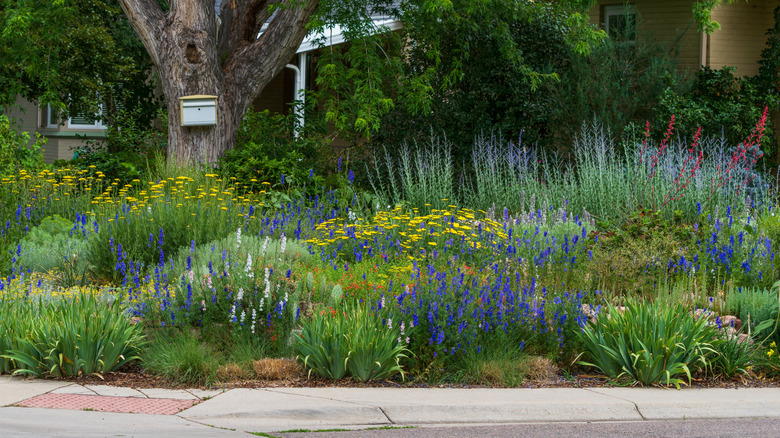
If you want to keep deer from snacking on your plants, you have a few options. You can try a hack like this DIY milk spray or add a fence, but if you don't have the time to spend on projects like that, consider planting naturally deer-resistant flowers. Blue anise sage (Salvia guaranitica) fits the role perfectly, as deer find it unappealing. Moreover, it's drought- and heat-resistant, making it a pretty sturdy plant for novice gardeners. Much like its cousin, the striking scarlet sage, hummingbirds are also a huge fan of this plant. With fragrant foliage and tall stems of deep blue flowers that appear from summer through fall, blue anise sage adds plenty of sensory appeal to your garden.
Caring for blue anise sage is easy, as long as you set it up for success. It is a tender perennial, meaning it is sensitive to colder temperatures. If you live north of USDA hardiness zone 8, you'll need to either grow this plant as an annual or plant it in a container and bring it indoors during winter. You can also select a more cold-hardy cultivar, such as "Black and Blue." Keep your blue anise sage in full sun for the best flowers and healthiest stems, and water it regularly whenever the soil dries out.
Adding blue anise sage to your garden
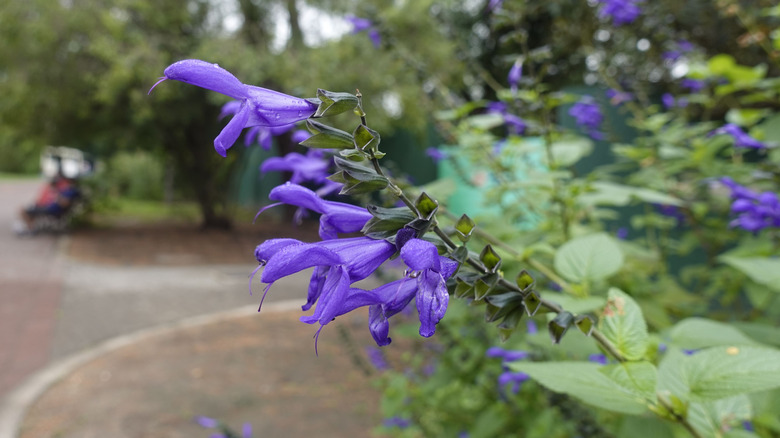
Blue anise sage fits into a variety of garden types. Its popularity with bees, butterflies, and hummingbirds makes it a common choice for pollinator gardens, but it is also a good fit for cottage gardens. The taller flower spikes also make it an excellent choice for planting along garden borders, beside fences, and at the tops of walls. Blue anise sage spreads slowly, and it will fill a space over time. While it is not listed as invasive, it is also not native to the U.S. Keep an eye on your plant to prevent it from spreading beyond your garden, or plant it in a container to stop it from escaping.
You have plenty of options when it comes to companion planting. While blue anise sage is lovely on its own, you can pair it with many other beautiful flowers for a stunning arrangement. Other tall flowers, such as Russian sage and English lavender, look lovely alongside it, and you can add native flowers such as black-eyed Susans and cone flowers to further support your local birds and pollinators. For potted gardens, consider container-friendly crocosmia plants, another favorite flower of hummingbirds.