

The Remote US National Park That Sees Only A Handful Of Travelers Each Year
We may receive a commission on purchases made from links.
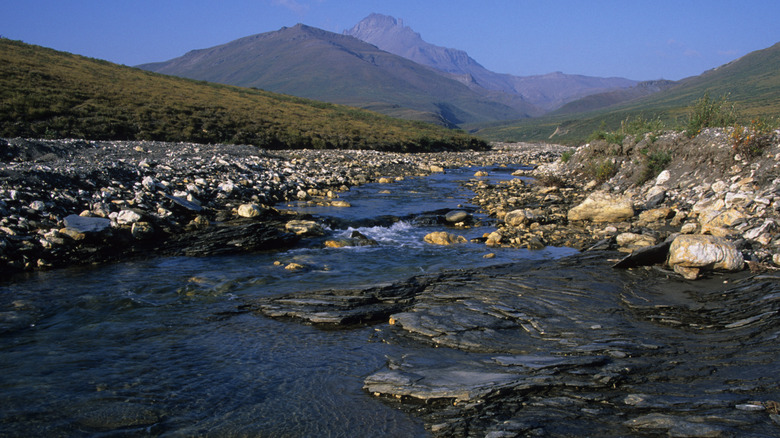
There's a good chance that Alaska's Gates of the Arctic National Park and Preserve isn't on your national parks bucket list. After all, it isn't among the nation's most popular national parks. In fact, according to CNN, it ranks dead last in total visitations among America's 63 national parks, attracting fewer than 12,000 visitors annually. By contrast, the most visited location, Great Smoky Mountains National Park, draws over 13 million visitors each year. However, the lack of people spending time in Gates of the Arctic National Park has more to do with the park's location and accessibility than the available recreational opportunities.
As the northernmost U.S. national park, Gates of the Arctic is situated near the Arctic Circle. As if its far-north location wasn't enough, adding to the complexity of accessing the park is the fact that there are no roads leading to it. So just getting to Gates of the Arctic feels like an epic adventure. Those who set their sights on reaching the park have three options: hike, boat, or fly on an air taxi. Flying is the quickest and easiest way to get to the park. This involves taking a small plane from Fairbanks to one of the small villages closer to the park, such as Anaktuvuk Pass, Bettles, or Coldfoot and taking an air taxi into the park from there.
Hiking in isn't for the faint of heart, as no established trails lead into the park and water crossings are necessary. Proper timing and planning are necessary to make the trek safely. Also keep in mind that two dangerous types of bears, brown and black, call the park home. So it is a good idea to carry bear spray and know how to use it, along with following other bear safety practices, such as making noise to avoid bears as you hike.
Things to do in Gates of the Arctic National Park
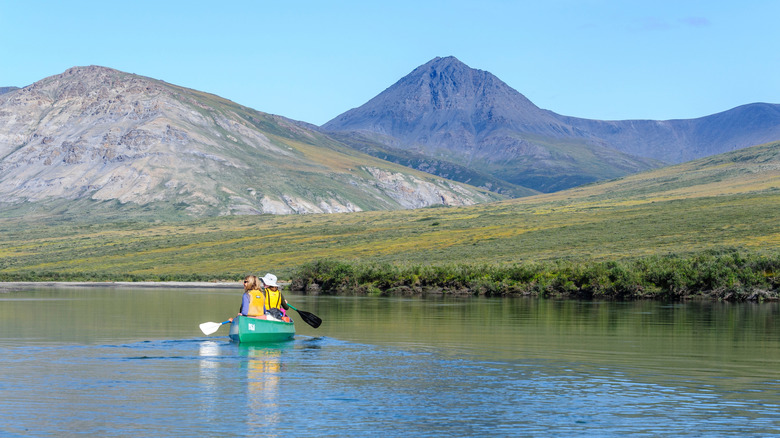
Once you safely reach Gates of the Arctic National Park, you will have no shortage of outdoor recreational opportunities as you explore the park's nearly 8.5 million acres. What you won't have are amenities or cell service. Those who aren't comfortable with such a remote, rugged trip have the option of either booking a day trip or a guided overnight trip with an approved tour guide or outfitter.
Those who plan to camp on their own will need to pack food, gear, and supplies to last beyond their planned stay in case of weather delays or other emergencies. It is also imperative to bring a satellite communication device. Satellite phones such as the BlueCosmo Inmarsat are good to bring, along with a backup device such as the Garmin inReach Mini 2 Satellite Communicator. This is the epitome of wild camping, as there are no established campsites within Gates of the Arctic. Given the pristine condition of the park, follow Leave No Trace Principles and plan to move campsites every few days to lessen your impact on the ecosystem.
Beyond camping, you can adventure along Gates of the Arctic's several rivers, half a dozen of which have been designated as Wild Rivers. Visitors can float or paddle these rivers, as well as the numerous lakes in the park, utilizing inflatable rafts, canoes, and kayaks. These same waters offer outstanding fishing for grayling, char, trout, sheefish, and pike. Wildlife-watching and birding are also popular, with nearly 150 bird species, including bald eagles, regularly spotted in the park. Arrigetch Peaks is a popular location for climbing and mountaineering, and there are countless miles perfect for hiking throughout the park. Gates of the Arctic is also a great spot to view the Northern Lights.