

The Rusty Nail Myth To Stop Believing When It Comes To Lemon Trees
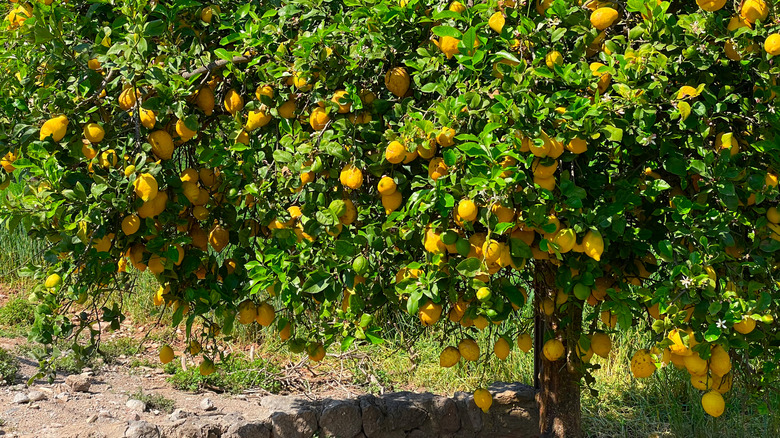
Lemons are a popular fruit tree, and one of the best fruit trees to grow in small spaces. If your lemon tree used to offer a great harvest but stopped, you might be willing to try anything to get it to start again. One unusual bit of advice you might have heard is to hammer a rusty nail into the trunk. Some gardeners swear by this hack, but does it actually work? Technically yes, but that doesn't mean it's a good idea.
Hammering a rusty nail into the trunk gives your fruit tree a jolt of stress. It essentially goes into survival mode, producing lemons so that it has seeds to spread. However, this doesn't fix the problem in the long run. In fact, it can make everything worse. If your lemon tree is already struggling to the point that it won't produce fruit, increasing the amount of stress it's under and forcing it to use a burst of energy to bloom is only going to weaken it further.
Puncturing the bark of the tree is also dangerous. Bark protects trees from insects and diseases, so opening a hole for them to enter through puts your lemon tree more at risk. Healthy trees can usually recover from this, but stressed trees have a harder time fending off pests and disease. Not to mention, if the lemon tree becomes sick enough that it needs to be removed, the nails can cause serious problems for the worker responsible for cutting it down. Chainsaws and nails do not mix!
How to actually help your lemon tree grow more lemons
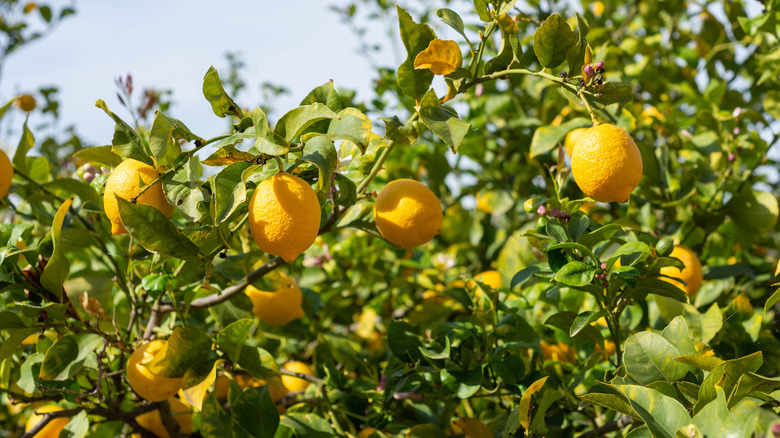
If rusty nails do more harm than good, what should you do instead? The best option is to figure out why your lemon tree stopped growing fruit and address that root cause. There are a number of reasons why fruit trees stop producing fruit, and many of them are treatable. A late frost might be killing off the flower buds before they can fully form, or there could be an imbalance of nutrients in the soil. Improper care can also cause problems. Finally, your tree may just be too old, in which case using a nail to get one last good harvest before the tree dies isn't a terrible idea. Just be sure to remove the nail afterwards.
A soil test will help you determine if your soil has imbalanced nutrients or the wrong pH. Nutritional and pH problems can be difficult to identify visually, so a soil test is the most reliable way to identify them. Checking the soil may also help you identify if it needs more water or less fertilizer. An influx of nitrogen can cause some plants to focus on growing leaves and stems rather than flowers, while a drought can slow or stop fruit production. Once the problem is identified, you can form a plan to rectify it by treating the disease, balancing the nutrients, or adjusting your care routine to avoid common gardening mistakes like overfertilizing and overpruning.