

If You're A Hummingbird Enthusiast, You'll Wish You Planted These Flowers Sooner
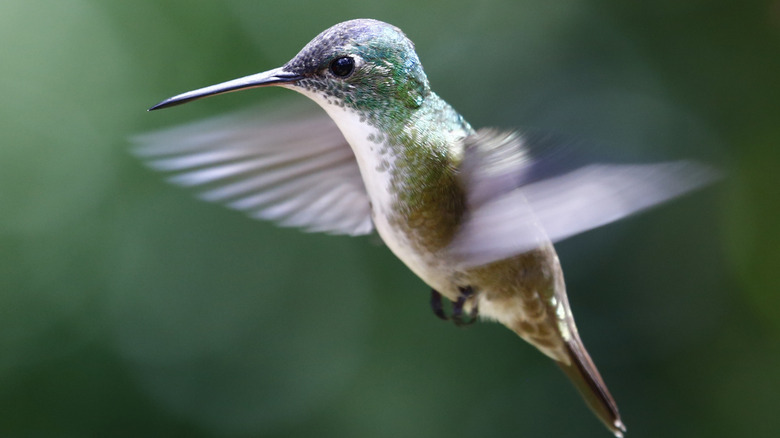
Creating a garden that attracts a lot of hummingbirds starts with providing a reliable source of food they'll love. And while you can hang several feeders and DIY the perfect homemade nectar for hummingbirds to enjoy, the trick lies in choosing the right flowers to plant in your garden.
Luckily, there is a large selection stunning plants that will attract hummingbirds to your garden. Two of these include a dynamic pair of self-seeding annuals that complement each other and bloom beautifully: cosmos (Cosmos bipinnatus) and calendula (Calendula officinalis). These brightly colored flowers provide your feathered friends with nectar and pollen year after year, dropping their seeds before the season is over so the plant re-emerges next spring without you having to replant it.
In terms of compatibility, cosmos and calendula work well together due to their similar growing needs, making it easy to plant them close to each other and care for them throughout the season. Calendula is a very easy flower to grow, making it an ideal addition to other fuss-free plants great for gardening beginners. Meanwhile, cosmos adds height and an airy texture to the garden. Although cosmos and calendula have similar care needs, their growing seasons differ: calendula is a cool-season annual that blooms from spring to fall in colder climates, and cosmos is a warm-weather annual, blooming in the beginning to the middle of summer all the way up to the first frost.
Growing cosmos and calendula in your garden
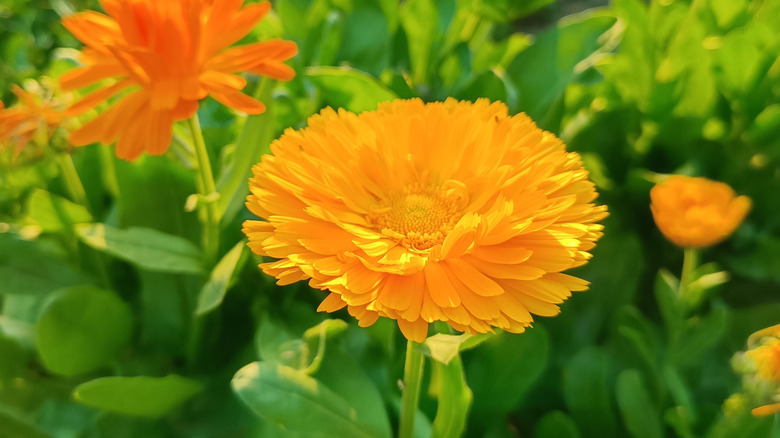
Both cosmos and calendula thrive in full sun where they can get six to eight hours of daily sunlight. Afternoon shade, especially during the hottest months of the year, can protect the flowers from getting too many rays without affecting the growth. In terms of water needs, both cosmos and calendula require regular watering while they're getting established, then only occasional watering once mature. Letting the soil dry out in between watering sessions (although not too much) is also essential, as it will prevent root rot. As such, well-draining soil is a must-have. As for soil tolerance, calendula can grow in dry, poor soils, but dislikes soggy, wet soil; cosmos also thrives in poor soils and is quite drought-tolerant.
Too much fertilizer can cause cosmos plants to grow excessive foliage at the expense of showy blooms, so it's best to skip it altogether. However, if the soil your calendula is planted in is very poor, you can safely add a balanced fertilizer at the time of planting, but it won't need any more after that.
Care-wise, deadheading is beneficial to both the cosmos and calendula plants, and can help keep them looking tidy and blooming all season long. If you want to see a late-season array of blooms, cut the branches on your cosmos about 1/3 of the way to the ground. Finally, aphids can be a problem for both of these pretty plants, so make sure to inspect them regularly to catch any early infestations. If present, a simple, two-ingredient spray made from castile soap and water can easily take care of the problem.