

The Bold Perennial To Plant In November For A Striking Spring Garden
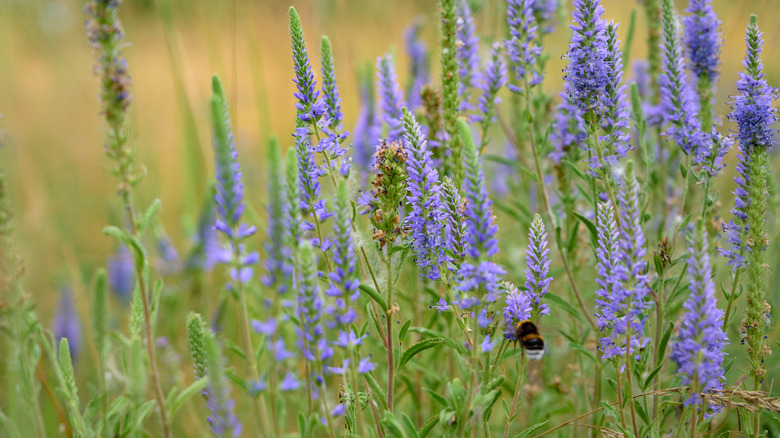
Many trees across the country are now bare, with fall slowly creeping into winter, and the time to lay seeds for the spring has arrived. While it will be months before blooms return to much of the continent, forethought and planning will set your garden up for a colorful debut. It is for this reason that fall is the ideal time to plant perennials in your garden. Regardless of where you live, there is one perennial that will add color to your outdoor space, producing a variety of flowers and blooms.
Speedwells (Veronica spicata) are easily cultivated herbaceous perennials, commonly referred to as Veronicas, and available in multiple varieties for any garden. While it can be hard to determine what plant hardiness zone you live in, the Old Farmer's Almanac says Veronicas can grow in all USDA Zones 3 through 11. This is because Veronicas come in multiple varieties, including cone-shaped blooms and low-growing groundcover types. Additionally, multiple varieties of the perennial are deer-resistant, as their dense, stocky structure offers little nutritional value.
How to care for your speedwells

Speedwells are known for being colorful and easy to maintain in most garden beds. While transplanting the blooms in spring is the most low-maintenance way to add color to your garden, planting speedwell in fall requires deliberate care. Depending on your climate, there are some steps you can take to prevent frost damage in a late-season garden. For speedwells, this means laying the seeds in a mix of compost and soil, while adding a layer of straw to insulate the seeds. Although many varieties are cold-tolerant, planting them in a cold frame can help ease the potential issues from frost.
There are two major types of speedwell varieties, with one characterized by taller spiky blooms ideal for cut flowers, and the other providing colorful, low-lying blooms, like those produced by the creeping speedwell. Both are considered low maintenance, requiring limited watering, though if summers are particularly dry, they may need some extra moisture. While not essential, trimming deadheads can encourage reblooming in shades of blue, purple, and pink. Cutting the blooms can also help create a striking centerpiece for a bouquet.