

How To Use Snow In Your Yard To Help Plan Your Spring Garden

If you're a home gardener, you may see the winter as a time to kick back, or shift to an indoor-only plant setup. The winter months freeze the soil, buried under thick layers of snow in colder climates, making it functionally impossible to tend to any blooming flowers or outdoor ground cover. But this is no reason to put your green thumb to rest. As it turns out, snow can be an invaluable tool in planning ahead for your spring planting schedule. As the snow falls and subsequently melts, it can help you to identify shaded areas of your garden, and locate the sections with the best access to sunlight. Take the opportunity to survey the area, take thorough notes, and consider which plants you'd like to grow when the seasons change. With any luck, you may be able to avoid some common gardening mistakes, like planting sun-loving flowers under the shadow of your fence, or overheating your low-light shrubbery with too much sun.
That's not the only benefit that snow has in your garden either. In fact, there are a myriad of surprising upsides to the frozen powder, especially in areas where snow remains on the ground for consistent periods of time. A blanket of snow provides insulation and moisture for roots and dormant plants over the winter, and fosters healthy seed growth. It also gives you time to plan upgrades and additions. And when it melts, it can also show you where water is standing and pooling, where lighter fall rains might not. Come spring, you'll be ready to turn your snow banks into Lady Banks roses (Rosa banksiae), and winter storms into agapanthus 'Storm Cloud' (Agapanthus spp.).
How to use snow to your benefit
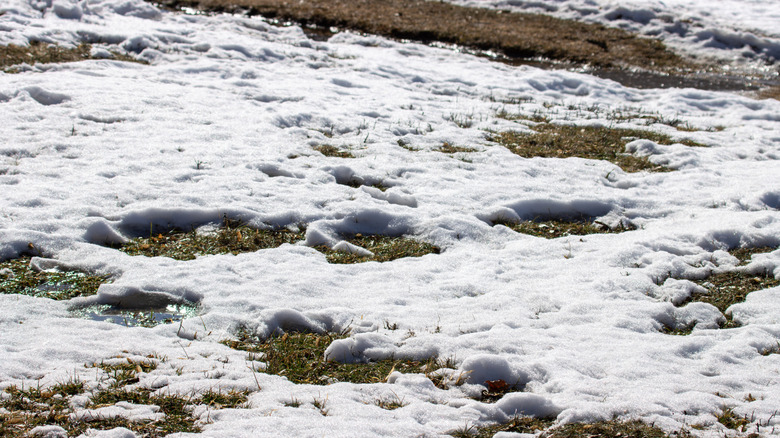
Obviously there are a number of external factors that can change the way the snow in your or garden melts, including wind drift, rainfall, even children playing. Still, there should be a clear delineation over time between rapidly melting areas and shaded areas that remain snow-covered. Whether snow stays on the ground for months in your area, or disappears in a few days, take the time to map out or photograph melt patterns. With this information, you can plan to put spring-blooming bulbs and sun-loving plants like zinnias, marigolds, or lavender where the snow melts the fastest, and add shade-loving perennials to brighten up your yard, where snow lingers. Sunlight can hit unexpected places, so don't be surprised if your survey throws you for a loop. Also remember the winter sun is shining through leafless deciduous trees: Shady areas in summer might be sunny all winter. With your map in place, you can spend the rest of the winter planning out your spring planting strategies.
Snow melt also helps identify areas where water is pooling, which can lead to mushy, muddy soil and root rot. Come spring, the simplest way to remove standing water from your lawn is to dethatch and aerate your soil. But if pooling is due to low spots in your yard or garden, consider what you need to know before adding a French drain. If snowfall is light, or you want some assists in finding these sunny spots, after removing snow safely from your deck, spread it around your gardening area, squeezing the most out of its wintery properties.