

The Unexpected Product That Can Help Protect Your Plants During Cold Weather
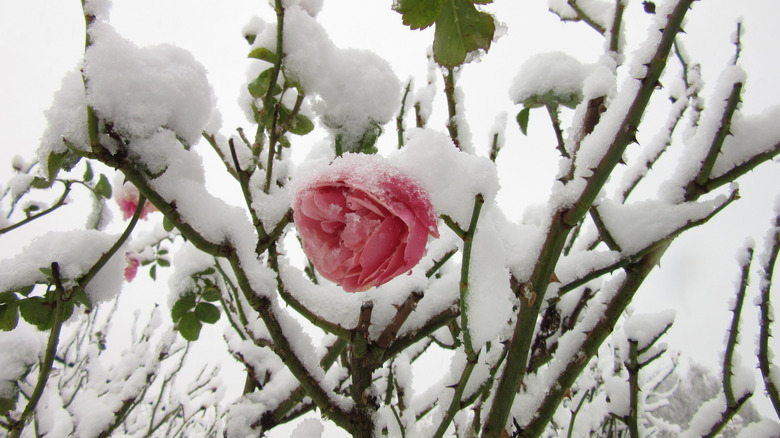
Regardless of whether the Old Farmer's Almanac's winter weather prediction calls for a mild, moderate, or harsh conditions through the season, every portion of the continental U.S. will almost assuredly experience a frost or freeze at some point. While there are some tricks for rescuing plants after an unexpected cold spell, it is always better to protect your plants when the temperatures plummet. This process doesn't have to be complicated, nor are expensive materials required. In fact, for those looking for a simple, cost-effective solution, bubble wrap is the unexpected product that can help protect your plants during cold weather.
When it comes to make sure your plants stay sufficiently warm when cold weather sets in, turning to bubble wrap to keep your plants warm makes sense for a variety of reasons. For one, it is an excellent insulator, thanks primarily to its air-filled bubbles which help slow the loss of heat more effectively than single-layer materials. Secondly, it provides protection from elements other than cold, such as wind, rain, and sleet. Finally, it is inexpensive, readily available, and easy to store.
Being caught unprepared for frost or freeze conditions is a mistake many beginning gardeners make. To make sure you don't commit this faux pas, begin stockpiling bubble wrap from shipping packages and envelopes or buy a roll of American Bubble Boy Bubble Wrap or similar product and keep in handy. As long as you neatly remove and store your bubble wrap after each use, it should last you at least a few years.
How to use bubble wrap to protect your plants
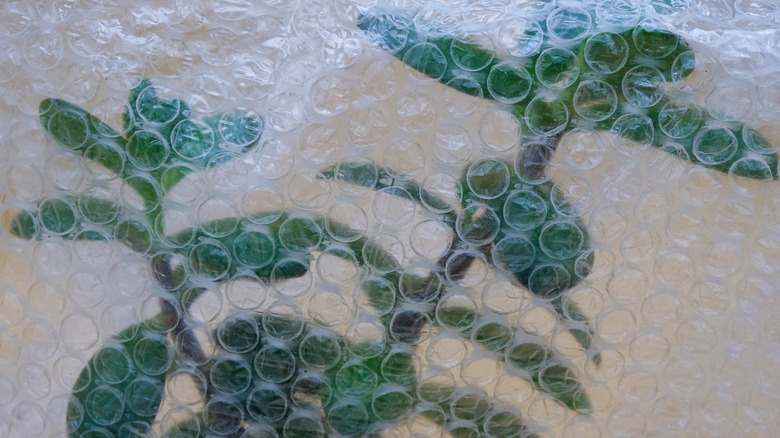
Bubble wrap can actually be utilized to protect individual plants, entire garden plots, and even greenhouses. When utilizing bubble wrap to protect potted plants, the emphasis should be on keeping the roots warm. This can be done by wrapping the pot with bubble wrap and securing it with side pins, twine, or packing tape. The layer of bubble wrap can also be covered with a layer of cloth or burlap. Alternately, you can use a double-pot technique, placing your plant's pot into a larger container and filling the gap between the two with bubble wrap.
Wrapping the actual plant, whether it be in a pot, garden, or bed, with bubble wrap should be considered a temporary fix. That's because covering plants with plastic for a long period of time can trap moisture and prevent proper air circulation. However, it can be very useful for helping plants get through an overnight drop in temperature. To wrap individual plants, simply wrap the bubble wrap around the plants and secure it in place with string or tape. Remove the bubble wrap during the sunny, warmer daylight hours to prevent damage.
To cover a portion of your garden, drive wooden stakes around the perimeter of the area. Then, wrap the bubble wrap around the outside of the stakes, stapling or tying it in place. Finally, put a layer of bubble wrap over the top of the area, essentially creating a bubble wrap greenhouse. To insulate an actual greenhouse during winter, start by connecting long strips of bubble wrap to the center support. Then, spread it toward the floor, connecting it to different points of the greenhouse frame along the way. Depending on the type of frame, it can be held in place with magnets, Velcro, staples, or tape. Once done, tape all the seams together.