

Deadly Black Ice On Wintery Roads: Can It Be Predicted Before You Start Driving?
We may receive a commission on purchases made from links.
Whether you're heading out for your daily commute to work or on a road trip to your favorite winter sports destination, driving in winter weather is a part of life for those living in the northern U.S. However, being behind the wheel in such weather does come with some risks. In particular, drivers need to beware of deadly black ice on wintery roads. The safest way to deal with this hazard is to avoid it altogether. So, can black ice be predicted before you start driving? To some degree, yes, as long as you know how and why black ice forms.
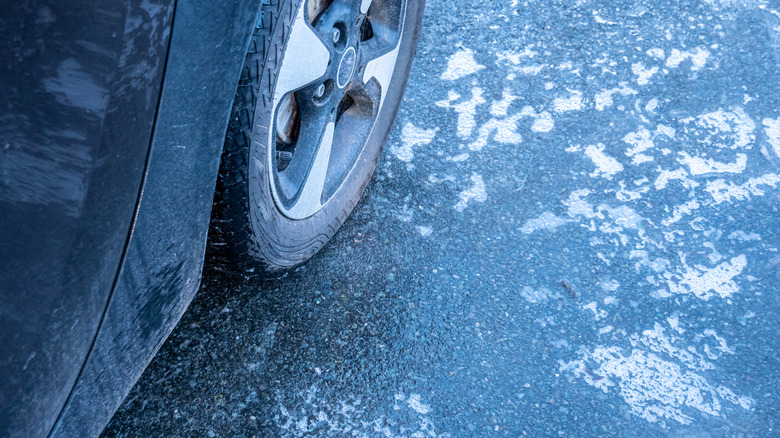
For those unfamiliar, black ice is a thin, hard-to-see area of ice on paved surfaces such as roads and bridges. It is referred to as black ice because it is transparent, appearing as the same color as the roadway beneath it. Black ice is typically difficult to see, especially at night, leading to it being a particularly dangerous hazard for drivers. The two things that are needed in order for black ice to form is moisture on the surface of a road and freezing temperatures. This moisture can be the result of melted snow, fog, vehicle exhaust, or drizzling rain. As a result, whenever a roadway is the least bit wet and freezing weather is on the way, there is a chance that black ice may form.
With that in mind, being aware of the forecast within your driving area is the simplest way to predict whether you could possibly encounter black ice during your drive. If the combination of moisture and freezing temperatures exists, there is a good chance you may come across patches of this dangerous frozen layer.
Bridges can be particularly dangerous
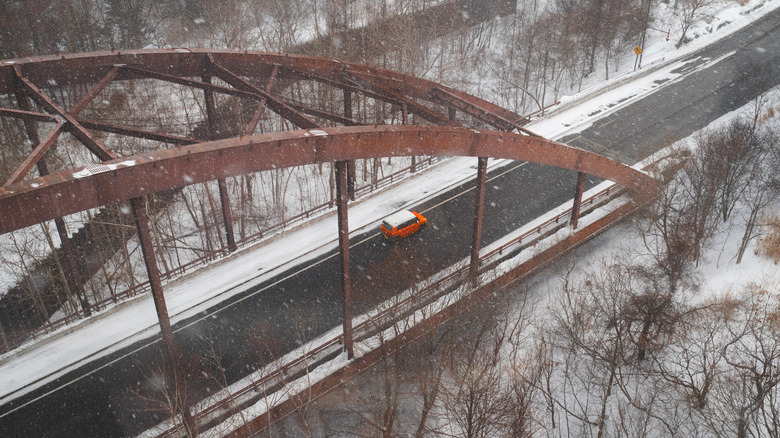
While freezing temperatures and moisture are the basic conditions needed for black ice formation, one thing that makes it particularly dangerous is some areas can see black ice even when the ambient air temperature is above freezing. Places such as bridges and where roads cross culverts lose heat faster than the surrounding roadway. This is because they lack the insulating layer of earth beneath them. In fact, rather than having heat-retaining soil, these areas have cool air passing underneath. As a result, there is a possibility of black ice forming in these spots without freezing air temperatures.
The fact this thin ice layer may form in these areas even when air temperatures remain above freezing adds an additional level of danger, as drivers are often caught by surprise. As a result, you should be keenly aware of any bridges or culvert crossings that you may encounter along your path. Much like you melt ice on your driveway, crews will often place salt or de-icing agents on these trouble spots in advance. However, that is not always the case, especially along routes that aren't well traveled. So, the best bet is to always slow your speed and approach bridges with caution when temperatures are at or near freezing.
How to recognize black ice while driving
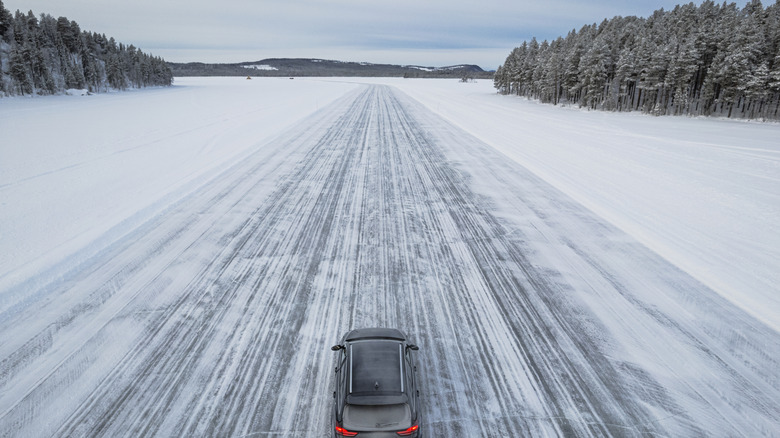
Black ice is notoriously difficult to see. Knowing ahead of time the conditions are right for the formation of black ice can help. However, you still need to be able to recognize and take proper action should you come across black ice on your drive. Since black ice is transparent and allows the color of the road to show through, most often the only indication that a patch of black ice is what appears to be a glossy or shiny spot on the road.
Regardless of whether you see a patch of black ice, if conditions are conducive for its formation, you should be particularly cautious when you approach areas which are prime black ice spots. These include shaded portions of roadways, bridges, and areas where the road passes over culverts. Approach these areas at a reduced speed and give extra space between yourself and any vehicles in front of you. If at all possible, try not to accelerate in these areas, and if you need to slow, use steady pressure on the brake.
Of course, in order to spot black ice, you need to be able to see out of your vehicle. So, before starting your drive, thoroughly clean all ice and snow from the glass. To make sure your windshield stays clean throughout your drive, make sure you have plenty of cold weather rated fluid, such as Prestone AS250 De-Icer Windshield Washer Fluid, in your vehicle's reservoir. Additionally, utilize your de-fogger and keep the inside of your windshield and windows wiped clean.