

The Ancient Gardening Technique That Can Produce Better Crops For Years To Come
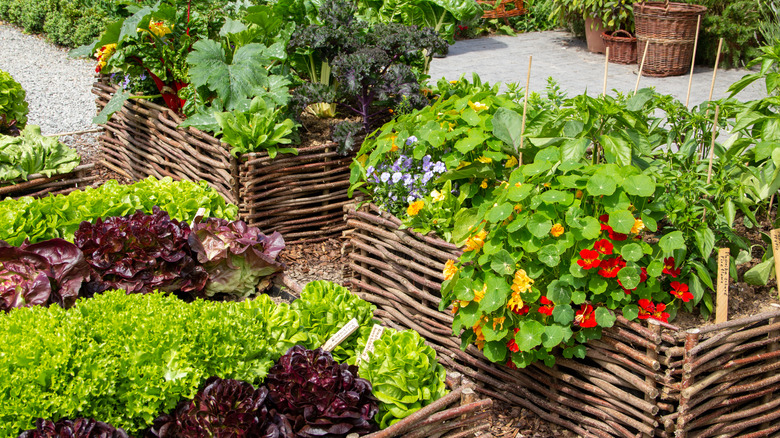
Anyone from hobby gardeners to cash-crop farmers should take a page from our agrarian ancestors and use the time-tested technique of crop rotation. Revolving where you plant your vegetables on your arable land every growing season is a simple yet cost-effective strategy that consistently improves soil health, lowers reliance on costly synthetic fertilizers and pesticides, supports sustainable yields, reduces pollution, and controls pests and diseases. Evidence of this proven ancient gardening technique dates back thousands of years and has been found worldwide, including remnants from ancient Rome. They employed a simple rotation of "food, feed, fallow," alternating between eating crops, growing cereal grains for livestock, and taking a resting and rejuvenating year during the third season.
For the modern gardener, crop rotation requires mapping and scheduling your harvests in succession every season. Some plants grow better (see: companion planting) or worse (see: veggies that should never be grown together), depending on the neighboring species. For example, tomatoes and corn gobble up the soil's nitrogen and phosphorus, so they should never be planted consecutively in the same spot. Soil also gets physically compressed over time, and by rotating varied root structures will aerate and break up the earth. Ultimately, changing what grows where protects your soil from being stripped of nutrients, structure, and moisture.
A superstar in crop rotation is the legume family, like beans and peas. This family of plants actually adds nitrogen to the soil through a symbiotic relationship with soil bacteria. By rotating beans into each bed, you can naturally add nitrogen (like 50-200 pounds per acre) back to your soil and avoid using synthetic fertilizers. Yield studies show that crops rotated in a diverse system outperform monocultures by 29–48%.
Pro tips to make the most of your crop rotations
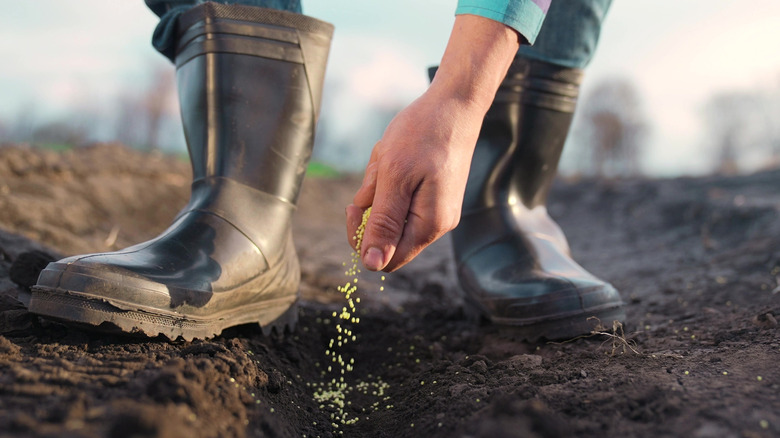
Another crop sequence tactic is rotating in a green manure crop. Growers plant green manure to cover bare soil, then till it into the dirt while it's still supple and green. This practice adds carbon, moisture, structure, and nutrients back into your soil. Common green manures include buckwheat, rye grasses, and red crimson clover. Rotating with cover crops also suppresses weeds.
Crop rotation also diversifies your garden. Monoculture is a farming practice that took off in the 1800s with tobacco and cotton and then really gained popularity in the 1950s when postwar synthetic fertilizers and pesticides were heavily marketed. What we now know is that monoculture is like a buffet for many soil-borne pathogens and pests. For example, your cabbage crop is like a city of sitting ducks — the diseases and pests, like cabbage moths, will build up and wreak havoc for years because you keep providing them with an endless food supply year after year. By relocating your cabbage bed every season, you can actually reduce pest populations and diseases, thereby decreasing reliance on synthetic pesticides and herbicides.
For the best practice of crop rotation, avoid planting vegetables from the same family in the same location for three to five years. For example, if you grow kale in row 1, don't plant any other crucifers (like broccoli or cabbage) in row 1 for the next few years. To keep track of your planting schedule and locations, take pictures of your garden, make a chart, and divide your garden into distinct rows or zones. By rotating your veggie plants throughout your garden and avoiding other common gardening mistakes, you'll be shopping through your garden like it's a grocery store, year after year.