

Prevent Post-Storm Flooding In Your Yard With A Clever DIY Solution
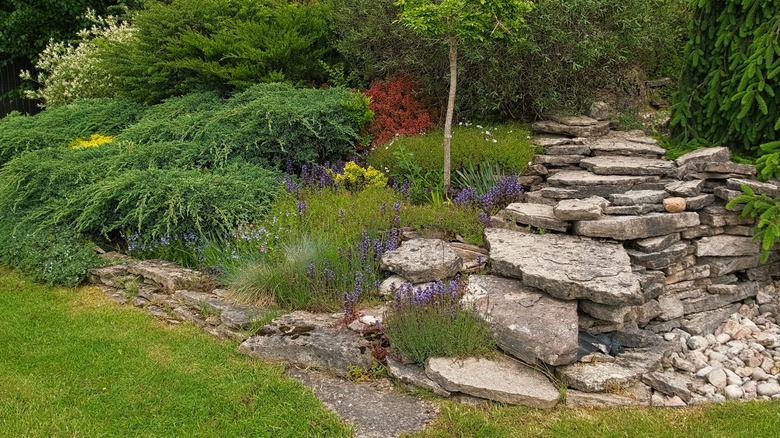
Homeowners and cultivators of lush lawns welcome a little rain, which provides needed nourishment to both their garden beds and grass. But too much of a good thing can be bad, and large amounts of rain can lead to soggy soil, which can harm plants in the long run. But fear not, there is a stylish and effective way to divert flows while still drawing the needed nutrients into your lawn and garden. You can do this by creating a dry creek bed either along the perimeter or through the center of your lawn.
The American Society of Landscape Architects (ASLA) notes that investing in landscaping work in your yard can raise the value of your home by 10 to 15%. While patios and pavers are a go-to for many homeowners looking to add some spice to their lawn, they do little to redistribute water during heavy rain. It was this fact that prompted one Reddit user to take matters into her own hands, using gravel and stone to create an artificial creek bed. While it may seem intimidating to dig a makeshift riverbed in your lawn, it is a surprisingly easy process with several long-term benefits.
Before getting started, make sure your local municipality allows homeowners to build dry river beds on their properties. In some cases, there will be rules you have to follow when directing water into public streets and sewer systems.
How to design your dry creek bed

Dry river beds are designed to look like natural creeks but without the constant source of water. Instead, they're there in case you need them during times of heavy rain fall. The most important step of designing your dry river bed is selecting the right path for the water to flow.
Start by looking at low points in your lawn where water collects, and find the location of any downspouts and storm drains. Taking these two locations into consideration will help you effectively drain water from your lawn without creating a mini pond on your property. Once you have decided this, you can begin the trench digging process. Chart a shallow trench, then line it with landscaping fabric to prevent water that travels the creek from absorbing into your lawn. Next, lay down a layer of gravel to regulate the amount of water seeping into the earth during heavy rain. Be sure to choose the right gravel though because it's easy to mistake crushed rock or sediment for gravel. Finally, lay down polished stones in multiple colors and sizes to add visual interest to your creek bed.
Once you have created your dry river bed, a great way to take full advantage of it is to plant local trees and wetland shrubs like you might when creating a rainfall garden. Classic water-loving plants such as the Iris will help collect some of the water and nutrients from the creek and transfer it into your lawn.