

Common Winter Weeds And How To Easily Get Rid Of Them
We may receive a commission on purchases made from links.
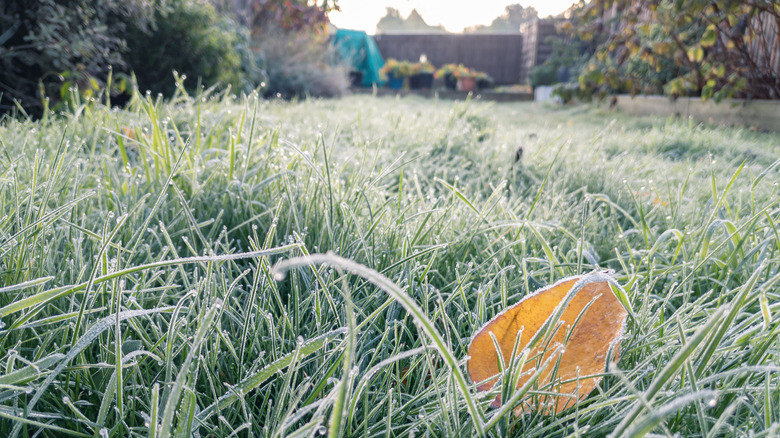
During the winter months, most lawn grasses enter a state where their growth rate slows tremendously or even stops completely until the warming spring weather arrives. The same is true for many types of weeds. However, not all weeds fade away during winter. In fact, some of these pesky plants thrive during the cold. The good news is that there are fewer varieties of weeds that are likely to emerge at this time of year. They're usually seasonal in nature and can typically be easily controlled by being vigilant and taking early action. It's important to do so, as you may otherwise end up with patchy areas of grass and other issues come spring.
Some common winter weeds are specific to certain regions of the country, while others are found throughout the United States. Weeds such as chickweed, henbit, annual bluegrass, bittercress, and groundsel are prevalent winter weeds over a wide swath of the Lower 48. Certain varieties of clover may also remain in lawns in the winter. Those in the Northeast are likely to battle Persian speedwell, bedstraw, and shepherd's purse as well. Midwesterners can expect to encounter wild mustards and prickly lettuce, and dandelions and burr weed can be an issue in winter for those living across the southern half of the country.
Ways to get rid of winter weeds in your yard
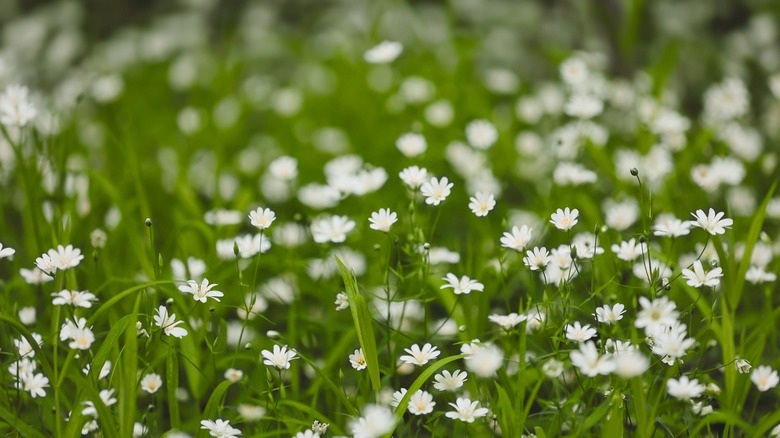
Proper mowing techniques can control weeds in warm weather. However, mowing is best avoided during winter, so that's not really an option. Instead, if you anticipate winter weeds based on previous years or their prevalence in your area, the best option is to utilize a pre-emergent product such as Scott's Turf Builder Winterguard Fall Weed & Feed. As the name suggests, these products should be applied in the fall. The idea is to prevent winter weeds from germinating in the first place. However, you should avoid pre-emergent products if you are overseeding or reseeding your lawn, as they can also prevent grass seeds from germinating.
Keep in mind that not all winter weeds are susceptible to pre-emergent weed killers — they will not work on plants that are already established. Should you see weeds popping up, whether you applied pre-emergent or not, you have a few options. One, you can try pulling weeds by hand. This works well on some winter weed varieties, such as bittercress, henbit, and chickweed, so long as they haven't spread over a large area and you can remove the entire root.
A second option for ridding your yard of small patches of weeds is to spot treat individual plants with a commercial or DIY weed killer. However, if you have larger areas of weed infestation or weed types that are difficult to hand-pull, your best option is to apply a post-emergent weed killer to your lawn. Just make sure to choose a product that targets the specific type of winter weeds growing in your yard.