

Nature's Service Animals: How Conservation Detection Dogs Are Protecting Ecosystems
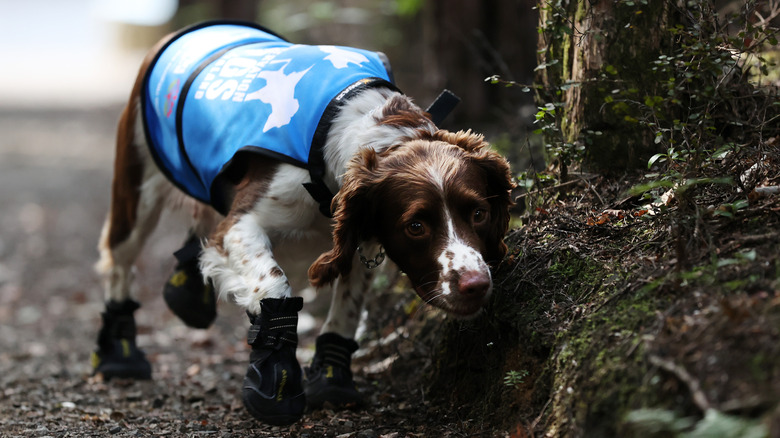
While some national parks allow you to bring your dogs, not all of them do. However, there's a chance you could still see a dog there, hard at work. These conservation dogs serve a number of different roles, both in national parks and out. You may see them at customs, in the airport, or on farms. Just like a service dog is trained to help people, conservation dogs receive special training to help the environment.
Your dog should have some training before joining you on a hike, but these dogs are getting more than a lesson in obedience. Depending on their job, conservation dogs are trained to identify and track the scents of certain plants and animals. Detection dogs trained by the USDA identify invasive plants in people's luggage, breaking up smuggling rings and preventing seeds from hitching a ride on tourists' clothes. Meanwhile, the dogs trained by groups like Working Dogs for Conservation track invasive species that are already in the U.S., as well as endangered species that need monitoring. They even detect diseases, so conservationists can ensure that animals are healthy.
Any dog can be a conservation dog, as long as they have the right qualities. They need to be able to physically complete the tasks, whether that's navigating dense brush to find an invasive lizard or focusing on a suitcase in a busy airport. Dogs also need to be easy going and eager to learn. A pedigree isn't important — in fact, both the USDA and WD4C use rescue dogs.
How effective are conservation detection dogs?
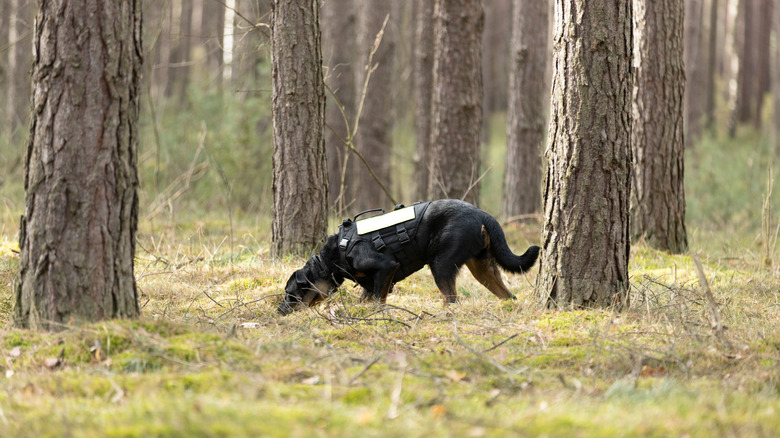
These dogs are cute, but are they really effective? Yes, and in fact they're more effective than traditional methods in some cases! Conservation dogs working in Grand Teton National Park were able to find 75% more invasive species than humans over four years. Their powerful noses let them detect plants while they're still small and track animals that are fantastic at hiding. While there are costs associated with CDDs, they're more affordable than tech like helicopters or fancy cameras.
However, CDDs aren't a perfect solution, and their effectiveness ranges wildly. Training is critical to a strong performance, but it can be challenging. Acquiring good samples for the dogs to learn from isn't always easy. Personality and behavioral training is important as well, as a dog with too high of a prey drive might chase an animal instead of tracking it. It can take time to get to know a dog well enough to decide if it's a good fit for the job and train it.
A well-trained dog paired with the right handler is an incredible asset to a conservation team, while a different dog may not do as well. It's likely that these problems will be corrected as programs grow and learn more about the best ways to select and train dogs. In the meantime, if you see an invasive species in a national park, alert a park ranger. Who knows, maybe you'll get to see one of these dogs in action!