

How To Tell If Your Hostas Have Frost Damage And Tips For Saving Them
We may receive a commission on purchases made from links.
Hostas are popular plants that can brighten shaded areas of your lawn and garden. While they are hardy and resilient plants, capable of being cultivated in USDA Hardiness zones 3 through 9, hostas are susceptible to frost damage. Spotting the signs of frost damage and knowing what to do in response is key to keep these otherwise low-maintenance plants healthy and thriving.
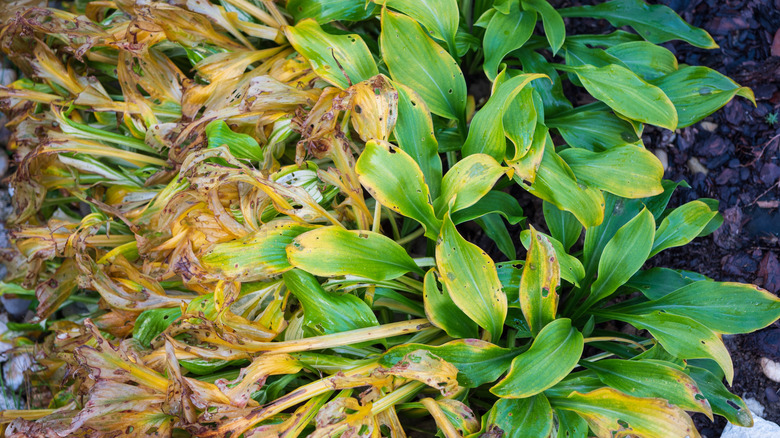
There are several symptoms that indicate your hostas have suffered frost damage, including holes in their leaves and a gradual discoloration of the foliage. The outer edges of the leaves may also appear torn and jagged. Fairly common and relatively minor, these symptoms of frost damage are easily dealt with. But if your plant begins drooping or turning black, you have a severe problem on your hands.
If your hostas have been exposed to frost or freezing conditions, the first thing to do is water the plants. Should you notice any leaf damage like that describe above, cut away the most severely damaged leaves. This is critical in preventing additional problems such as opportunistic pests and various diseases. Minimally damaged leaves should be left in place so that the plant can continue to photosynthesize, which is essential to its long-term survival.
Protecting hostas from frost damage
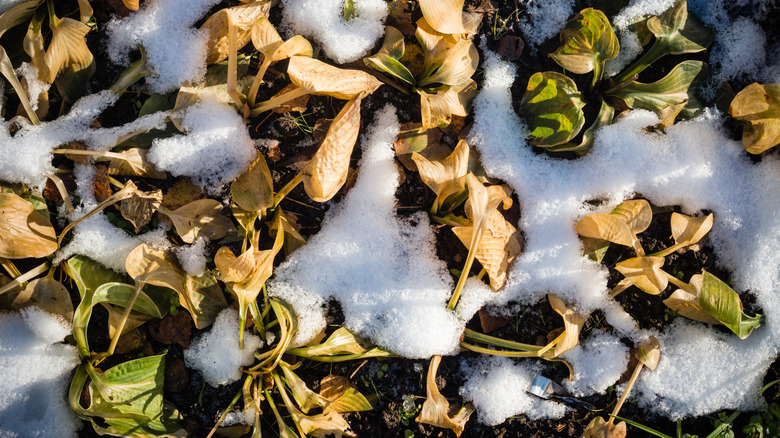
While there are tricks to rescuing hostas and other plants from unexpected snow or freeze, prevention is the best way to ensure you hostas survive winter weather. This begins with choosing the best place to plant your hostas. For one, hostas that are in the ground are far less susceptible to frost damage than those in containers. Additionally, those that are planted with wind-blocking walls or fences, under the trees, or in spots that get a bit of morning sun will usually fare better than those in open areas exposed to the elements.
For hostas that are in the ground, you should trim back the foliage prior to the arrival of winter weather. Additionally, the plants should be well-watered throughout the winter. Adding a layer of mulch around the base of the plants will help the soil retain water and insulate the roots. When frost or freeze conditions are forecasted, you should water the plants then cover them overnight with a Tilvex Frost Cloth, burlap, or another breathable material. This cover should be removed later in the day when the temperatures rise. Mulch can be removed in spring, once the danger of freezing weather has passed.
If you do have your hostas in containers, there are a few additional steps you can take to protect them. One is to move them indoors. Any structure that provides protection will help, whether it be a garage, storage shed, or in the house. Whether they are brought indoors or left outside, it is also a good idea to huddle containers of hostas alongside other potted plants to help them retain heat. The entire group of huddled container plants should be covered with burlap or a frost cloth at night.