

Best Plant Identification Apps For Gardeners And Explorers Alike
The best plant identification apps satisfy our natural curiosity for the world we inhabit. The need to know which plant is which is something that dates back to mankind's early ancestors, when even just a touch of botanical savvy could be the difference between a dangerous dinner and one that would safely sustain them.
Of course, for most modern gardeners, the pursuit of such knowledge is largely academic, and often only practical in so far as it can help us grow more productive gardens. Still, we can't help but find ourselves curious about the flora and fauna with which we share our planet. If this sounds familiar (and you have a smart phone) then good news: There is a long list of apps developed specifically to help you satisfy such curiosities. Many use point-and-shoot identification, meaning you simply take a picture and allow AI to suggest which species you might be observing. Still others venture beyond the pantheon of plants, helping intrepid explorers contribute to scientific research or identify animals, fungi, and other parts of an ecosystem.
Given the long list of available apps, it pays to know which will most help or hinder your pursuit of natural knowledge. From simple identification and cataloging, to paid subscriptions for massive databases and quality plant care, our coverage of these apps draw on real user feedback (pros and cons) and close examination of each developer's unique approach.
Pl@ntNet
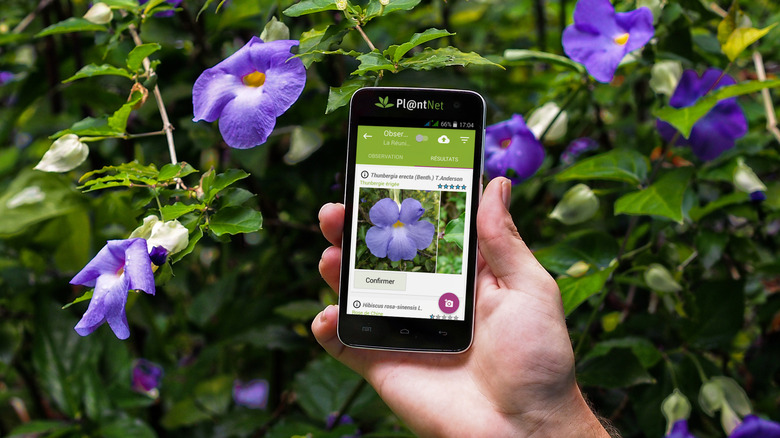
Not only does Pl@ntNet help you to identify a plant from a single picture, but it also allows you to become, as the app states, a part of a large citizen science project on plant biodiversity as you do. As with many of the apps in this guide, it relies on quality pictures (from you and several million contributors across 200 countries), then leans on artificial intelligence to cycle the enormous library of plant names and identification features. As a free plant identification app, it also means you needn't extend your current subscription budget to use it. Oh, and Pl@ntNet isn't only for phones — there is an online version you can access from your laptop or desktop, too.
As for reviews, Google Play Store shows more than 10 million downloads by Android users, and with more than 250,000 reviews, it has an overall star rating of 4.7 out of five. It's a similar story on Apple, with users awarding it a total of 4.6.
One user on Google Play Store says ""A very helpful app to identify plants!" but offers a word of warning: "I added a plant recently that was not listed in the directory. I wasn't able to add its common name, and a search for its genus or species came up with nothing." Another user cites discrepancies between the app's findings when used on different devices, saying "I had 5 results on the LG and 11 on the iPad." Overall, however, this same user seems overall impressed, saying "It's a great app though. Well done Plantnet!"
PlantSnap
Boasting "world-leading plant identification technology", PlantSnap also uses AI-powered insights to help you capitalize on the time you spend outdoors. Unfortunately, the first thing that jumps out when you visit the website (as of this writing), is a banner ad pushing a 50% off promotion, which smacks of pay-to-play. Whether or not that's a deal breaker will likely depend on how much you intend to use it.
The premium service allows you to "unlock unlimited plant identifications," (in fact, PlantSnap itself claims to have over 600,000 species logged, compared with — PlantSnap claims — 2,000 on similar free apps). Paying a subscription also allows you to enjoy ad-free browsing, so there's that.
On the App Store, a 4.6 out of 5-star rating seems pretty solid. That's out of more than 67,000 reviews. However, over on Google Play Store, it manages just 3.6 out of 5 stars, with over 95,300 reviews. It's worth noting that the majority (64%) of these reviews award the app 4 or 5 stars. One user says "Works pretty well. At least with ornamentals," although they suggest that, "when hiking it doesn't seem to work as well." Another says it "sometimes takes a couple tries to narrow it down, but very good for a start."
One less satisfied user cites inaccuracy in the absence of flowers on their plants, saying that the app "should be renamed Bloom Snap" and "I regret purchasing the app," claiming that all of the master gardeners they work with agree. Some users also run into functionality issues with the free, ad-supported version of the app after a few days.
iNaturalist
Ranked by the New York Times as one of the two best plant identification apps (and rated as "best app for sharing your findings"), iNaturalist has an enormous following, with over five million downloads on Google Play Store alone. It's designed to help you identify everything from the blooms in your borders to the birds that might be helping out in your garden, all while generating important data for science and in support of conservation efforts. The community using the app, according to iNaturalist, includes like-minded naturalists and scientists, adding enviro-cred.
Reviews across Google Play Store and the iOS App Store are in general agreement of the app's quality, with the former giving it an overall rating of 3.7 out of 5 stars, and the latter awarding it 4.0 out of 5. "Being able to track which species you've seen in the wild is very cool," writes one positive reviewer, "and the community around the app is incredible." One 4-star reviewer joked that "It's like real life Pokemon, gotta snap them all."
Some minor issues flagged in the ratings include the lack of an option to automatically include one user's current location on uploads, some user-interface functionality issues, and connectivity problems, with one user saying "the app tells me 'you have to be connected to the internet to do that!' despite *being on the internet*."
ObsIdentify
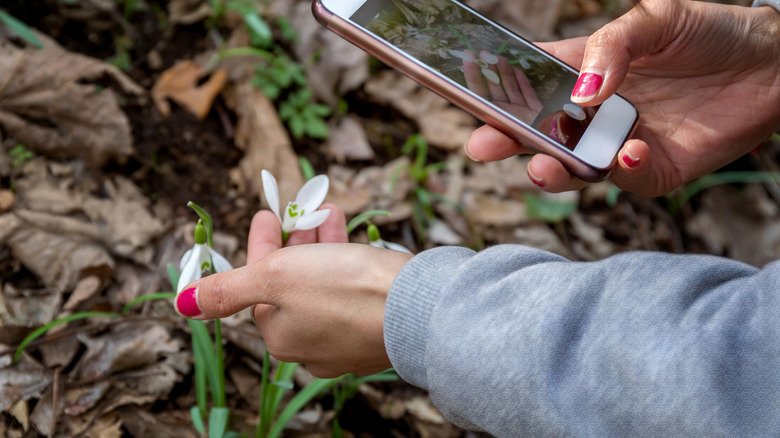
From developer Observation International comes ObsIdentify — an app that allows you to collect your wildlife and plant images and information, earning badges and joining BioBlitz challenges along the way. In other words, it doesn't just enhance your time outdoors, it gamifies it. And that has to be a good thing, especially if it encourages more people to get outside.
What many seem to love (it has a 3.7 rating on Google Play) is that it helps to identify not just plants, but also animals and even mushrooms, making it one of the best apps for outdoor enthusiasts. The only real drawback, as far as the developer's own specifications are concerned, is that its capabilities are limited to species in Europe and the Dutch Caribbean. That's a pity, especially since many of those who use it in these areas seem to love it. "Such a cool app," says one. "Now I can actually see what bug it is instead of staring at it!"
If you're in the U.S. and feeling slightly disappointed, you might take some solace from some of the reported issues of other, less-satisfied users. "Not a bad app, but it does get it wrong sometimes," says one, while another describes it as "very annoying to work with. Takes too much effort to get a clear picture and save it."
PictureThis
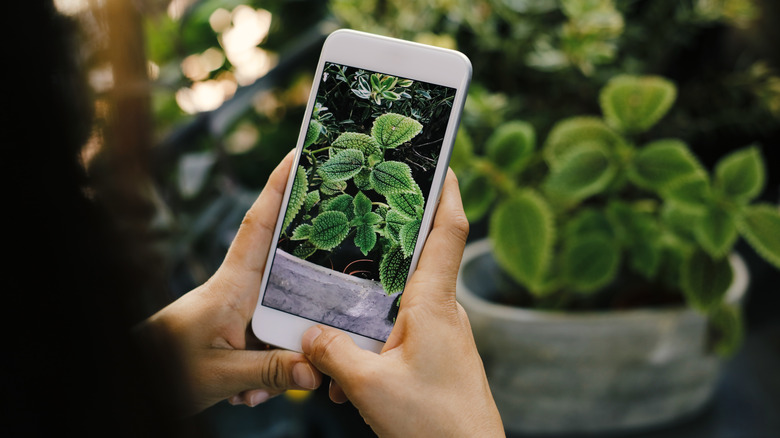
PictureThis bills itself as being "Botanist in Your Pocket." In fact, the platform offers four specific reasons to pick this app: Instant plant identification (including genus and species) with your camera, plant disease diagnostics and prevention tips, and prescriptive tips and tricks to care for your botanical babies. Another is assistance in identifying plants you might not know are deadly — a bonus for anyone with pets and vegetarian-curious children.
It's another freemium app, so while you can use it without paying for a premium subscription, you should expect ads and limitations on how much you can use its features (it does require a credit card up front for a free premium 7-day trial, which can then be canceled). You might be tempted to sign up, given that more than 706,000 reviews give it an overall 4 out of 5-star rating on Google Play Store. The Apple store paints a similar picture, with an impressive 4.8-star rating from over 1,000,000 reviews.
One says "What I found particularly helpful was the scanner that tells users if their plant looks healthy," while another, with a paid-for subscription, says "It's amazingly cheap for the premium version (like, shockingly so)." Some, however, call into question its identification accuracy. One suggests that the app only correctly identified 20 out of 48 pictures, while another airs their frustration, saying "Inaccurate & few features are free."
LeafSnap
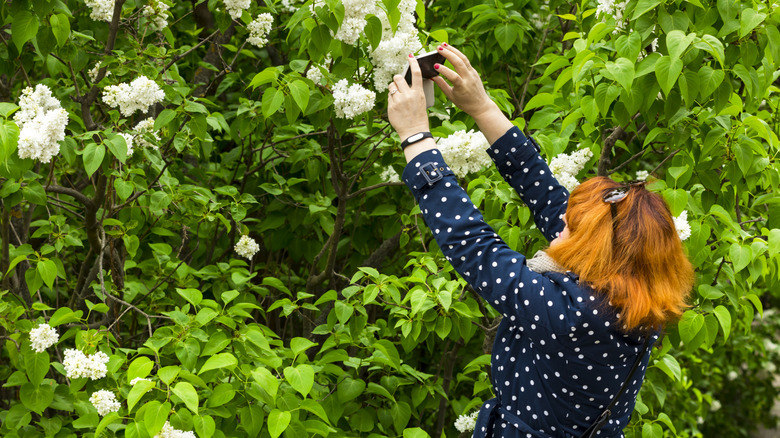
Those who would like to identify plants quickly and learn how to care for them will be seriously tempted by LeafSnap, which claims to do precisely that, mere seconds after you share your pic. It boasts a database of information on more than 32,000 plants from around the world, and offers detailed, step-by-step care guides to help you tend to them like a master botanist.
Just know that some features need to be paid for. The app can be used for free (with ads), but you'll need a premium subscription to access step-by-step care guides, plant care reminders (without limits), and zero ads. Paying also grants access to what Leaf Snap dubs advanced identification, allowing identification from just a leaf, bloom, or bark instead of the whole plant.
Reviews are pretty solid across the board; the iOS App Store gives it 4.4 stars out of five, and it earns 4.1 on Google Play. As with most apps, not all of the feedback is generous. One user complains that, after identifying a plant, "you have to manually select options for morning or evening watering, fertilizing etc," despite this being done automatically by other apps. On the other hand, many reviews are favorable, including one that says "This app found my plant in about 2 seconds and I was so excited," and another explaining how, when the user tried identify around 50 different plants, it gave the correct names "EVERY SINGLE TIME!"
Google Lens
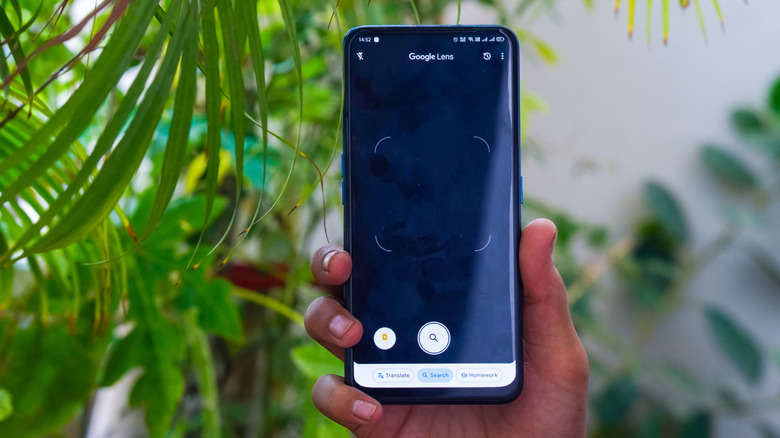
Downloadable as an app from both the Google Play Store and the App Store (provided you have already downloaded the Google app), Google Lens is also built straight into the brand's Pixel smartphones, as well as some other brands, like Samsung and Sony.
Its ability to point, shoot, and identify makes it easier for humans to interact with and discover the world around them, including the plants in your garden. Even if you're in a garden center on foreign soil and can't read the labels, Google Lens has your back — allowing you to snap and translate text from over 100 languages. And while mushrooms are the last thing you should eat off your local trail, Google Lens will also help you to identify fungi. Just know that plant identification apps have certain shortcomings when used for foraging, so you should only use this one as a supplementary source of information.
On the Play Store, Google Lens receives 4.8 out of 5 stars, with more than 2.71 million reviews. It's also received over a billion downloads. That's a billion — with a "B". "This is even useful for identifying bugs like spiders or moths, all kinds of plants. It is not always accurate, but it gives you a lot of information," says one reviewer. "I'm actually finding this app more useful of late than when I first tried it — especially for identifying fungi and certain trees," says another.
However, some users are less than pleased, including some recent users who say that new AI search functions have negatively impacted the app's accuracy. Another bugbear, according to one user (who otherwise rates it as a "Very useful as a starting point") is that "it is constantly asking me if the results were useful and if I will write a review."
Flora Incognita
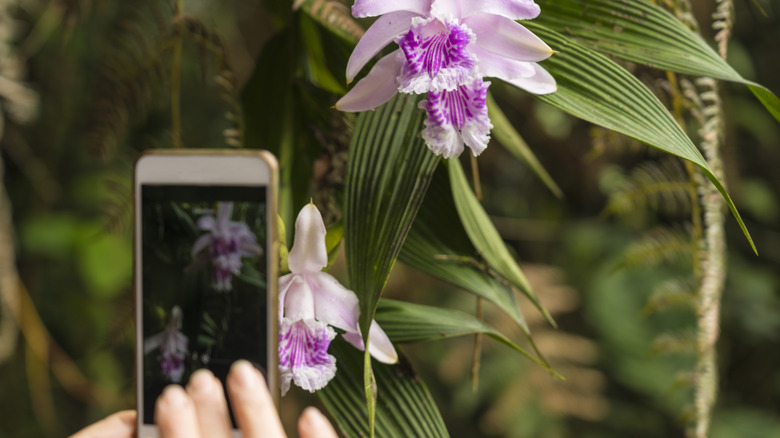
With a 4.7 out of five-star rating on Google Play, plus an overall rating of 4.8 stars on Apple, Flora Incognito has low-key made for itself a reputation as one of the best of the free plant identification apps. The company claims to offer an intersection between AI-driven plant identification and citizen science. It's kind of similar to iNaturalist in that regard — building a community of like-minded people eager to share and discuss their findings. Flora Incognita is part of a scientific research project, offering budding naturalists the chance to embark upon their own citizen science projects. If you do, the team behind the app will code a specific project interface to match your proposal (subject to approval), and support you in gathering fellow participants to support your research. You'll also find news and updates both about app-driven projects and the wider world of botanical science.
It's completely free of charge and comes without any annoying ads. Those are two enormous ticks in its favor, and its database of more than 30,000 plant species makes a third.
Looking over the reviews, they're generally positive, with one saying "So far it has correctly identified every plant I have, no matter how young or old it is." Yet some issues have been registered with the plant identification aspect of the tool, with one reviewer saying "I have inula and before it flowered the app insisted it was giant willowherb." But this doesn't appear to be the norm. Many reviews agree that it's a "wonderful resource to have available when you are walking," "reliable and easy to use," and a "superb app for botanists everywhere."
Seek by iNaturalist
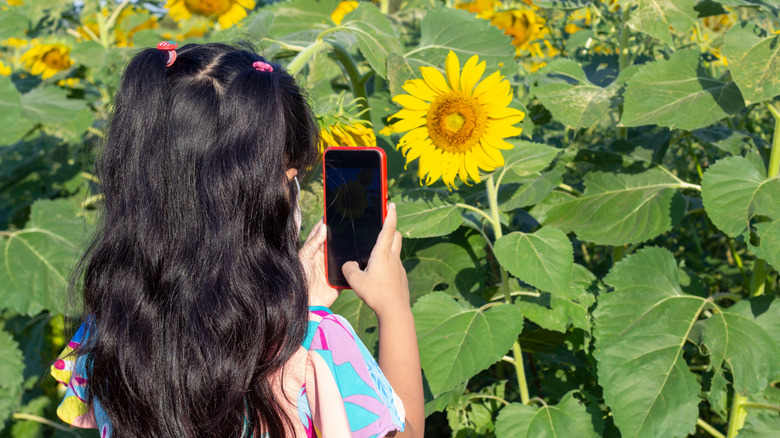
Self-proclaimed as a "great app for families who want to spend more time exploring nature together," Seek by iNaturalist gains almost immediate trust among long-time users of the brand's flagship app, iNaturalist. Like its big sister, it's free (of both ads and subscription costs). Whereas iNaturalist is designed to give like-minded naturalists the chance to join a global community in creating research-level citizen science data, Seek is designed to appeal to all ages. In other words, it's child-safe, requiring no account details to login. Nothing is shared, either. The app doesn't require an internet connection to work, your identifications stay on your device, and zero personal information is collected. It even pops up with a warning to "stay safe" when using the camera.
It must be one of the best plant identification apps available then, right? Well, not quite. Google Play Store (from which the app has been downloaded over a million times) gives it an overall rating of 3.1 out of five. The Apple store is only slightly better, giving it a total of 3.7.
A multitude of reasons contribute to this lower-than-expected rating. One flags its poor performance on Android, saying "I can focus on species fine [...], however it just crashes when trying to take the photo." One says that "This is a pretty good app for things that don't move much," and another, citing "instant amnesia," says that it's "Great when it works [...]. It will 'detect' a species for a split second, then rather than giving you some breathing space to get your photo and log your find, it will return to deep uncertainty."
RHS Grow
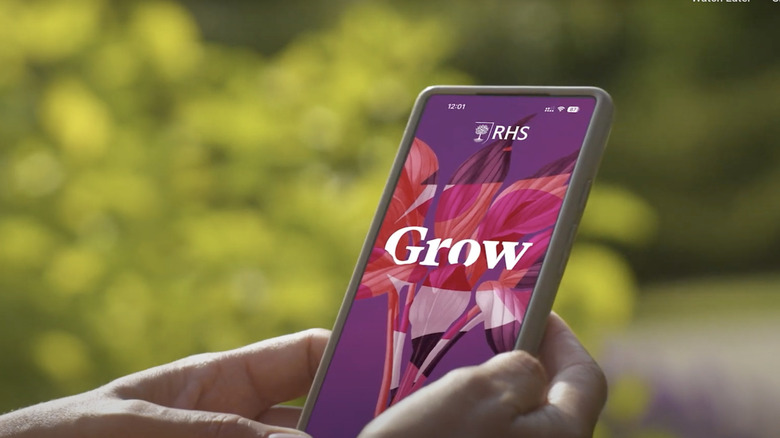
Anybody who spends their time researching new and curious plants, particularly in the UK, will surely be familiar with the Royal Horticultural Society. Its website is something of a bible for budding botanists. Now this vast resource has an app, pouring into it "200 years of knowledge." Easily identify plants with your camera, keep track of those in your garden, access expert care guides, and even find tips on how to bolster your borders with colorful flowers to make your garden smell like heaven. If you need a question answered, stat, you can try the AI-driven ChatBotanist.
Perhaps unsurprisingly, since its launch in May 2023, it's been lauded by users as one of the best apps for plant identification, garnering solid praise from reviewers around the world. It boasts 4.5 out of 5 stars on Google Play Store, and 4.7 on the App Store. One user says it's "Great for info on my garden and plants," and another explains that its "Plant recognition is great, tailored monthly care tips are fantastic." However, one recent miffed reviewer says "You have to subscribe to use it."
Indeed, one of the main drawbacks of this app is that some of the features are gated for paid users only. At about $5 per month, or a little over $50 for the year, it's not an unreasonable price, given the prestige of the society behind it. More seriously, at least some users have had issue with the app freezing, and one dissatisfied customer says many common plants aren't listed (sort of like a wildlife app not including domestic cats). "I tried 5 different common plants, all purchased directly from RHS recently and none of them are listed. There is no way of uploading or requesting plants to be added either."
Methodology
The apps featured in this guide were collated based on research across multiple platforms. This included guides written by users (in the form of blogs and online articles), as well as real reviews sourced from both the Apple App Store and Google Play Store. There are many "plant identification" apps available to smart phone users, however, only those found to have the highest ratings, and particularly those with enough detailed customer reviews to offer a meaningful sample size, were included in the final article. The writer aimed to include as much genuine feedback from users as possible, including quotes. To ensure a fair and rounded assessment, even for the apps most highly rated, any negative feedback was also considered and duly included. Whether or not an app was found to be free to use had no bearing on whether it was included in this guide.