

Explore Poland's Alpine Forests And Glacial Basins At A Highly-Rated National Park
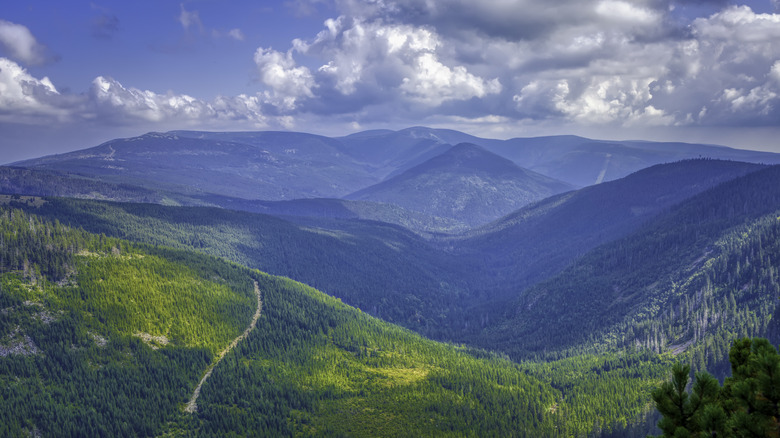
If you are looking for an adventurous destination around the world that is somewhat off the beaten track, consider visiting the stunning mountains of Southwestern Poland. This part of Central Europe is full of history, rare wildlife, and incredible vistas, and Poland's Karkonosze National Park showcases all that this part of Europe has to offer. Boasting hidden-gem hiking trails that won't disappoint, it's recognized as a UNESCO biosphere reserve for its high biodiversity. The park stretches nearly 14,000 acres along the border with the Czech Republic, in the highest part of the Sudetes mountain range, and is popular with hikers and visitors from surrounding European countries as well as visitors from abroad.
Karkonosze National Park is not only beautiful, but it's also part of a unique cultural crossroads of German, Czech, and Polish influences in a region known as Silesia. The park was established in 1959 to protect the unique local landscape of glacial cirques, waterfalls, and alpine forests that are home to diverse wildlife, including wild boars and the rare European mouflon, a type of bighorn sheep. There are many well-established trails to choose from for a hiking adventure, either for a day trip or a multi-day excursion.
Hiking the highlights of Karkonosze National Park
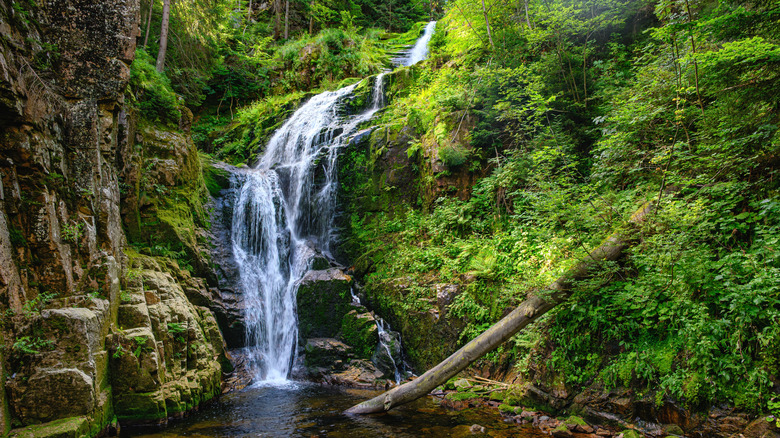
Start your visit to Karkonosze National Park at the Education Center in the charming town of Szklarska Poręba, a ski village located at the foot of Mount Szrenica. Here you can learn about the geological and natural history of the Karkonosze, or Giant Mountains, and be oriented to the many trails the park has to offer. From the village, you can take a ski lift about 4,400 feet to the top of the mountain, or hike to the summit on a challenging 6.1-mile trail paved with cobblestones. A longer, more moderate hike will take you on a scenic 13.3 loop past a waterfall, two glacial cirques, and a unique rock formation called Trzy Świnki, or the "three little pigs." Hikers rate this route highly, commenting on the picturesque views and recommending a visit during clear weather for the best vistas.
If you are up for a longer adventure, start on the eastern side of the park near the historic town of Karpacz, and head out for a 26-mile hike all the way across Karkonosze, east to west on a trail dotted with historic mountain huts. You can spend a night or two in these stopovers, perfect if you don't want to carry all your gear the whole time. If mountain biking is your vibe, get outfitted in Karpacz or Szklarska Poręba to hit one of the many highly-rated mountain bike trails that cross the park. Since this park is popular, trails can become crowded in peak summer months. There is a small entrance fee for the park (under $3 for a day pass), and a separate fee to see the popular Kamieńczyk Waterfall (under $5).
How to get to Karkonosze National Park
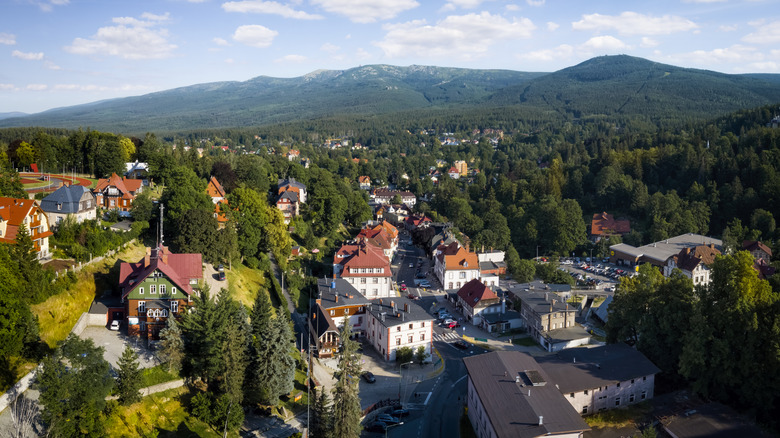
Exploring this area of Southwest Poland by car is your best bet. Not only is it the easiest way to get to Karkonosze National Park itself, but it also allows you to easily access supplies and lodging. Plus, it frees you to take in the charms of the small mountain villages and historic castles within easy reach of the park's entrances, such as the medieval fortress Chojnik Castle. If necessary, however, you can take a bus or train to Szklarska Poręba, Karpacz, or Jelenia Góra from other major Czech or Polish cities, then walk or take local transit to nearby trails and park entrances. Driving from Prague, the park is about two and a half hours northeast. From Wroclaw, a charming historic city in Southwest Poland, the park is a three-hour drive, and from Dresden, Germany, about three and a half hours.
While there is no tourist visa required to visit Poland if you are going for under 90 days, as a member of the European Union, Poland has begun a new Entry and Exit system for travellers from abroad, which means fingerprints and facial scans will be taken upon entry. While Eastern Poland, which borders Ukraine and Belarus, has had some airport and border closures resulting from increased security in the region, the southwest area where Karkonosze National Park is located is far from these tensions and remains a safe and beautiful destination to explore.