

A Huge Mistake People Make When Traveling To See The Northern Lights
We may receive a commission on purchases made from links.
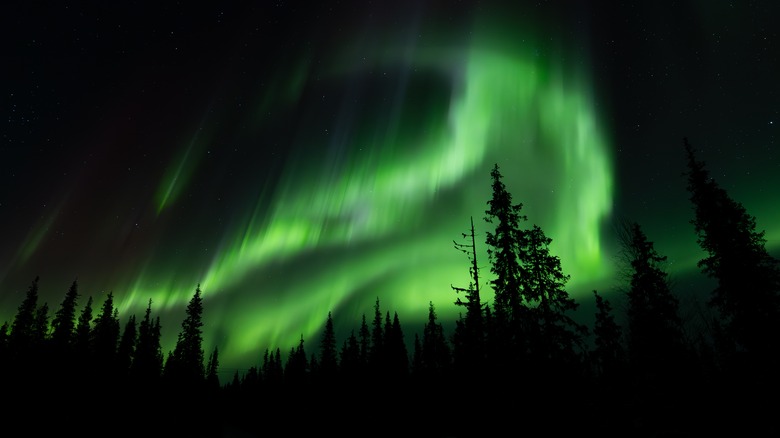
The northern lights, the name commonly used to refer to the aurora borealis, are an incredible natural phenomenon caused by the magnetic fields of the Earth and sun interacting with one another. The kaleidoscopic colors this forms in the sky are so popular among travelers that it has spawned its own tourist industry. Although the lights have occasionally been visible as far south as Texas in the peak years of 2024 and 2025, the best places to see the Northern Lights in the US and elsewhere are, as the name suggests, in the northern reaches of the globe. However, one huge mistake people make when traveling to see the northern lights is not staying a sufficient amount of time to ensure they get to view this spectacle.
Picking the best time — fall through early spring – and place — the area known as the auroral zone – can certainly enhance your chances of glimpsing the northern lights. However, this is a natural phenomenon. Like everything else in nature, it is not 100% predictable or guaranteed. While watching forecasts and predictions can also increase your chances, odds are you won't see the lights every night of your stay. Not only does the solar activity have to be just right to bring out the lights, but the night sky has to be clear and dark to afford a view of them.
With that in mind, it is advisable to stay in your chosen location at least a week. Given the cost of travel to the best northern lights viewing locales, the expense of staying a few extra nights is relatively minor compared to the difference between an empty sky and witnessing a spectacular celestial light show.
Other mistakes to avoid when seeing the northern lights
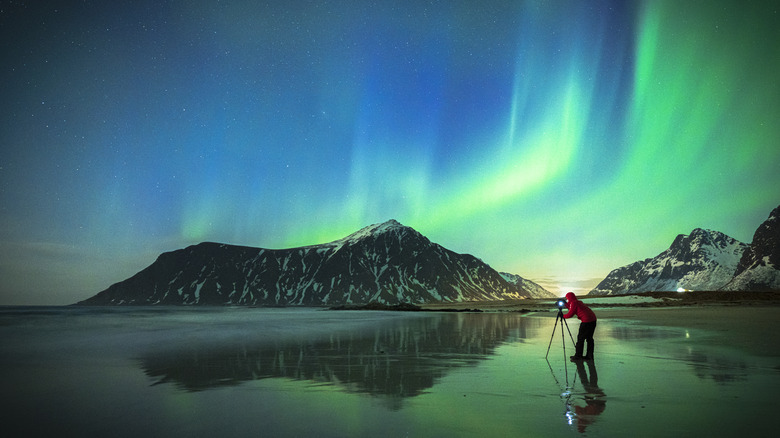
Staying enough time to increase your chances of seeing the northern lights doesn't just apply to the duration of your trip — it also means you need to stay at a viewing area an adequate amount of time. Just because darkness falls doesn't mean the lights suddenly appear. Sometimes, they may not be visible for hours after sundown. Most often, people cut these sessions short out of boredom or being too cold. You should be prepared to combat both these things to make sure you are actually in a position to see the lights should they appear.
To do so, you should dress for a winter hike and bring extra blankets, clothing, and hand warmers in a pack. You should also bring some snacks and a thermos of hot coffee, cocoa, or tea. Don't bring any distracting activities, though, as you will need to keep your eyes trained on the sky almost constantly, since the appearance of the lights is sometimes quite brief.
Another major mistake is not coming prepared with the right camera gear to get the perfect photo of the Northern Lights. A DSLR camera fitted with a lens with wide angle and low F-stop capabilities is recommended. Above all else, a tripod is necessary to keep your camera still. Given that you will need to travel with this equipment and it will be used outdoors, a lightweight yet rugged model like the K&F Concept Lightweight Travel Outdoor DSLR Tripod is the best choice. You should also pack a portable charger, as the cold temperatures can rapidly drain camera batteries.