

Visit America's First National Recreation Area For Outdoor Thrills And Brilliant Blue Waters
We may receive a commission on purchases made from links.
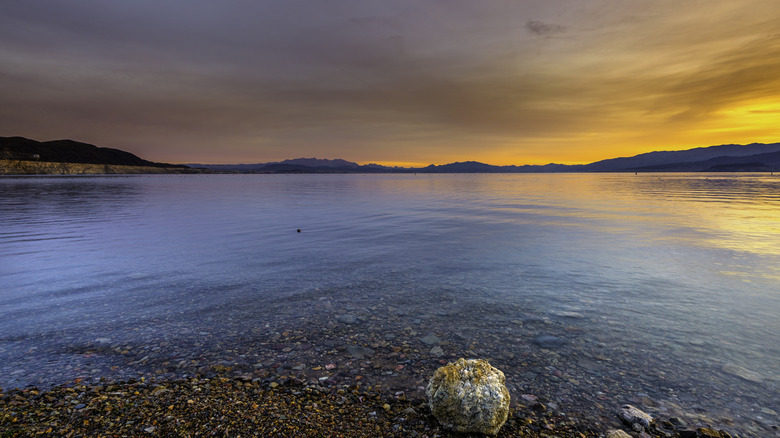
National recreation areas are tracts of federally protected lands that border various large reservoirs across the United States. These areas are meant to provide outdoor recreational opportunities while simultaneously preserving the land. Today, there are 18 such properties maintained by the National Park System. Outdoor enthusiasts can still visit America's first national recreation area, Lake Mead NRA, for outdoor thrills and brilliant blue waters in a pair of reservoirs.
Not only is Lake Mead NRA the country's first national recreation area (designated as such in 1964), it is also the largest, covering more than 1.5 million acres of land and water. Within its boundaries rests the nation's largest manmade reservoir, Lake Mead, as well as Lake Mohave, a major reservoir in its own right, and long stretches of the Colorado River. Lake Mead NRA also features dozens of hiking and horseback trails, miles of scenic roadways, and multiple campsites. This combination affords visitors a myriad of outdoor recreational opportunities both on land and water.
Located less than an hour's drive from Las Vegas, Lake Mead NRA straddles the border between Nevada and Arizona, with a portion being in each state. Visitors can access the land and waters of the NRA 24/7. However, the visitor center and information kiosks follow a set schedule. The visitor center is open daily from 9 am to 4:30 pm, while the information kiosk is open 8 am to 4 pm Monday-Friday. Visitors must pay an entry fee of $15. They also have the option of buying an annual pass for $45 or utilizing their U.S. Parks Pass, also known as the America the Beautiful National Parks Pass. Additional fees are charged for lake use and camping. You don't need to bring cash, though, as all of these fees are collected on a cashless basis.
There are myriad ways to enjoy the water at Lake Mead NRA
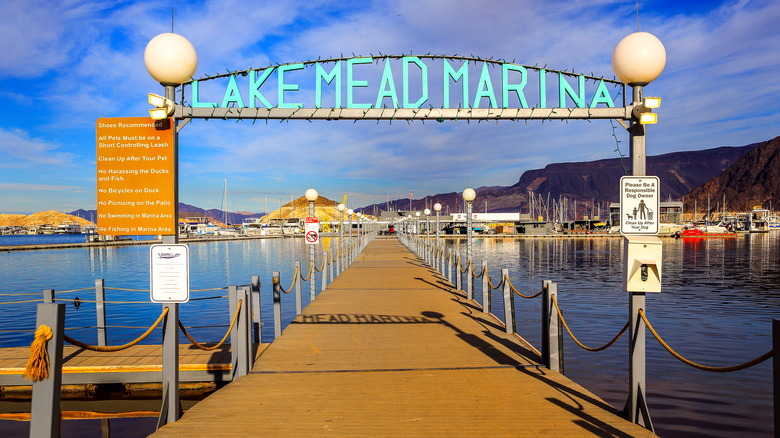
With over 290 square miles of water to explore, it is little wonder watersports and water-related activities are popular at Lake Mead NRA. Swimming, fishing, skiing, boating, paddling, and scuba diving are among the most common ways to enjoy the waters here. Several boat ramps are available, but boaters should be advised they are required to purchase a vessel pass (or annual boat pass) in order to launch their boat in the NRA. They also must follow the applicable state boating laws for either Nevada or Arizona, depending on which side they're on, and carry all required boating safety equipment. A variety of rental boats are also available at the marinas on both lakes.
Boating and water skiing are both extremely popular on Lake Mead. However, paddling is also a favorite activity on these waters. Canoeing, kayaking, and paddleboarding can all be enjoyed in various parts of both lakes, as well as on the Black Canyon National Water Trail in the Colorado River. Before exploring these waterways, it's a good idea to know how to safely paddle in different types of water, as the areas here range from calm coves to potentially rough open water and swiftly flowing river currents.
For anglers, the most popular species is striped bass, although largemouth bass, rainbow trout, crappie, and catfish are also found in both lakes. Those looking to get in the water can swim at various spots throughout the NRA, although swimming is not allowed near the marinas or boat launches. Additionally, the waters of Lake Mead are infamous for being dangerously deceptive, so swimmers are encouraged to wear life jackets at all times. Scuba divers also come to Lake Mead, primarily to explore a sunken B-29 Superfortress aircraft and the remains of a city that was flooded when the lake was created.
Land-based outdoor activities are also available at Lake Mead
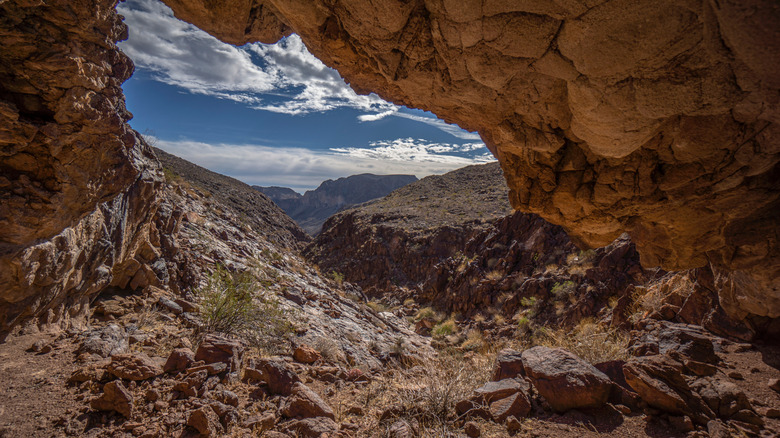
Not all of the outdoor activities in Lake Mead National Recreation Area involve water. With more than a dozen trails ranging in difficulty from easy to strenuous, hikers have plenty of options. A good number of these trails offer stunning views of Lake Mead, Lake Mohave, or the Colorado River, as well as the incredible rock formations, mountains, and canyons surrounding the waterways. Hikers should be mindful that they are in a desert environment and prepare accordingly. They should also beware of dangerous creatures while adventuring in the desert, most notably rattlesnakes. Close to 90% of the NRA's lands are part of the Mojave Desert. This is actually the spot where three of the four major deserts in North America intersect — the Mojave, Great Basin, and Sonoran.
In addition to hiking, it is also possible to view the stunning landscapes of Lake Mead NRA from horseback or vehicle. Horses can be ridden in much of the NRA, including numerous trails and back country roads, although there are some areas that are off-limits to equestrian use, such as picnic areas and campgrounds. Additionally, both Lakeshore Road and Northshore Road provide beautiful scenic views of Lake Mead and the mountainous terrain beyond when driving in an automobile.
Those looking to stay overnight in Lake Mead NRA have several options from which to choose. All told, there are 15 different developed campgrounds and RV villages with a total of 900 individuals campsites that can accommodate tents and RVs. Some campgrounds are managed by the NPS, while others are run by private concessionaires. Backcountry and shoreline camping are also available. If you choose this style of camping without amenities, a LifeStraw Personal Water Filter can help ensure you have plenty of fluids for hydration without having to lug a lot of heavy containers.