

Reconnect With Nature At One Of America's Most Visited National Parks
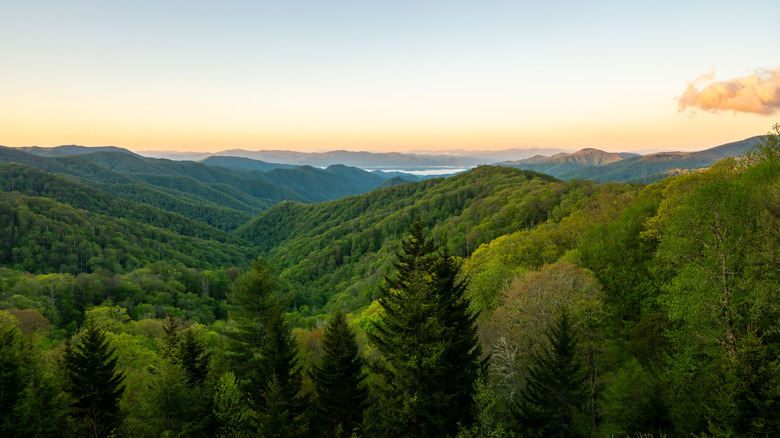
If you're looking to escape the suburbs or the big city, consider the Great Smoky Mountains National Park, which is part of the broader Blue Ridge Mountain province of the Appalachian Highlands. These mountains are some of the oldest on Earth, ranging between 200 and 300 million years old. The park received 12 million visitors in 2024, making it the most visited in the United States. But at over 520,000 acres, there's plenty of space for all of them. This park is part of the Great Smoky Mountain Range, which has been designated as a UNESCO World Heritage Site for its "outstanding value to humanity." These are just a few of the reasons why this national park should be on your bucket list.
The park, located in both Tennessee and North Carolina, has been popular since it was chartered by the United States Congress in 1934, during the New Deal. President Calvin Coolidge had initially authorized creation of the park in 1926, but both land and funding needed to be procured. The goal was to preserve the old wood forests before lumber companies could cut them all down. It was the first national park to be built using public and private funds. While the land was originally taken from the Cherokee people, the park's construction also involved displacing thousands of white descendants of early settlers who lived in the mountains. President Franklin Roosevelt dedicated the park in 1940. The Civilian Conservation Corps built the park's roads, fire trails, and additional structures between 1933 and 1942.
Natural attractions in the Great Smoky Mountains National Park

The park is filled with hundreds of miles of trails, including over 70 miles of the Appalachian Trail. If you have a backpack and a tent, you can hit these trails for several days or even weeks. There are plenty of campsites where you can build a fire and make dinner.Along these paths, you will see humongous rock formations and panoramic views of the hills. There are even streams where you can filter fresh water. If you're a fisherman, there are several ponds and streams where you can catch bass and trout.You could probably spend years exploring this park and barely be satisfied, but there are a few highlights you should seek out first.
You can take the 2.6-mile Laurel Falls Trail up Cove Mountain to see an 80-foot, two-tiered waterfall. The trail is paved, just in case you have accessibility concerns. There are also several roads where you can take scenic drives, which are especially pleasant during the fall. The Roaring Fork Motor Trail wraps around the park and will provide visitors with views of waterfalls and historic buildings.
This is also an incredible biodiverse part of the world, and some of its trees are up to 500 years old. You will find a mix of oaks, maple, red spruce, Fraser fir, and yellow poplar. There is a chance of seeing elk, bobcats, wild turkeys, salamanders, and perhaps one of around 2,000 black bears, one of the densest populations in the country. There are several laws pertaining to animals that you should know about before you visit any national park, including regulating how close you can deliberately get to wildlife. These laws are important for both your safety and theirs.
Historic sites in the Great Smoky Mountains National Park
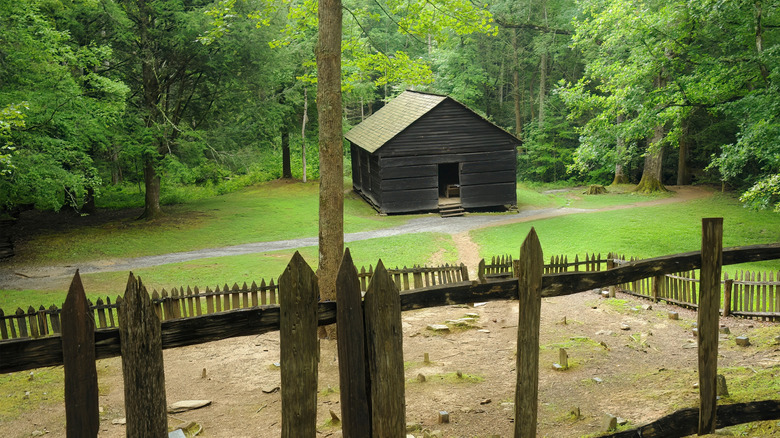
If your interests lay in the past, you will have no shortage of historic sites to check out in the Great Smoky Mountains National Park. Over 90 historic structures dot these hills, including log cabins, mills, and churches. These represent properties left behind by the communities displaced from the highlands about 90 years ago. These structures provide a unique glimpse into the lives of people who once called these mountains home. For instance, the Little Greenbrier School was built in 1881 out of poplar logs and generations of children attended until 1935. Just outside its door lies a small cemetery with graves dating back to the late 1800s.
You can also visit the Alfred Reagan Place and Grist Mill in what is now the Roaring Fork Historic District. At that site there is a little cabin and tub mill, where the flume and grindstone are still intact. Alfred Reagan, a respected member of his community, built the house and mill around the turn of the 20th century. He used it to turn corn and wheat into cornmeal and flour. When the rains hit heavy, the river roars and that sound echoes through the ridges.
There are also several Cherokee sites where visitors can learn about the original inhabitants of the land. You can hike up the Kuwohi, which, at 6,643 feet, is the tallest mountain in the park and the highest point in Tennessee. Kuwohi, a name that translates to "mulberry place," was a place for medicine people to seek spiritual guidance from the Creator. A modernist-style observation tower from the 1950s provides one of the best possible views of the mountain range.