

A Pretty But Fast-Spreading Flower To Avoid Planting Next To Your Roses
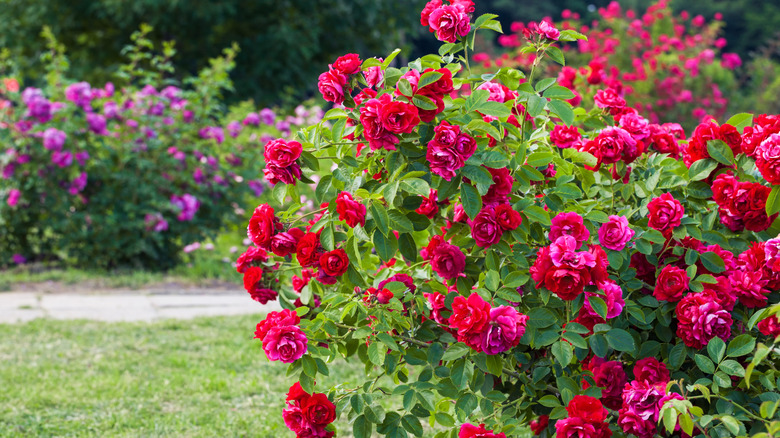
Roses are among the most popular flowers to plant in a garden. They thrive alongside some amazing companion plants, such as marigolds, phlox, shasta daisies, and foxgloves. All of these companions are beautiful in their own right, and offer specific benefits to the roses by attracting pollinators, preventing diseases such as powdery mildew, and warding off pests. However, there are equally beautiful flowers that you should avoid planting anywhere near your roses. Fast-growing leopard's bane (Doronicum spp.) is one of them.
Part of the Asteraceae family, leopard's bane is a type of early blooming daisy that boasts bright yellow petals from mid-spring to early summer and thrives in USDA Hardiness zones 4 through 8. They come in numerous different types and make excellent companions for late-spring bulb flowers, including daffodils and, lady's mantle, or Solomon's seal. One of many sturdy perennials that require very little in the way of care, leopard's bane makes a great option for anyone looking to add some spring brightness to their garden.
Here's why you shouldn't plant them near roses, though. Leopard's bane grow via underground rhizomes that can create clumps that grow upwards of 2 feet wide in a given season. This creates a ground cover that can very easily foster an environment that is overly damp and moist. If this stretches to the base of your rose bushes, the constant moisture will create the perfect conditions for the fungal disease black spot. This could lead to permanent damage, even killing off your roses.
How to keep leopard's bane in check
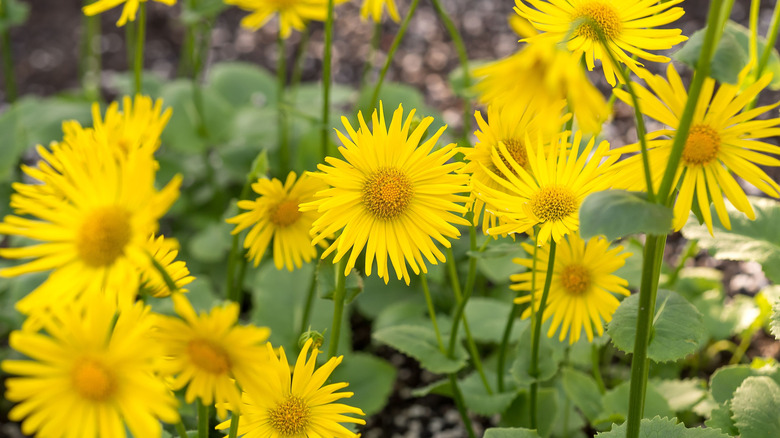
One of the easiest ways to keep leopard's bane in check is to make sure that it is physically confined. Planting this flower in pots is a great way to keep it from spreading around the base of your rose bushes, and to prevent it from competing with your roses for nutrients. Planting your leopard's bane in a container will allow you to pair its color alongside your roses without having to worry about moisture and black spot.
If you have planted leopard's bane near your roses, there are some simple maintenance tasks you can perform to keep them from taking over. Maintain a practice of deadheading the blooms to encourage them to put their energy towards new growth instead of spreading. Do this with your roses, too. You can also just dig up and remove any clumps of leopard's bane that you think are too close to your roses. This can be a little tricky, however, because the rhizomes like to spread underground and unseen.
It's also important to be careful not to throw the plants into your compost pile. This will sully the compost and make it far easier for the seeds and rhizomes of the leopard's bane to take over your soil. Instead, burn lion's bane, or dispose of the plants in debris piles your local municipality handles.