

A Clever Winter Preparation Tip That Make Removing Snow Even Easier
We may receive a commission on purchases made from links.
When there's a moderate amount of snow and more on the way, the best time to start shoveling snow is while it's still falling. This way, it never has a chance to get too deep to manage — or to bury the perceivable edges of the driveway and sidewalks, making it hard to tell where your lawn begins. Shoveling when the snow first starts falling isn't always an option, however; overnight snowfall catches just about everyone by surprise once in a while.
It's a bit tricky to plow, shovel, or blow snow when you can't tell where the sidewalk ends (shoutout to Shel Silverstein) and where your yard begins. Power equipment in particular can be problematic when it accidentally chews up your lawn instead of moving snow out of your pathways. Get around this issue with a little prevention while the ground is still somewhat soft. Yard markers placed strategically along the sides of the driveway apron, the driveway itself, and the sidewalk can help keep you on the right track when you're clearing snow. And to make things less of a chore while you're out in the elements, here are some clever hacks to make snow removal easier than ever.
How to mark your driveway and sidewalk edges for safer, easier snow removal
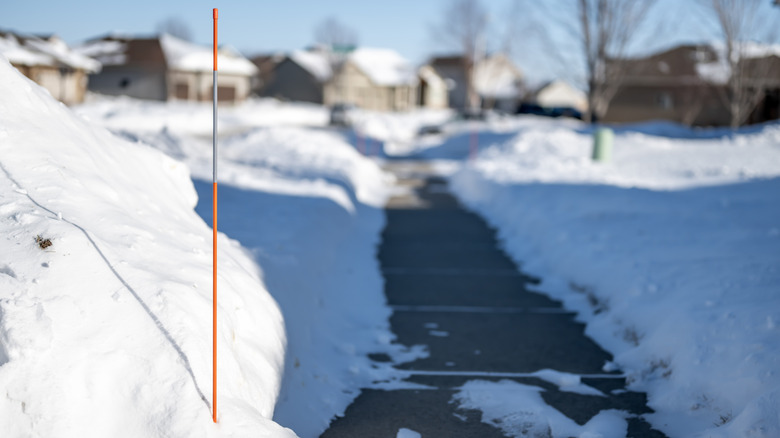
Tall driveway markers make it easy to see the boundaries of paved areas, even amid snowdrifts or snow banks. Choose stakes such as ROP Shop's 48-inch reflective driveway markers to make it easy to know your path no matter when you get around to clearing snow. These have a wide reflective band on them so car, tractor, or plow headlights make them highly visible after dark, too. The same holds true if you use your riding lawn mower for snow removal. These particular markers (and many like them) are made of fiberglass for durability. Plus, they have a cap that allows them to be tapped with a hammer into the ground, if necessary. Buy as many as you think you might need based on your driveway length, plus some for the sidewalk areas, too.
If possible, insert the stakes on a warmer day when there's no snow coverage. Pound or push the stakes into the ground a few inches from the pathway — deep enough so they'll stand vertically and won't easily fall over, even against snowfall or a snow blower. Set stakes every 10 feet or so on a straight driveway (or at a distance that makes sense for your driveway layout), or use them to mark obstacles and points where paths cross, such as the sidewalk crossing your driveway, or where the walkway heading to your house connects with the driveway. It's worthwhile to place these around items such as fire hydrants and other items sticking up from the lawn that could accidentally be hit when clearing snow. Otherwise, snowdrifts and piles could easily cover them, making them hard to locate.