

Upgrade Your Fence With A Climbing Plant Adorned With Bell-Shaped Pink Flowers
We may receive a commission on purchases made from links.
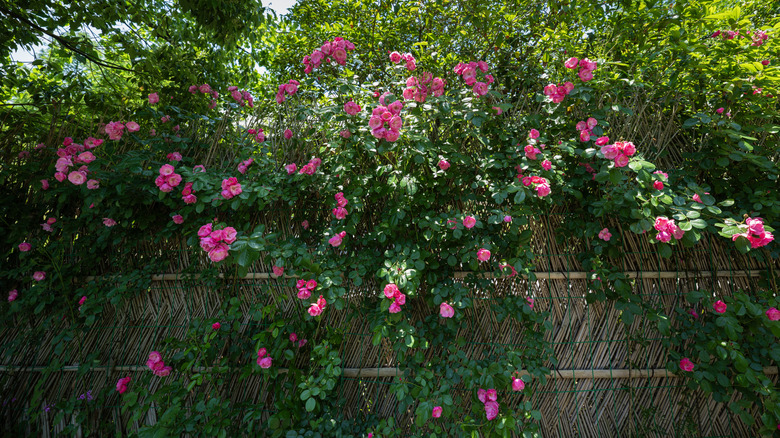
Fences, trellises, and arbors are all excellent ways to add a vertical dimension to your garden. Some climbing plants will only scale certain types of structures, so it's important to choose a species suited to what your garden provides. Clematis vines have twining leaves that will easily wrap around long, thin parts of a fence. This makes them a good fit for chain-link fencing, metal fencing with slender vertical panels, and even enclosures made of chicken wire. If your fence is beneath a tree canopy or in a spot with partial shade, consider using it as a climbing wall for leatherflower (Clematis viorna), a type of clematis that's native to the northern, eastern, and central parts of the United States. It's relatively easy to grow and will quickly cover a bare fence with bell-shaped blooms and tough yet flexible leaves.
Though leatherflower can grow as a ground cover, it naturally prefers to climb toward the sun. Each plant needs 3 to 6 feet of space to spread out. If you fulfill this request, leatherflower will reward you with tons of pink or purple flowers from late spring through early fall. The flowers are likely to bring more songbirds to your yard since they find the seedheads tasty. You can also attract butterflies to your garden with these plants. Leatherflower's foliage feeds hungry caterpillars, while its blossoms offer nourishment to full-grown butterflies and moths that will facilitate pollen exchange in your garden. The eye-catching flowers can even lure hummingbirds with their delicious nectar.
Caring for fence-dwelling leatherflower
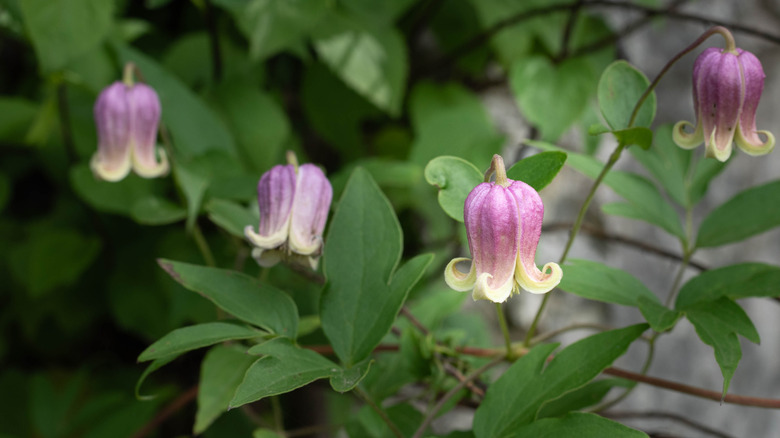
Leatherflower isn't a terribly temperamental species, and resists most pests and diseases, so it's a good choice for gardeners new to vertical growing. This perennial tolerates a wide range of soil textures, from sand to clay, as long as water drainage is adequate. If its planting site's drainage needs improvement, try amending the soil with organic matter such as compost or leaf mold. Make sure that the soil's pH level falls between 6 and 8, as leatherflower isn't a big fan of acidic or alkaline conditions. The NewTest soil pH test kit or a similar product can help you perform this measurement. Leatherflower also adapts well to various climates. It thrives in USDA hardiness zones 4 through 9, which cover much of the continental United States.
You can grow leatherflower from seed, but propagating plants from stem cuttings is typically a faster process. See if a friend or neighbor with a thriving leatherflower will let you snip off a few cuttings to start new plants. If your leatherflower vines aren't twining onto your fence as expected, you can affix them to it with garden tape. If your fence lacks thin sections for the vine's leaves to grip, consider growing leatherflower on a trellis that you lean against your fence. This will give you a similar look without a lot of fuss. Trellises are easy to build with household materials that have outlived their original function. For example, you can repurpose old mattress springs to create a new trellis.