

The Vibrant Bulb To Plant In The Fall To Attract More Robins Come Spring
We may receive a commission on purchases made from links.
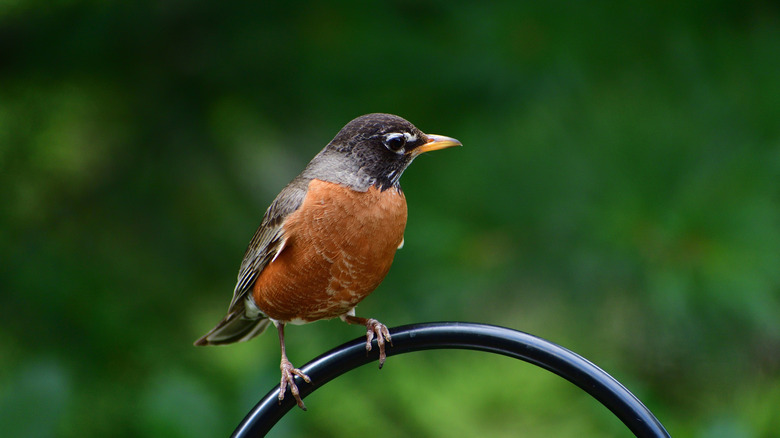
The American robin is among the most common songbirds in the United States. These iconic birds are a particularly common sight in the spring, when a combination of resident and migrating birds are found in the Lower 48. There are a number of simple methods to attract songbirds, such as robins, to your yard, including putting out feeders. You can also plant certain fruit bushes to attract songbirds. However, one surefire way to make sure you have robins in your backyard this spring is to plant camas (also known as camassia) bulbs this fall.
Given that the primary diet of robins consists of various worms, insects, fruits, and seeds, it may not be immediately apparent how a spring flowering bulb could attract them. To answer this question, think of camas (Camassia quamas) as support structure. The lavender and blue blooms themselves do nothing to draw in robins. However, they are irresistible to a number of insects — particularly aphids, on which robins enjoy feasting. To that end, camassia can be seen an indirect food source that will keep robins and other songbirds flocking to your yard.
However, to take advantage of this spring songbird attractant, you need to take action months prior. Fall is the best time to plant spring blooming bulbs, including camassias. This allows the bulb to settle in before freezing winter weather arrives, and be ready to sprout and bloom the following spring.
Where and how you should plant camassia
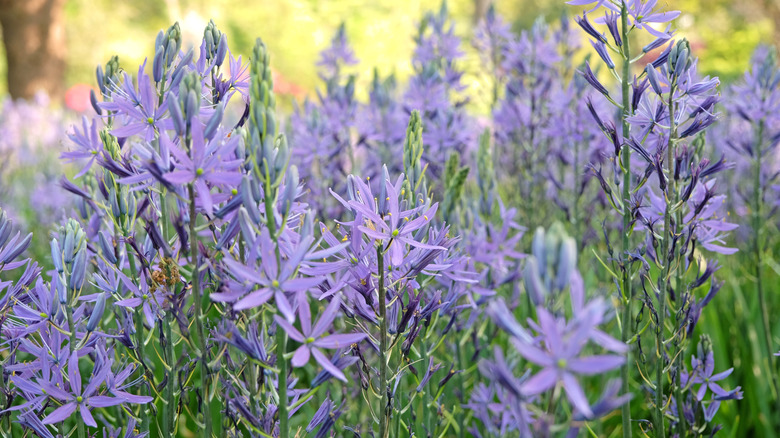
Camassias are indigenous to the Pacific Northwest, where they grow in the moist soil of vast meadows and along the edges of the forests and woodlands. So, while they thrive throughout hardiness zones 4 through 8, it is no surprise they do best in soil that retains its moisture, without getting soggy. Additionally, they prefer areas that receive full sun or have partial shade. Soil pH is not nearly as important, as camassia can fare well in all soil types, even heavy clay. When planting camas for the purpose of attracting robins, consider locating them around ponds or water features, along the borders and edges of your lawn, and near seed feeders.
Once you have your site selected, be sure to secure an adequate amount of bulbs from a local nursery or reputable online supplier. To determine how many bulbs you will need, consider that plants should be spaced about 6 inches apart. They also work nicely scattered along the edge of, or scattered among, wild grasses and ground cover. By planting several varieties, you can stretch the blooming season out to over two months.
To plant the bulbs, dig a hole approximately 5 inches deep. You can use a small garden trowel for this task, although a tool like the Edward Tools bulb planter makes it much faster. Next, place the bulb in the hole pointed side up. Should you be using a bulb planter, start dig your second hole. Use the dirt that was pushed up through the planter to cover the previously dug hole. Continue that process, spacing holes 6 inches apart, until all the bulbs are planted. They are low-maintenance plants, that really only need clumps divided and replanted every few years.