

The Pretty Perennial Martha Stewart Uses To Help Keep Squirrels And Deer At Bay

As beautiful as fall gardens can be, they're also a magnet for hungry and determined wildlife. By the time autumn rolls around, squirrels are frantically stockpiling for winter, digging up loose garden soil and leaving behind holes and chaos. Deer, meanwhile, are not only searching for scarcer food sources but also using their antlers on young trees and stems, scraping away bark in a way that can leave lasting damage. Both creatures are at their most desperate in fall, when natural food is scarce and your perennials suddenly look like an easy buffet.
For gardeners, this means not only do you have plants fading at the end of their bloom cycle, but this wildlife is also snacking on whatever is left standing. No wonder fall can feel like the hardest season to keep your beds looking good. That's where selecting the right perennials can truly transform your garden. Instead of letting it fall prey to scavengers, take a cue from Martha Stewart, who shares a list of her favorite outdoor plants, among them a stunning fall-blooming flower that combines beauty with a bit of built-in protection: colchicum.
Autumn-blooming colchicum emerges just when you need it most, producing lush, oversized petals in fuchsia and lilac shades that seem to borrow from spring's palette. But beyond its good looks, colchicum has the added benefit of being unappealing to squirrels and deer, keeping your garden beds vibrant and undisturbed at a time when everything else feels under siege. Stewart has planted them generously around her property, where they've flourished year after year, and she praises their ability to multiply into cheerful, colorful clumps. For anyone frustrated by fall's combination of fading blooms and feisty wildlife, colchicum delivers both resilience and seasonal drama in one neat package.
All about fall-blooming colchicum
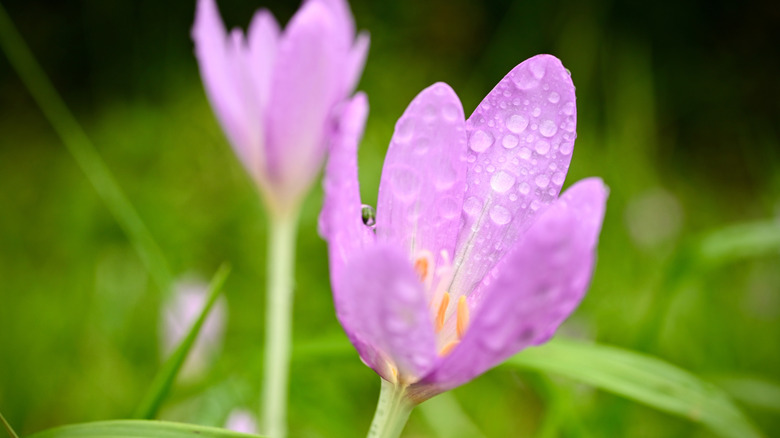
If you've ever stumbled across a patch of "autumn crocus" blooming when most of the garden is fading, you've probably met colchicum, though it's not a crocus at all. These fall-blooming bulbs belong to the lily family and go by some playful nicknames like 'meadow saffron' or 'naked ladies.' Their goblet-shaped blooms arrive in shades of pink, purple, or white, stretching about 4 to 6 inches tall and lasting about two weeks. What's even more fun is that each bulb sends up multiple flowers, so they often appear like a ready-made bouquet tucked into your landscape. While they're gorgeous to look at, every part of this plant is toxic, which is why the squirrels and deer don't like them. To make it even more effective, you can partner colchicum with other deer-resistant plants.
Plant these bulbs in mid- to late summer, long before most people even think of bulb season, and they'll reward you with fireworks of color in September and October. They thrive in USDA hardiness zones 5 through 9 and love spots with well-drained soil, from rock gardens to areas under deciduous trees where spring leaves shade their growth. Because their foliage appears in spring and collapses by early summer, many gardeners plant them with hardy geraniums or creeping thyme to disguise die-back. Then, come fall, you shear back the companions, and the colchicums put on their show. While colchicums are great on their own, if you're looking for other reliable fall bloomers, you can try this other drought-tolerant perennial that'll shine in your garden.