

What Are The Small Orange Spiders In Your Yard And How Best To Deal With Them
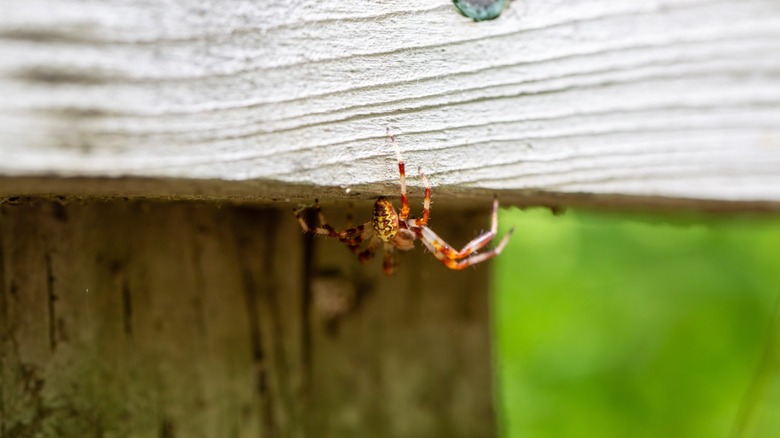
Spending time in your yard without encountering a spider is unlikely. Some of the most frequent visitors to your outdoor space are small orange spiders, such as the marbled orb-weaver (Araneus marmoreus), the cross orb-weaver (Araneus diadematus) and the very tiny cardinal jumper (Phidippus cardinalis). All of these orange or semi-orange spiders are fairly common residents in North America and beyond. Thankfully, when it comes to ranking types of spiders by danger level, these eight-legged, orange creepy-crawlies are pretty harmless. The best and easiest way to handle finding one of them in your yard is to just leave it be. If you have a pest control service, ask them to leave webs alone and to avoid spraying near them.
Both marbled orb-weaver and cross orb-weaver spiders, by nature of their name, weave unique webs in the shape of wheels. These are the classic "garden spider" webs across open spaces between posts, trees, or tall plants. Their presence in yards is more noticeable in mid-summer to late fall, and they prefer grassy and woody spots. Marbled orb-weavers are sometimes referred to as pumpkin spiders and belong to the largest genus of spiders in the world. Cross orb-weavers like to hang around exterior lighting. Cardinal jumpers, while not fully orange, are another common sight. These tiny spiders (from the size of a grain of rice to ¾-inch wide) can leap up to 29 times their body length, which can be sort of freaky. However, like the orb-weavers, jumping spiders will not harm humans, plus they feed on other pesky insects.
Dealing with orange spiders in your yard
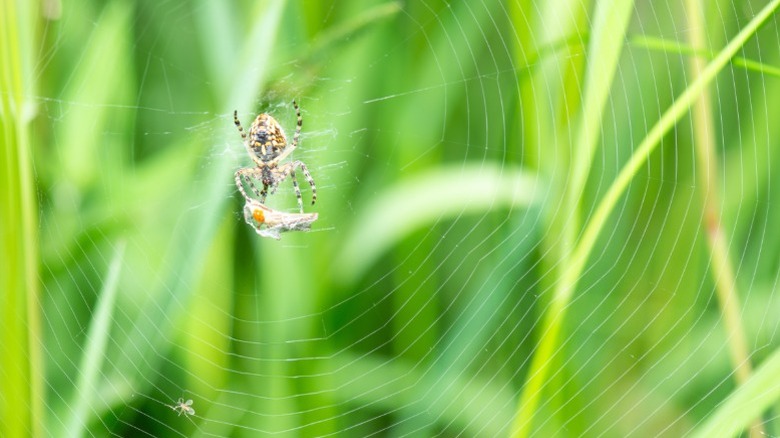
Even if they send shivers down your spine, you may want to stop killing spiders in your garden. Most spiders hanging around your home or in your garden plot are not black widows or brown recluses. For the most part, common orange spiders will not bother or harm you. The one exception may be a mama protecting her egg sac if you mess with it. In some cases, people bitten by cross orb-weavers react with pain, swelling, and other symptoms. Sometimes stronger reactions, like nausea or muscle cramps are reported, but those are rare. The good news is that they won't bite you if you leave them alone to go about their spider business. When it comes to the most common orange spider, the marbled orb-weaver, their bite is often likened to the feel of a bee sting.
Also, consider the benefits of letting your orange tenants remain in your yard. Marbled orb-weavers, for example, help control flying insects. Their large webs capture flies and other pests, like moths. A few orb-weaver spiders in your yard can be the key to maintaining low fly populations. And remember that leaving pesky spiderwebs in your yard may be the key to attracting hummingbirds. Because these tiny birds use the web material for their nests, you are doing a favor to your yard's ecosystem by letting the spiders stay. In short, leaving these colorful arachnids alone benefits you, your yard, the spiders, and the hummingbirds.