

How To Tell If You've Accidentally Overwatered Your Roses
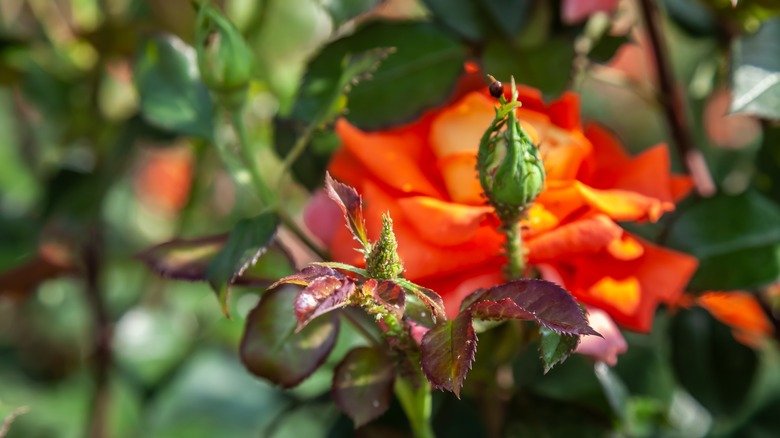
Roses are a nice addition to any yard. They provide a little bit of color and a sweet smell, and they will return every spring for decades. They're also a great gift — there isn't a single person who doesn't enjoy waking up to fresh-cut flowers in a vase. But you will need to use the right timing and technique to propagate roses in your garden. One unfortunate aspect of keeping these plants is that they sometimes require a fair amount of maintenance, including pruning, frequent watering, and fertilizing. There are varieties of garden and shrub roses that don't need as much care, but you can damage even the most robust variety with overwatering.
This mistake could cause a number of issues for your plants. One of the first things that can happen is that the roots become waterlogged and start to decay. If you don't know how to identify the signs, you might not notice this happening until it's too late. The plant can also lose its structure, which will cause the stems to become mushy. Before this happens, leaves will usually fall off, which makes it harder for photosynthesis to take place.
To keep your rose bushes healthy, you'll need to figure out the right watering regimen. This might require some trial and error, and you might have to adjust it depending on the fluctuating level of rainfall throughout the seasons. The best methods for watering your roses usually require about 2 to 5 gallons of water a week.
More signs that you've overwatered your rose plants
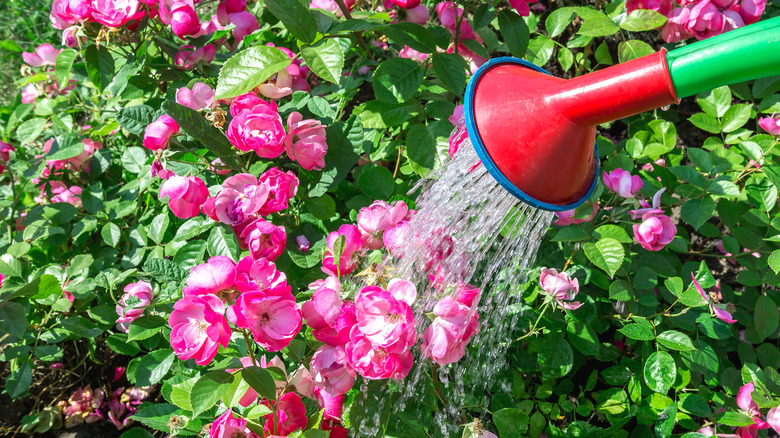
Rose plants can be delicate to various changes in conditions, so many of the symptoms of overwatering could appear similar to symptoms of underwatering. For instance, overwatered plants often grow yellow. This happens because the roots have started to rot, which inhibits the uptake of water. This will eventually lead to wilting. So, if you notice these symptoms, how can you tell what's gone wrong? First, you should check to see if the ground is wet by sticking your finger into the surrounding soil — it should be damp, not soggy — or by using a moisture meter.
There are also several other signs you should look for. Edema is another problem that you might notice. It occurs when the plant's cells absorb too much water and burst, causing blisters to form on the leaves. White mildew might also coat the leaves and stall the plant's growth. And, if you're overwatering your roses, there is a chance you may be making other mistakes when watering your garden. Avoid overwatering in general by keeping a rain gauge to track moisture levels.