

A Drought-Tolerant Flower That'll Help Fill Your Garden With Pollinators

When looking for flowers to include in a vibrant pollinator-friendly garden, it's important to consider your local climate. Planting drought-tolerant flowers may be your best option if you live in a dry region of the United States. One of these flowers is the Wright's skullcap (Scutellaria wrightii), a leggy perennial with purple and violet blooms that brighten gardens and thrive through dry seasons.
Hardy in USDA zones 8 through 11, which includes temperate areas of the West and Southeast, Wright's skullcap grows in the form of a low bush or clump. Part of the heat-tolerant Scutellaria family of plants, which includes other herbaceous skullcaps, Wright's skullcap thrives in sun and well-drained, sandy soil. Its fuzzy, tubular blooms last from early spring all through the summer, and sometimes into fall, providing a reliable food source for butterflies, moths, and bees. The name "skullcap" comes from the hooded shape of its purple petals and white interior, though the flower doesn't actually resemble a skull.
A flower fit for harsh conditions
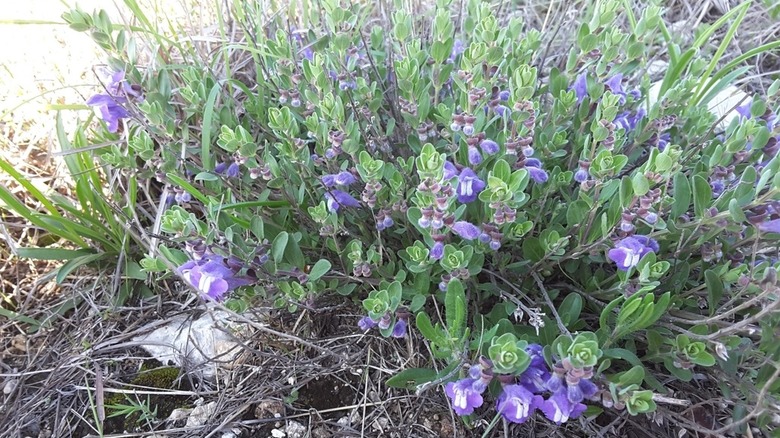
Wright's skullcap — also known as scrubby or bushy skullcap – is native to the plains and prairies of Oklahoma and Texas, where it is used to harsh weather and long periods of drought. It grows well in rock gardens or along gravel and paved pathways, needing little water once established. Part of the larger mint family, this skullcap grows to a height of 6 to 10 inches, with a bush that spreads to 18 inches, producing multiple purple blooms on each leafy stalk. Because it can tolerate poor soil, it's a useful flower to plant on slopes or dry embankments. For the best results, space the plants about a foot apart to allow for air circulation and spreading growth.
Wright's skullcap is sure to make all the bees come buzzing to your garden, benefiting your other plants and veggies. Though drought-tolerant once mature, young plants should get a light watering until their roots fully establish. In early spring, prune your skullcap before it blooms to encourage dense, healthy growth. If you prefer a pink flower, Wright's skullcap has a cousin — the pink skullcap (Scutellaria suffrutescens) — a Mexican native that has similar growing needs and is equally attractive to pollinators.