

The Outlandish Tickle Trick That'll Help Your Tomato Plants To Be As Productive As Possible
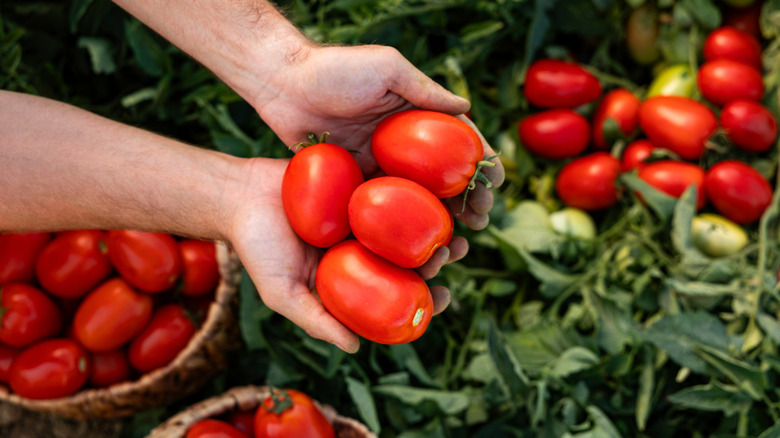
Growing tomatoes takes work, but it's worth it for a big crop of juicy red slicers or sauce-ready Romas. There are several ways to help your plants produce lots of fruit. Mulching your tomatoes with red plastic encourages a more bountiful harvest, and avoiding overuse of nitrogen-rich fertilizers can help prevent fruit-set problems. Pollination is another key factor to consider. Sometimes, pollen gets too hot to do its job effectively. Other times, humidity makes the pollen so sticky that it can't get to the flower's pistil, the part of the flower that must receive it to create a new tomato. When pollen is too dry, it may not adhere to the flower's reproductive parts. Your yard might also lack enough bees to assist with pollen transfer. Whatever the reason, if pollination is lacking, your plants won't make many tomatoes. You can assist your plants by hand pollinating them, a process some gardeners call tickling.
Tickling may sound silly, but it can yield surprisingly strong results. This trick delivers pollen directly to the flowers' pistils, which can result in larger numbers of tomatoes than the plant would have produced otherwise. Tickling doesn't require specialized tools, but timing matters. The best time to tickle your tomatoes is in the morning, on days that humidity levels are low to moderate. Morning is when the newest flowers open, offering access to the most promising pollen. Avoid hand pollinating your tomatoes when air temperatures are above 80 degrees Fahrenheit, as the plants may pause their fruiting and flowering efforts to cope with heat stress.
How to tickle your tomato flowers

To tickle your way to higher tomato yields, grab a small paintbrush and a pair of gloves. Locate flowers that have opened all the way. Then, channel your inner bee. Gently brush inside each flower to move the pollen around. With tomatoes, the goal is to shift pollen from the stamen, which produces it, to the pistil, where fertilization occurs. Be gentle and use a clean brush for each type of tomato you tickle. Using separate brushes prevents cross-pollination between varieties. This is especially important if you hope to save seeds from your favorite tomato plants at the end of the growing season. If you don't have a set of small paintbrushes, you can use cotton swabs or clean, soft toothbrush bristles for hand pollination. Repeat the tickling process every two to three days for the best results.
If your hands aren't steady enough to tickle the flowers with a paintbrush or cotton swab, try a different approach. Shaking your tomato plants ever so slightly can prompt some pollen to drift from the stamens to the pistils. This can transfer enough pollen to noticeably improve yields. Whichever method you use, give your tomato plants plenty of water when you're lending a hand with pollination. Some gardeners grow tomatoes in gravel to provide a consistent amount of moisture and fend off soil-borne pests and pathogens. Drip irrigation is another reliable way to maintain proper moisture levels. Also, be sure to avoid over-hydration and other garden-watering mistakes.